

Your Thoughts Are Not as Private as You Think
What Modern Consciousness Got Wrong About the Mind
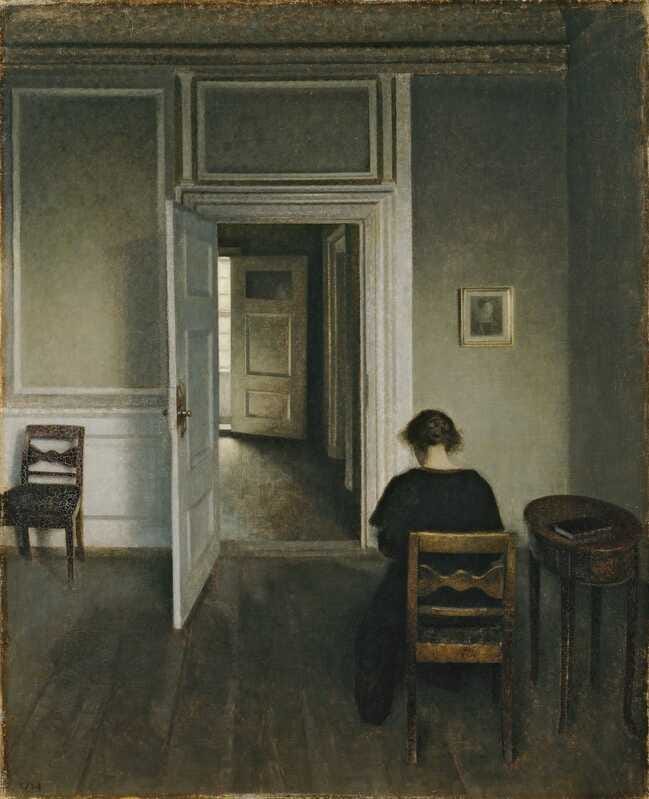
Most people assume that thinking happens entirely inside their own head.
When we disagree with someone, we tend to imagine two private worlds bumping into each other. My thoughts are mine, yours are yours, and the disagreement is just the point where they meet.
But it hasn’t always been this way.
For most of human history, thought was not experienced as something manufactured internally and then projected outward. People did not experience the mind as a closed container behind the eyes. Thinking was something that happened between you and the world.
Today, thinking is treated as a mechanical process. Information enters the mind, gets processed internally, and exits as opinions, judgments, or conclusions. If an idea can’t be defended cleanly or articulated precisely, it’s dismissed as emotional.
This shift has changed how we reason..
Thank you for being part of our mission! If you’d like to support us, and join in the book club sessions directly, please consider a paid subscription. You’ll get:
All live book discussions and recordings (biweekly)
Regular essays to guide you through the books we’re reading
The full archive of articles, essays, and podcasts
Access to our community of readers
Our second discussion on The Everlasting Man by G. K. Chesterton takes place on January 20 at 12pm ET — join us!
Note: all paid members can join the live discussions up on stage. You’ll receive Zoom links shortly before each session.

A Porous Mind
Ancient people did not experience the mind as a sealed chamber.
The boundary between inner and outer life was thin. Dreams, intuitions, omens, and sudden insights were treated as meaningful disclosures.
This is why ancient texts so often describe wisdom as something that comes. In the Hebrew scriptures, wisdom “cries out” in the streets. In Greek philosophy, truth is something the soul remembers. In early Christianity, revelation descends; it is received, not reasoned into existence.
Even memory was not primarily internal. It lived in ritual, song, architecture, and story. Knowledge was communal and embodied long before it was abstract and individual.
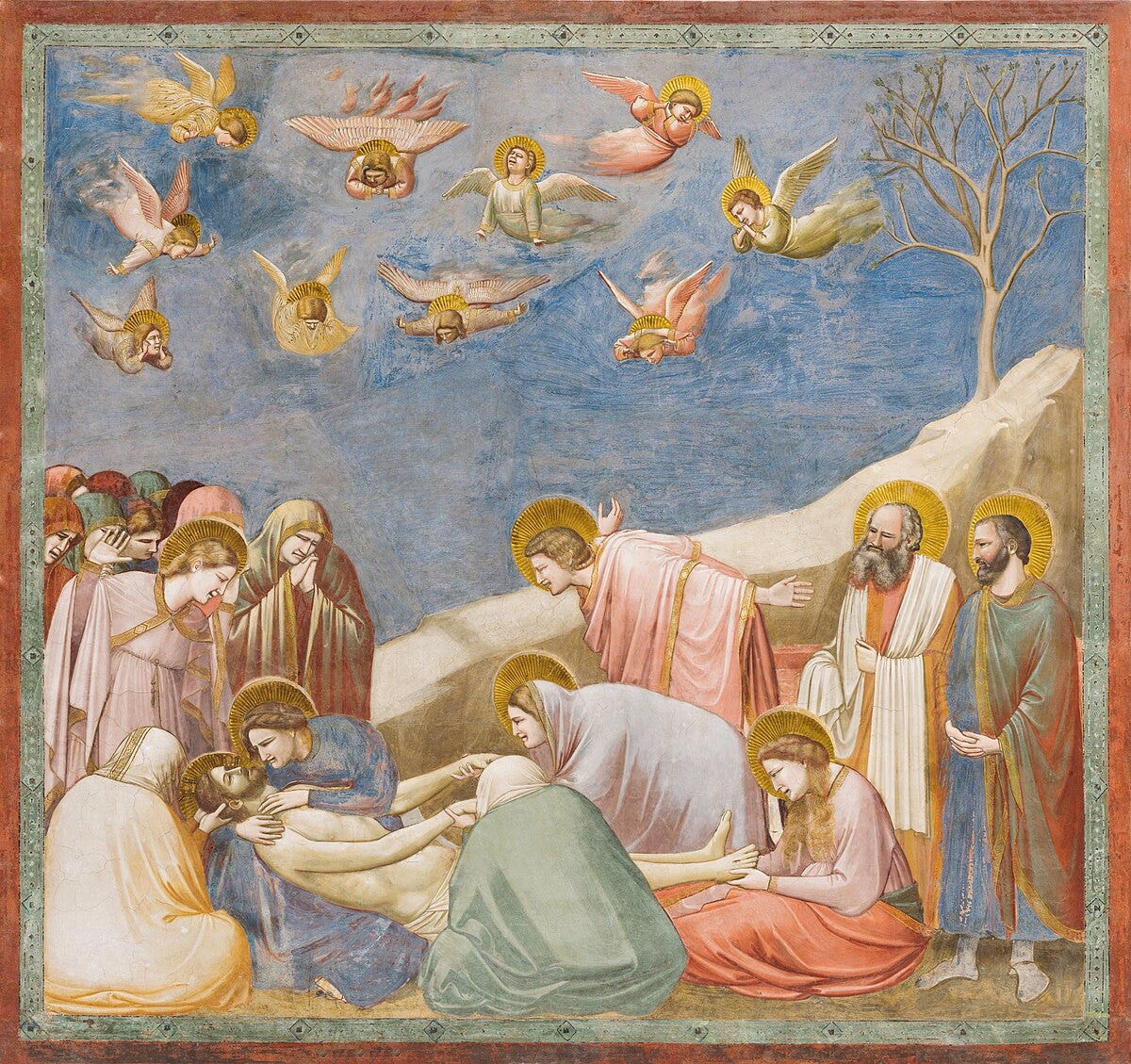
This does not mean ancient people were irrational or incapable of analysis. It means their consciousness was structured differently. Thought had not yet withdrawn into the interior and declared independence from the world.
One of the most important modern thinkers to recognize this difference was Henri Bergson. Bergson argued that modern philosophy had confused reality with the tools we use to analyze it. Instead of knowing things as they are lived, we dissect them conceptually from the outside.
“The intellect,” Bergson wrote, “is characterized by a natural inability to comprehend life.”
For Bergson, lived experience was fluid, continuous, and qualitative. But modern thinking freezes experience into static concepts. We replace what is lived with what can be measured.
Something subtle but profound is lost in this exchange.
The Birth of the Isolated Thinker
The turning point in Western thought is often traced to René Descartes, who famously declared cogito, ergo sum—I think, therefore I am, placing the certainty of thought at the center of human experience.
With this move, the act of thinking becomes the most secure foundation available, and everything else is approached from there. Reality no longer presents itself directly as something given; it must first be doubted, tested, and reconstructed internally before it can be trusted.
From this point on, the mind is understood as standing apart from the world. The world appears at a distance, positioned in front of the thinker rather than surrounding and sustaining him, and experience is reorganized as something to be observed rather than inhabited.
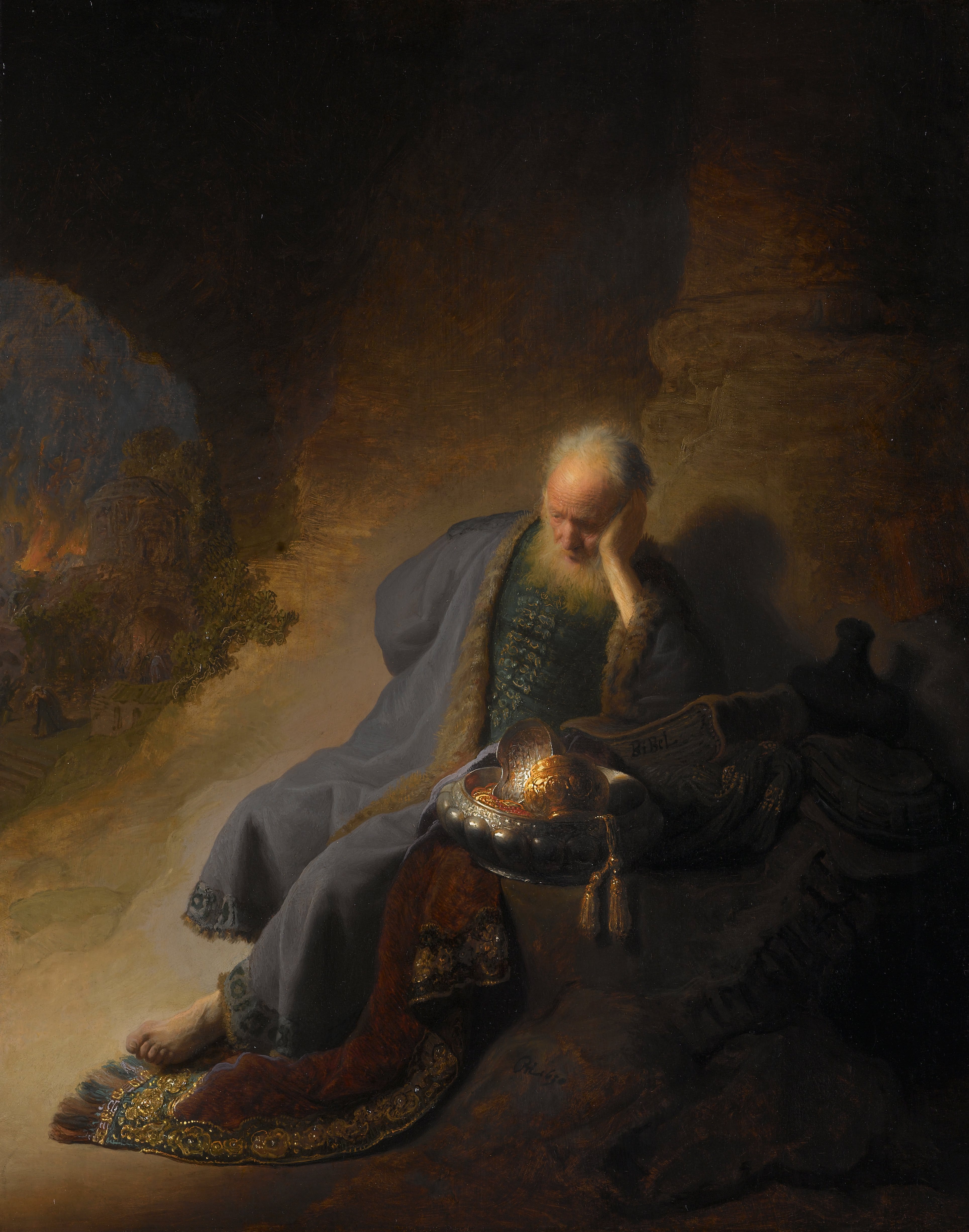
Over time, this stance reshapes how it feels to exist. The human being comes to experience himself less as a participant moving within reality and more as a spectator positioned across from it, encountering the world through representations before encountering it as lived.
Bergson noticed a similar habit in modern thinking about time, which is treated as though it were space… divisible, measurable, and laid out in units. Thought undergoes the same treatment. It is broken into parts, arranged into steps, and handled efficiently, while the sense of thinking as something continuous and lived from within gradually recedes.
When Ideas Had Weight
In older forms of consciousness, ideas were not weightless abstractions that passed easily through the mind.
To hold a belief meant aligning oneself with a reality, and words carried force because they were bound to what they named. Speech was not neutral. To speak falsely was not simply to be mistaken, but to disturb the order of things one had entered into.
This is why ancient cultures treated language with caution. Words were understood to bind the speaker to what was said, creating obligations that extended beyond the moment of speech.
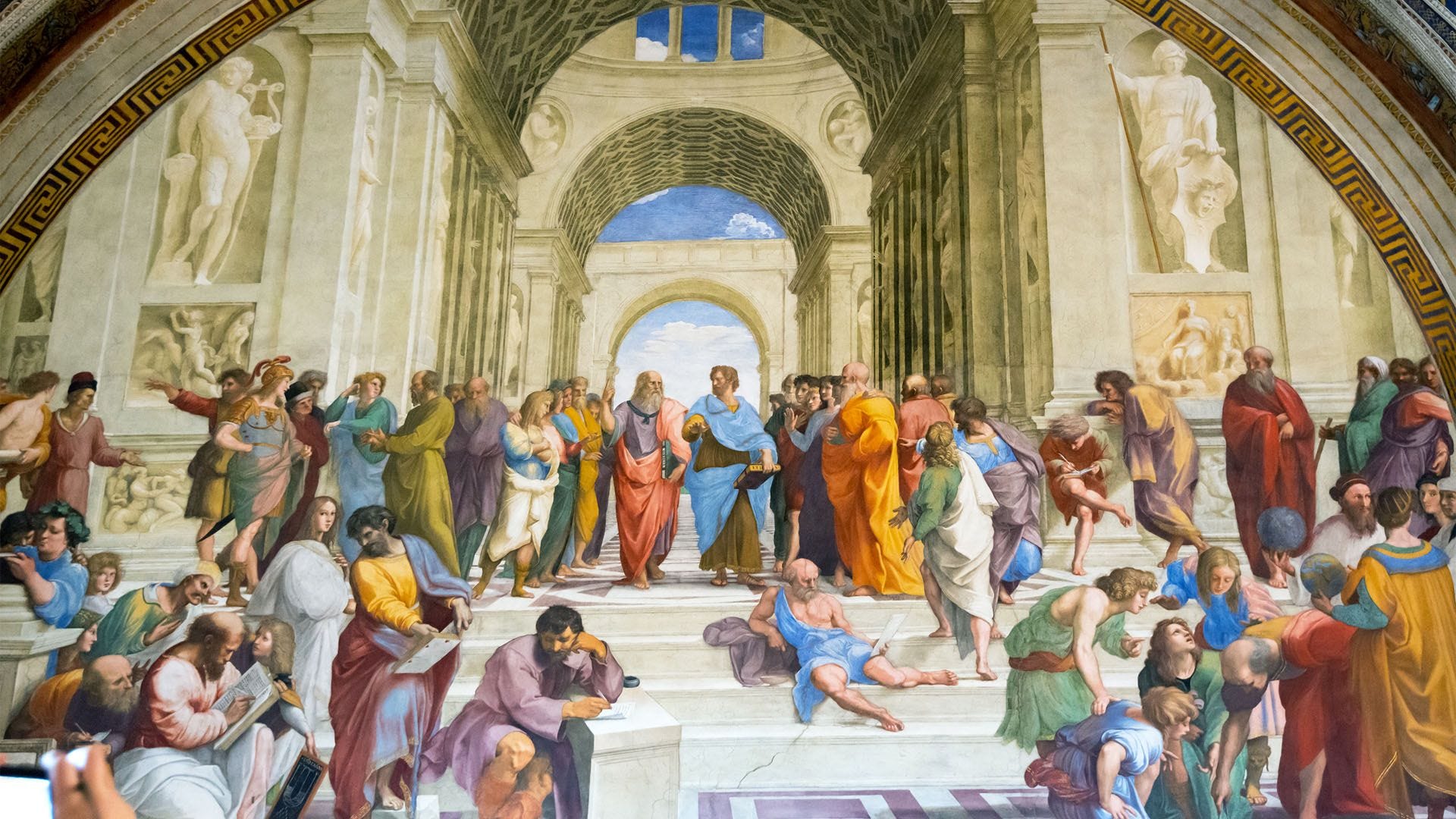
Modern language feels lighter. We speak constantly and casually, and opinions multiply because they cost very little. Words drift away from action, belief loosens from commitment, and thought separates from life. Thinking becomes easy precisely because it no longer binds us to anything beyond ourselves.
That freedom produces a faint but persistent sense of unreality, a feeling that ideas move through us without leaving much behind.
Thought as Encounter
For Plato, knowledge took the form of recollection, a recognition of truths the soul already knew in some incomplete way.
In the Meno, Socrates shows that learning unfolds through questioning and dialogue, not through the passive reception of information. The point is the structure of knowing itself, in which truth emerges through participation rather than private construction.

Thinking happened in conversation… with other people, with tradition, and with reality itself. Even solitude was understood as an openness toward something beyond the self, rather than a withdrawal into mental privacy.
Modern thinking treats this process as a closed loop. The individual mind receives inputs and produces outputs. Dialogue turns into debate. Truth turns into opinion, something defended rather than recognized together.
The Cost of Sovereignty
The modern mind operates as a sovereign, judging and evaluating from a position of distance.
Nothing is allowed to speak for itself. Everything must justify its existence before reason. This posture has produced extraordinary achievements in science and technology, reshaping the material world with remarkable precision.
It has also made meaning more fragile. When meaning is manufactured it becomes easier to discard. When thought is private rather than participatory, it loses its grounding. The modern individual experiences freedom alongside a persistent sense of drift.

This helps explain why contemporary life is saturated with information and yet starved of wisdom, why we think constantly and still feel oddly detached from what we think about.
As Bergson observed, “The eye sees only what the mind is prepared to comprehend,” and a mind trained exclusively to analyze gradually loses the ability to receive.
If AI has lessons to teach us one of the most important is that consciousness is relational. We are *not* brains in a vat. We also are not just walking brains. We are intimately and intricately related to each other, every star in the cosmos, every point in history and every moment in the future. Intelligence is a side effect of acquiring this relationship with our world, NOT the vehicle.
I can't tell you how much I appreciate this. Knowledge has proliferated while wisdom has withered. Connecting back into the ancient narratives brings back a piece of ourselves (plural) and our global community.