


Is intensity a virtue or a vice?
We all have a friend who gets overly passionate about whatever he cares about, even at the expense of more important things. At its worst, this can manifest in addictions or consistent habits that can destroy your life.
In perhaps the greatest novel of all time, The Brothers Karamazov, Fyodor Dostoevsky demonstrates the dangers of being a slave to your own destructive passions. The Karamazov family is full of passion, often to tragic results. But while you can read about the danger of intemperate passions in many places, what makes The Brothers Karamazov unique is that it provides alternatives to a life governed by them.
The three (legitimate) Karamazov brothers provide three ways to handle passion. Only one brother — though he is by no means a perfect character himself — succeeds.
The demonstration results in one of the greatest psychological novels of all time, and shows why we cannot become enslaved by our passions, but we cannot eradicate them, either…
Join our read-along of ‘The Brothers Karamazov’!
We are working through it over the next 7 weeks, in dialogue with each other. The first discussion is on Tuesday, August 4, at noon ET.

To support our mission, please consider a paid subscription. It makes a HUGE difference to the time and resources we can dedicate. You’ll get:
Live book discussions (biweekly) and recordings
Access to our incredible community of readers
Regular essays to guide you through the books we’re reading
The entire library of articles, essays, and podcasts
Dmitri: A Passion for Pleasure
The first and oldest Karamazov brother is Dmitri. Like his father, Fyodor Pavlovich Karamazov, Dmitri is a classic hedonist. He gets himself drunk on a regular basis, revels with prostitutes, and runs around partying. He is engaged in a petty love triangle with his father over a young woman who goes by “Grushenka,” who constantly teases both men without committing to either.

And even when he is not living hedonically, Dmitri is impulsive and fiery — beating others, including his own father, when he becomes captured by his own rage. He is, in every sense, a man enslaved by passion.
Dmitri’s passion ends up destroying his life. He abandons his rich, beautiful, and almost miraculously patient fiancee, Katerina Ivanovna Verkhovtseva, for Grushenka. Moreover, his public rages and open threats against others make him the obvious suspect when a murder takes place, and he is convicted of a crime he did not commit. Dmitri is a miserable wretch, and his passions lead to his own destruction.
Most people in the novel attribute the intense passion to being a Karamazov; it runs in the family. Dmitri’s younger brother Ivan does not handle this well, either. But Dostoevsky does not think that the Karamazovs are helpless to their natures; they can choose how to handle their fiery temperaments…
Ivan: Love of the Intellectual Life
Ivan is the second eldest brother, and he is completely disgusted with Dmitri’s life of decadence. But surprisingly, Ivan is not much happier.
Ivan is a brilliant philosopher and writer. He can argue theological and philosophical points with the best of them, even confounding the learned monks of the monastery. Ivan is an atheist, though he writes thoughtful theological essays almost as a joke.
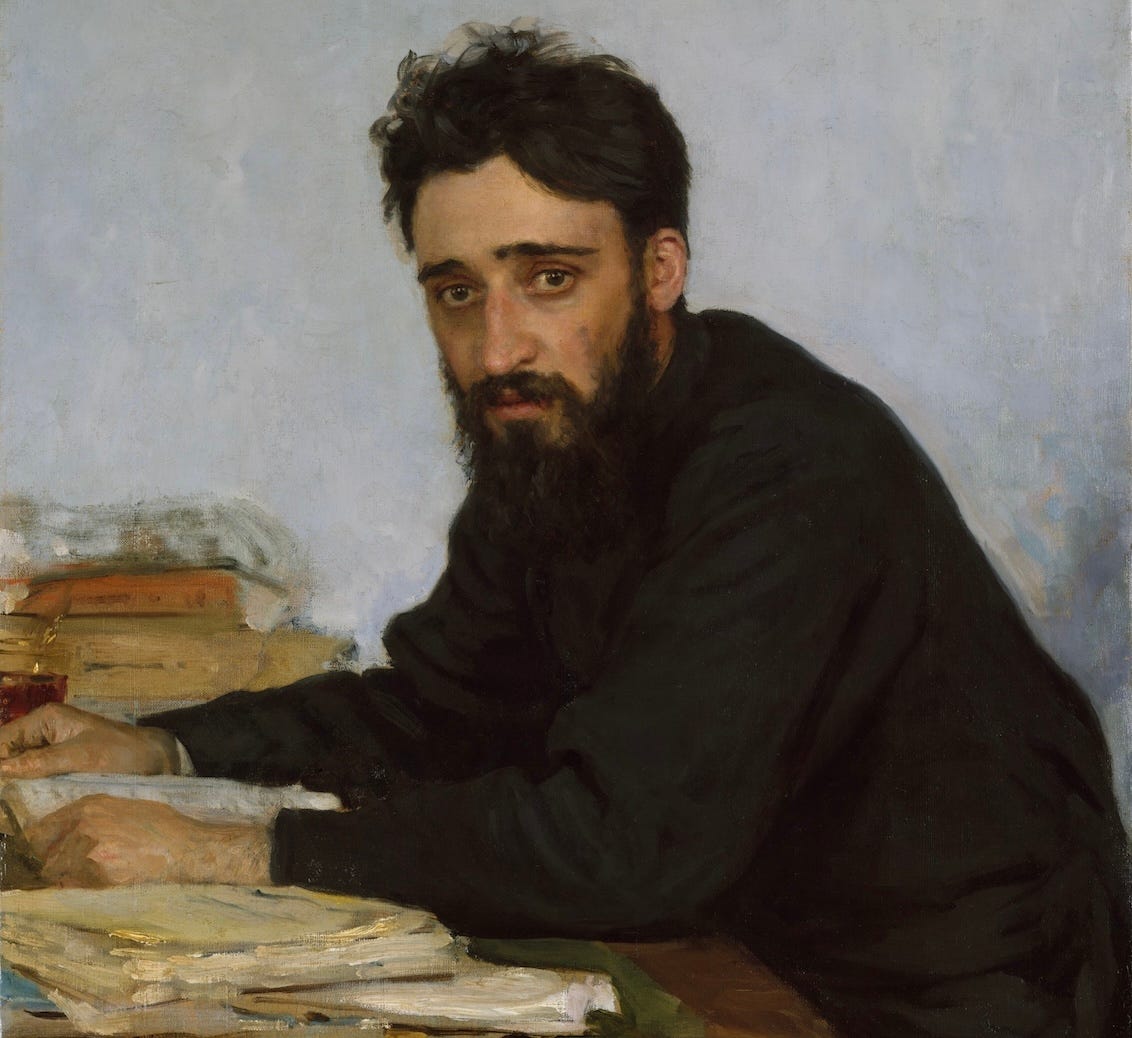
Yet Ivan cannot seem to be happy, either. He does not serve others, does not find true fulfillment in his writing, and seems largely to be waiting for something that never comes. He is also in love with Dmitri’s fiancee, but never speaks of it and represses his emotions.
Ivan’s philosophy, partially a response to his family’s chaos, is destructive in its own right: Ivan later learns that it is precisely his own nihilistic philosophy that led to the murder in the story (though he did not commit murder himself).
Eventually, Ivan’s brilliance collapses into mental disorder. His constant reflections on the problem of evil, and his growing sense of complicity in the murder, lead him into a brain fever and a vision of the devil — the devil is sarcastic and ironic, reflecting how Ivan himself approaches everything from his standpoint of intellectual superiority.
Thus, Ivan battles his “Karamazovic” passion by pouring it into his intellectual life. But this does not satisfy him, either. He is just as miserable as his older brother, and like Dmitri’s hedonism, Ivan’s philosophy ends up destroying both himself and others.
The key to a life lived well with passion, then, lies not in satisfying the passionate desires, nor in directing them toward ironic intellectual detachment. The true path to peace lies in the choices made by the third brother: Alyosha.
Alyosha: The Love of Others
When the novel begins, the younger brother Alyosha is a novice in a monastery. One feels that Alyosha is running from his family’s past, seeking safety in the seclusion.
But the elder of the monastery, a living saint named Father Zosima, soon tells Alyosha that his place is not behind monastery walls — he must go out into the world and live among his family (and get married).
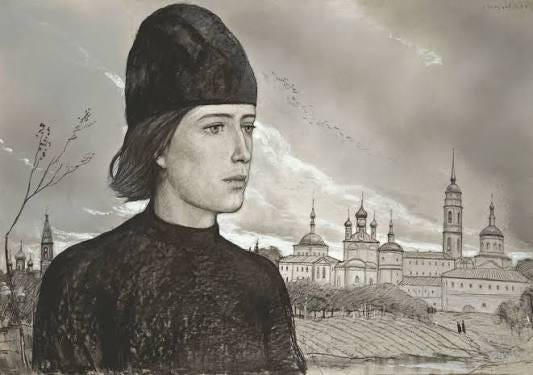
Holiness, we learn, is not found in running away from who we are, but in becoming who we are meant to be. In Alyosha, the passion of the Karamazov family is made what it was always meant to be: one that is passionately on the side of justice and charity.
Many people warn Alyosha that he is a Karamazov like his brothers and father, and therefore will have to reckon with passion as the others do. But Alyosha’s passion is not a passion for intelligence or pleasure; instead, he takes caring for others very, very seriously. When Alyosha learns that Ivan has insulted a poor man, he personally attempts to mediate between Ivan and that family to set matters aright. When he learns of a rift between Katerina and Dmitri, he works to repair that situation, too.
Where Dmitri, Ivan, and their father do tremendous damage to themselves and others, it is Alyosha who sets about making things right. It can seem like Alyosha spends most of the book putting out fires that other people set. And yet, Alyosha is both the happiest and most popular of the Karamazovs. Almost everyone respects and loves him, even his brothers who cannot get along with each other. Whereas the other Karamazovs spend the novel destroying themselves and others, it is Alyosha who serves as the corrective to classic Karamazov passion. He still has it, to be sure, but it is directed in love for others.
It would be tempting to think that Dostoevsky is firmly against strong, passionate personalities in The Brothers Karamazov. But like Aristotle, Dostoevsky is not opposed to strength or intensity; he is opposed to disordered intensity.
In Alyosha, we find a classic example of a man who puts his whole self into serving others. The result is someone who prompts the reader to say, with the final line of the book, “Hurrah for Karamazov!
Join our read-along of ‘The Brothers Karamazov’!
We are working through it over the next 7 weeks, in dialogue with each other. The first discussion is on Tuesday, August 4, at noon ET.

This is my first time joining as a paid subscriber. Where do we get the reading schedule, and how much should we have read for the August 4th discussion?
That time makes it impossible to join since it's right in the middle of work day, especially on the West Coast. Bummer.