

Once your culture is gone, it isn't coming back.
If you want to keep a culture, you have to choose to live it yourself. You have to continually study the books, ideas, and people that created it.
Cultures die — or cease to exist — when they neglect to study their founding ideas. It is enthralling to discuss how, at a few key moments in history, Western culture was saved from a knife-edge by great men or great wars (think the battles of Lepanto or Vienna). Pivotal moments, yes, but it was only thanks to the quiet work done long beforehand that there was anything worth saving.
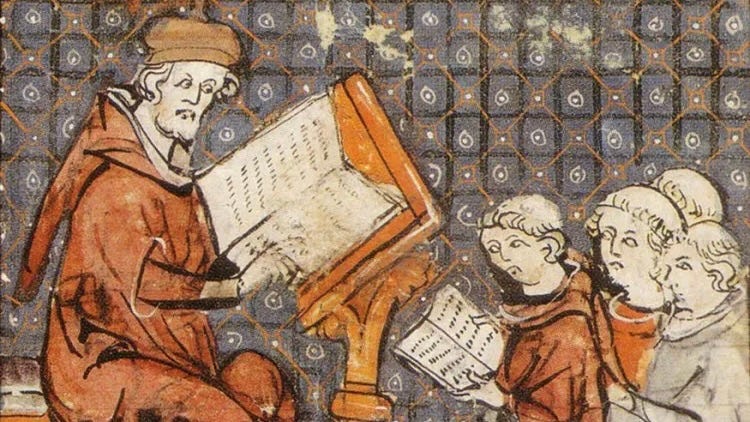
What we call “Western Civilization” only exists because of the hard work spent maintaining it through an exceedingly painful transition. When the Western Roman Empire fell to the barbarians, and centers of learning across the continent were lost forever, it was the monks who took it upon themselves to keep the fire burning.
Without scholars like Cassiodorus in Italy or Gildas in Britain, who between them established a great tradition of manuscript copying and classical education across Europe, we’d know almost nothing of the Greco-Roman world. We’d have no written record of Western thought, and in no meaningful sense would we have the society we know today.
However — be careful not to assume an abundance of records is all you need.
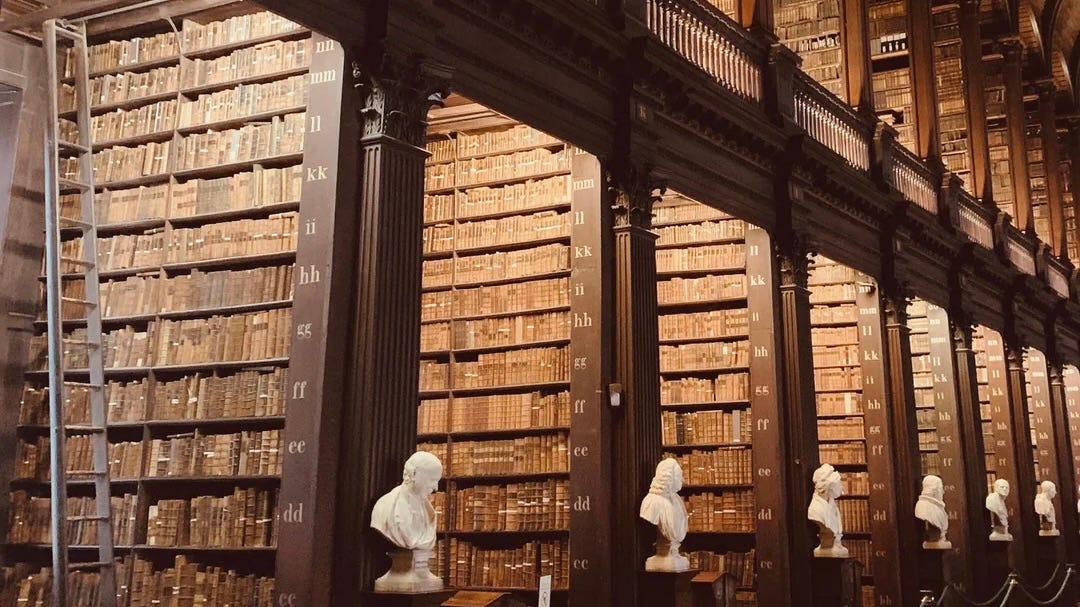
The story of the Library of Alexandria, for example, is often oversold as the loss of a millennium of collective knowledge in one fell swoop, set ablaze by a foreign army. In fact, the Great Library had long been left to decay, and by the time fires ripped it apart, the tradition of learning and preservation it once stood for was largely forgotten. A culture needs more than just shelves of books.
Take Virgil’s Aeneid, which we are currently reading in our book club. The only reason we get to read Virgil today is not because one monk made a manuscript. Manuscripts are easily lost. It’s because readers and educators across Europe collectively decided his poetry was worth passing down — Virgil was deemed essential to the forming of the Western mind, and educators united across centuries agreed.
At Athenaeum, we feel deeply fortunate to have inherited the tradition of philosophical thought and storytelling that the West has given us. That so much of it can be accessed with the click of a button is a miracle.
However, we know that we can never afford to become complacent. No system of records is enough if it remains unused. One must make the conscious decision to pass down what he inherits.
A lot of you have joined this community over the last few days, and we could not be more thankful. We hope you find these resources helpful.
The mission of this book club is very simple: we are an online community interested in studying the great texts of the Western canon, thoughtfully and openly, together.
Every month we study something new. So far, we’ve covered texts like Homer’s Odyssey, Augustine’s Confessions, Dante’s Inferno, Shakespeare’s Hamlet, etc. Texts that represent significant stepping stones in the journey of Western thought.
If you can, please do join our live book discussions. They have been incredibly fruitful recently and we’ve begun to form a wonderful group of regular contributors.
If you have questions about how the book club works (format, pacing, etc.), please check out this FAQ page. If you cannot attend a live session, don’t worry. Everything is recorded and posted here.
We are more energized than ever to help pass down the Great Conversation of Western thought — but we really need your help.
A paid subscription allows us to double down and spend more time building this into a powerful online resource. It doesn’t just fund your own participation, but also our efforts to produce and spread this work widely.
Beyond the live discussions, we write articles, record podcasts (check out our YouTube channel), and post across social media — all with the goal of encouraging others to return to the great books. Your support helps us work hard at it every day.
Remember: we are completely independent. We are funded entirely by the members of this community who wish to keep our efforts going.
All paid members get:
Live community book discussions (biweekly) — and all the recordings
Essays to guide you through the books we’re reading (plus the full archive)
Access to all community discussions (via the subscriber chat)
Ability to vote on what we read next
Very true. Important work you are doing.
Thank you! have noticed, your substack (any substack?) can be found on Bluesky. You might find yet an additional audience there.