

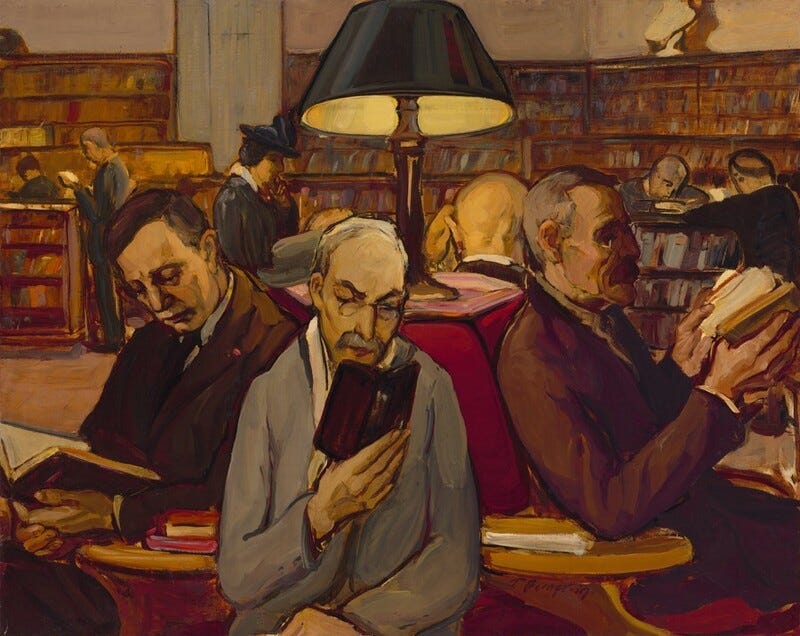
The Athenaeum was founded to resist our age of noise, speed, and amnesia. We are a community of readers who still believe that ideas matter — that Plato, Augustine, Dante, Shakespeare, Milton, and Dostoevsky are not just names in a syllabus, but guides to a deeper and more ordered life.
We are working through the classic texts of the Western canon, together. The Great Books of our tradition have immense depth and insight to offer, but it takes effort to read them, and even more to read them well. That’s what we’re doing here, in dialogue with each other.
So far, we’ve read works like Shakespeare’s Hamlet, Dante’s Inferno, Homer’s Iliad, and Augustine’s Confessions. Works that represent major stepping stones in the great journey of Western thought.
How do I join?
All subscribers to our publication can join the biweekly live streams on Substack. They take place every other Tuesday, at noon Eastern Time, and usually last for 90-120 minutes. You can subscribe here if you’re not already:
All paid subscribers can join the discussions directly: either via Zoom (with mic access), or by asking questions via the Substack live stream chat. Paid subscribers receive a Zoom invite link via email ahead of every call.
Also, please join the ongoing book discussion taking place between sessions inside our subscriber chat.
Who can join?
Anyone. We have complete beginners, literary scholars, and everyone in between inside our community. We may have different backgrounds, but we all have a shared desire to study the Great Books openly and honestly, in dialogue with each other.
Where is the link to the live session?
As a subscriber to our publication, you’ll get all the links to the live sessions emailed to you directly. The links are also posted inside the subscriber chat.
For those who want to join the Zoom discussions directly, all paid subscribers will receive a Zoom invite link via email ahead of each call.
What if I can’t make a live session?
That’s totally fine. We record all the discussions for our paid members and upload them to Substack so you can watch them back any time. You can find all the recordings that we’ve posted to date here.
What is the schedule?
We typically read a new book every 4-6 weeks, split into biweekly discussions every other Tuesday (unless it’s something lengthier that requires more time).
Whenever we start a new book, we share the reading / discussion schedule inside the subscriber chat. You will also receive weekly reading guides from us via email, every Monday.
Shortly after the final Tuesday discussion on a book takes place, we vote on the next book inside our subscriber chat. Members are presented with a list of books to vote on — the one with the most votes wins.
What are we reading?
To see what we’re reading currently, head to our homepage and you’ll see the “Current Read-Along” section near the top, including a link to the reading schedule.
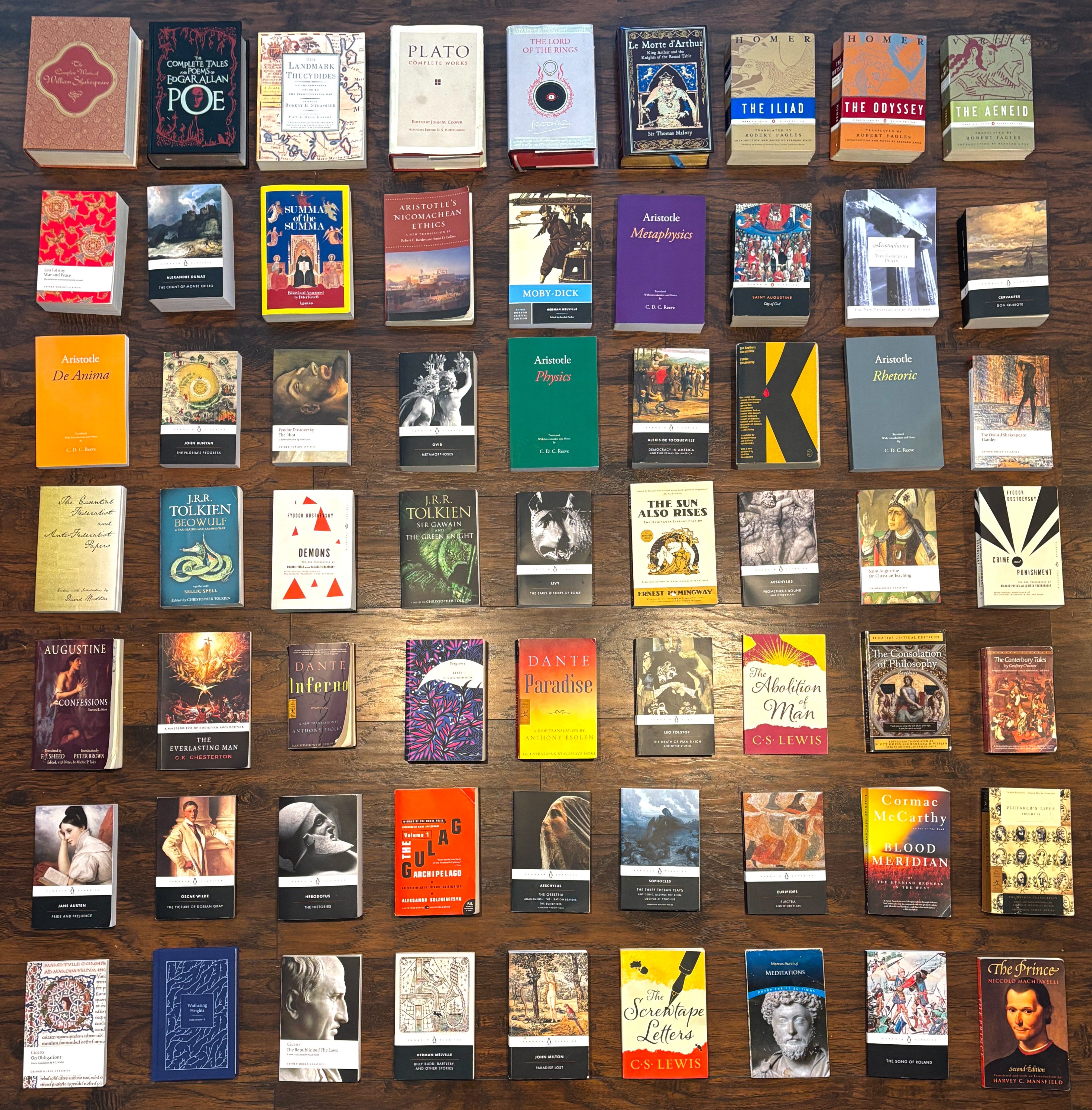
There is no formal reading list, and we are reading through the great texts in no particular order. However, our members vote from a pre-selected list of classics, similar to those in the image below.
We have chosen a list of approximately 60-70 great works that we feel qualified to discuss and explain at length. They are books that tackle the big questions on morality and the human condition, and that have contributed significantly to the great journey of Western thinking — from ancient times to modern.
What is the pace of reading?
Generally speaking, each read-along lasts 4–6 weeks. We have two or three biweekly discussions on each text (unless we are reading something that requires more time).
The chapters discussed during each session will be split roughly equally between each of the sessions — i.e., if we are spreading a read-along over three biweekly discussions, we will broadly split the book up into thirds, etc.
There is no strict requirement to hit a certain number of chapters prior to any discussion. However, if you have read the chapters suggested in the reading schedule, you will get more out of the sessions.
What is the format of the sessions?
These are interactive sessions. The first half (45–60 minutes or so) will typically be a lecture by our expert host, Sean Berube, who will discuss key themes, plot points, and tips for reading, before moving on to the discussion section and Q&A.
All paid members are encouraged to join in directly with questions and comments in the second half, either directly via the Zoom call with Sean, or via the subscriber chat on Substack.
Who is the host?
Sean Berube is an independent scholar and lecturer on the Great Books, shaped by over a decade of disciplined autodidactic study in philosophy, theology, and literature.
He writes and teaches on the great texts that formed the moral imagination of the West. His mission is to help renew the soul of civilization by helping readers rediscover the wisdom of the past.
Where can we discuss the book and our progress?
Please join us inside our community subscriber chat. This is where most book club discussion takes place, and we encourage as much participation as possible. This is a journey that we are all sharing, and the great texts are best studied together.
Also, a few days before each live discussion takes place, we share an overview of the key themes and questions that we will be discussing (inside the subscriber chat).
Are there any other resources to help understand these texts?
Yes. We publish regular articles, essays, and podcasts on the books we are reading in the book club. Head to the essays section of our publication.
In addition, every Monday you will receive our weekly reading/discussion guides to help you stay on pace with the current read-along.
And if you have any questions or thoughts on what we’re reading, please post them inside the subscriber chat! Our lively community exists so that we can help each other work through the Great Books, and test our understanding…
I recently discovered your excellent work and appreciate it highly. Just a suggestion, noon Eastern time is a problem for readers on the other side of the world. I live in Asia, 12 hours from EST. Even for those in Europe, noon eastern time is quite early. I suspect that noon Eastern, 9am Pacific time, is also not doable for quite a few potential participants in the US. Perhaps a session in the evening Eastern time would attract a lot of live participants.
Agreed. This "feels like a quiet form of resistance."
To me, It also feels like a great gathering of individuals who are in the process of emerging from the darkness and shadows of Plato's cave, into the bright light and fresh air of a more complete understanding of reality, where they can also discover their place within it.
There is also a secondary benefit, and that is the subsequent call to be open to sharing what we have found with others, who are also making this journey alongside us.
It is another form of self discovery, of which Dr Ira Progoff often noted in his own work as "The solitary work that we cannot do alone."
Mike