

Hello book club!
It’s time to begin our read-along of Augustine’s City of God. A truly foundational work of the Western canon, and, quite simply, one of the greatest works of Christian thought ever put to paper.
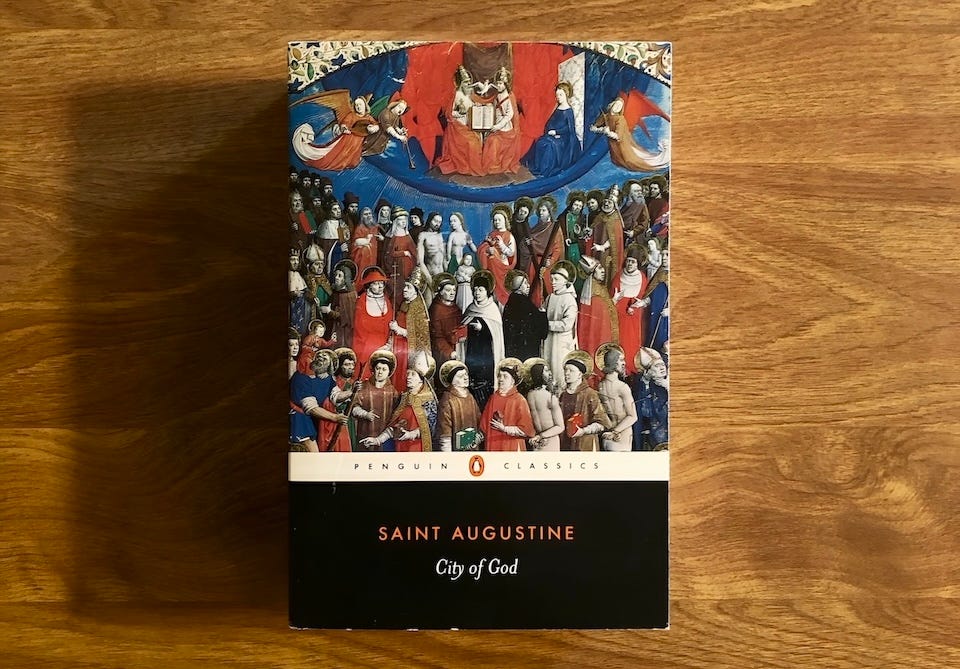
We meet tomorrow, September 15, at noon ET — we’ll be discussing Books 11, 12, and 14 primarily. You don’t strictly need to have done the reading yet, but those of you who have done some will follow the session more easily.
The first discussion will be livestreamed via Substack at this link.
For those joining our discussion group directly (available to all paid members), the Zoom link is at the bottom of this email…
You can join our reading group by taking out a paid membership here:
Now is an excellent time to join. The City of God is a foundational work, and despite being 1,600 years old, it has a stunning amount of insight for the modern reader. Study it with us!
This week’s discussion thread focuses on Book 14. Whereas Book 11 emphasizes the cosmic birth of evil and the fall of the Angels, Book 14 now turns our attention to the Fall of Man.
Saint Augustine begins by clearing up a common misconception. Scripture speaks of the “desires of flesh,” at war with the “desires of spirit.” Many heretics of the day interpreted this in a Gnostic sense, claiming that the soul is in opposition to the body and material world.
Augustine, and Christianity more broadly, rejects this. He insists that nature is created Good, but corrupted by evil. Thus, the proper love of life does not include denying the body, the physical world, or our natural pleasures, but ordering them toward their proper ends, toward love.
Augustine says the correct understanding of “living according to the flesh,” then, refers to man’s rejection of God in favor of self. In other words, man’s destiny in life is determined by humility or pride — will he, to paraphrase John Milton, “reign in Hell, or serve in Heaven?”
This simple “crossroads” defines not just man’s destiny, but the underlying narrative of the cosmos and salvation history as such.
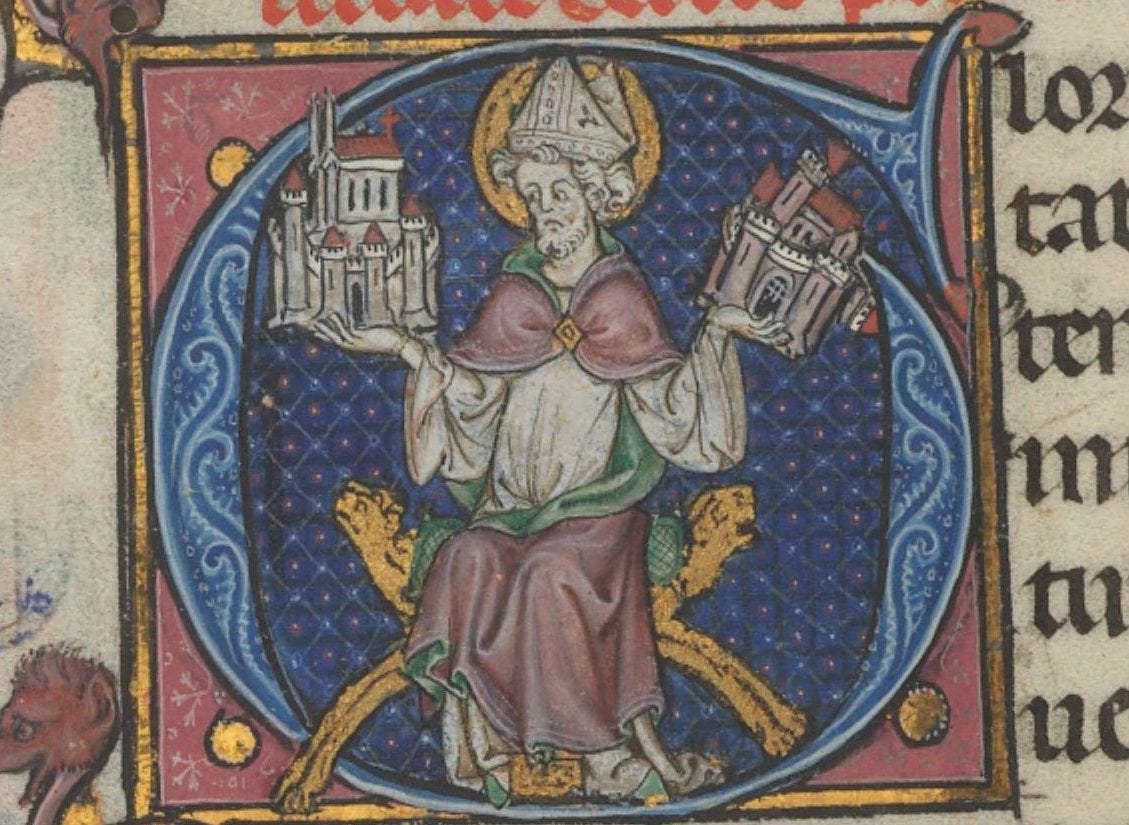
For Augustine, salvation history is quite literally a tale of two cities, ruled by two loves: either love of God or love of self. The man who dares to love God first owes allegiance to the heavenly city, and acts in cooperation with Providence. He becomes a conduit to help “make all things new.” The man who loves himself, however, dooms his destiny to destruction, no matter how clever, powerful, or well-intentioned he may be.
To put it simply, humans are creatures of worship by nature. That which we love most is what we worship, and that which we worship determines what we become.
Some key questions/ideas to ponder:
Augustine’s account of spiritual war is not body vs. soul, but pride vs. obedience. Why does he consider it so important to emphatically reject the Platonic/Manichean notion of “spiritual world = good, physical world = evil?”
“Two loves have made two cities” is one of the most quoted lines in the whole work. Ponder the significance of one’s loves as the arbiter of one’s destiny. Does this cohere with our modern conception of politics? Is the truest form of change to be found in the spirit, as Augustine says, rather than in the reform of institutions, doctrines, and legal systems? Can these two lines of thinking coexist? Or must they be in opposition?
Share your thoughts below or in the subscriber chat, along with any questions you have.