

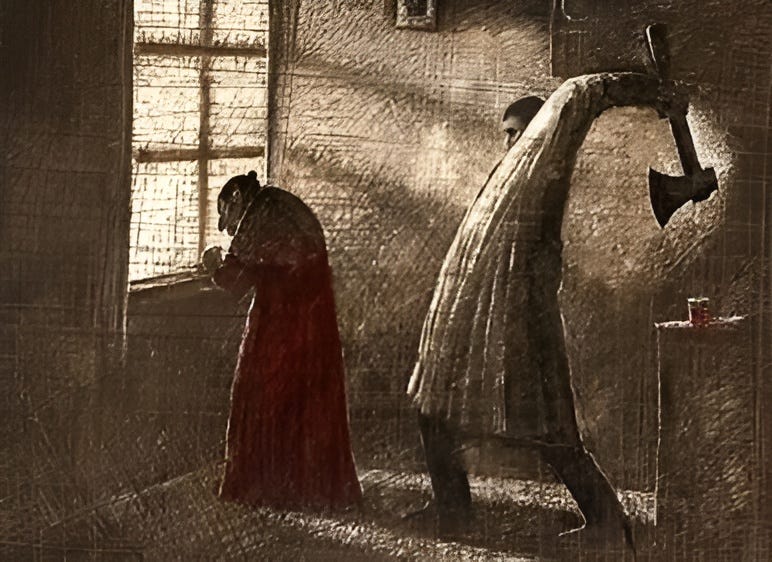
In our last article, we examined how Fyodor Dostoevksy’s novel Crime and Punishment argued for the objective moral evil of murder.
The book showed how sin, and evil more generally, is fundamentally self-destructive. Rodion Raskolnikov commits a murder, but one gets the impression, and indeed the novel seems to endorse the position, that it is Raskolnikov himself who suffers most due to this evil decision.
Most of the novel is concerned with Raskolnikov’s crime and attempts to escape punishment. But one aspect of the novel that is not always noticed is the nature of rehabilitation that is argued for in Dostoevsky’s masterpiece. Raskolnikov’s eventual conversion is not inevitable, even on a narrative level; it is, instead, carefully written, with a close eye on human psychology and the nature of interpersonal relationships.
Today, we are going to talk about the person most responsible for Raskolnikov’s conversion: Sonia.
Don’t forget to join our book club!
We are currently reading Crime and Punishment — the next discussion is on Tuesday, May 26, at noon ET.
If you’d like to support our mission and join our reading group, please do consider a paid subscription. You’ll get:
All live book discussions (biweekly) and recordings
Regular essays to guide you through the books we’re reading
Access to our incredible community of readers
The full library of articles, essays, and podcasts
Why Raskolnikov Committed Murder
As the novel follows Raskolnikov through his struggle with his own conscience, one thing becomes apparent: Raskolnikov is terrified of his own insufficiency.
For just one instance, one of the things that prompts his choice to murder the pawnbroker in the first place is his sister’s financially driven marriage to a terrible man. Raskolnikov is ashamed that his sister would be driven to such meanness, and is willing to do whatever it takes to avoid such shame on his family and, by extension, on himself.
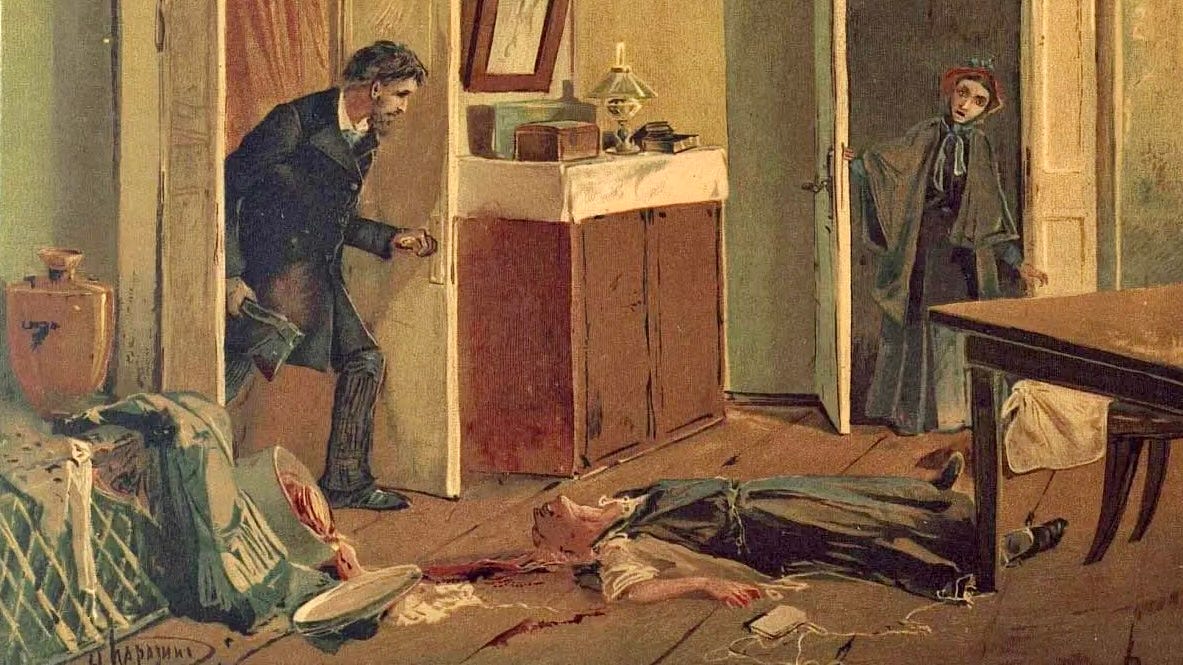
But Raskolnikov has plenty of reasons to be ashamed: he is a failed student. He has little career, less money, and no obvious way to find a new path forward. So, as Raskolnikov himself reflects, the murder is meant to find a way for Raskolnikov to reclaim control and power in his life:
“I wanted to become a Napoleon, that is why I killed her…I saw clear as daylight how strange it is that not a single person living in this mad world has had the daring to go straight for it all and send it flying to the devil! I … I wanted to have the daring … and I killed her. I only wanted to have the daring, Sonia! That was the whole cause of it!”
Raskolnikov is convinced that he is shameful, cowardly and unlovable. The murder is meant to fix that. It is meant to make him strong, courageous and admirable. But as we saw in the last newsletter, it does the opposite: Raskolnikov is even worse off than before.
So, in a fit of desperation, Raskolnikov tries the one thing he has been avoiding: he admits his sin to somebody. The somebody he chooses is the woman who loves him: Sonia.
Why Raskolnikov Tells Sonia
There is a tremendous risk in Raskolnikov telling Sonia about his murder. She could tell the police, after all. But that is not what Raskolnikov fears. What he really fears is that she will abandon him, telling her:
“I asked you for one thing, I came to you for one thing—not to leave me. You won’t leave me, Sonia?...And can you love such a mean wretch?”
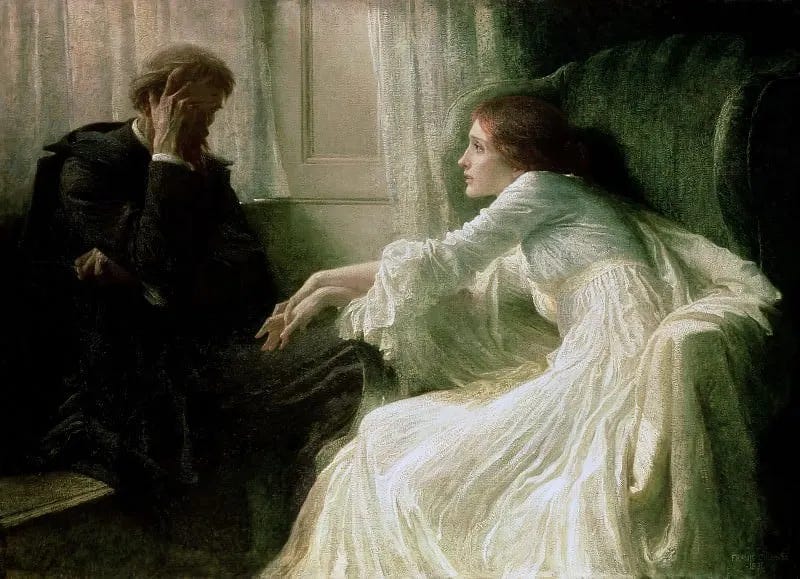
Raskolnikov seems, multiple times, to be most worried with the impact that his story is having on Sonia’s opinion of him; he asks her whether she will leave him, if she can still love him, and what she thinks of him.
The remarkable thing is how Sonia responds: