

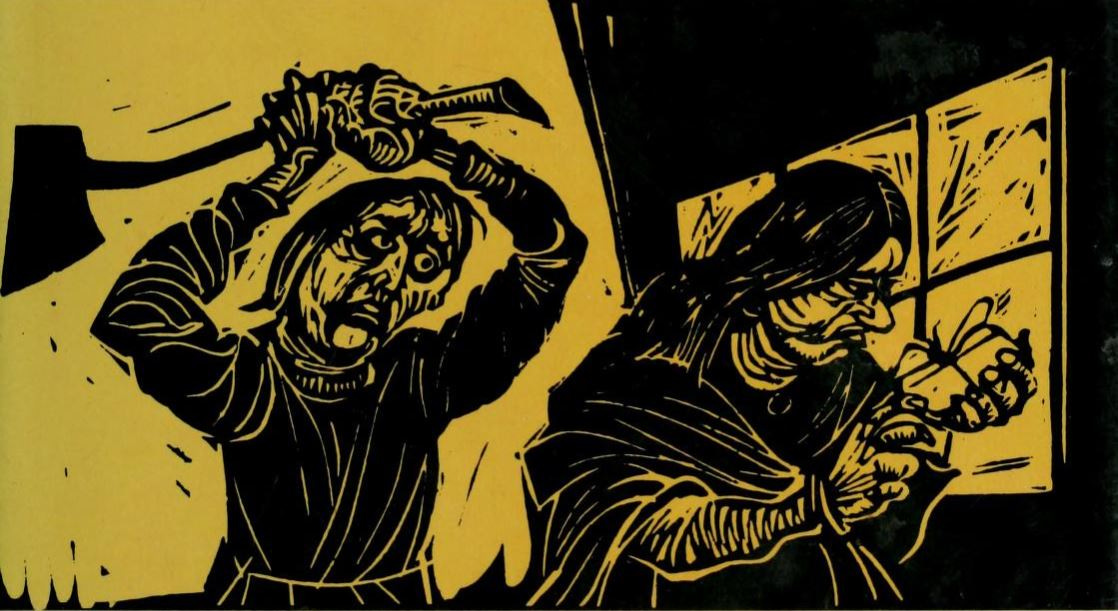
What do you do when you disagree with somebody? Argue with them? Talk behind their back? Make angry comments on social media? What about write a novel showing they were wrong?
That last one might seem out of place; who writes novels to disprove their intellectual opponents?
No less a writer than Fyodor Dostoevsky.
Dostoevsky is most popularly known as perhaps the greatest of the 19th century Russian novelists, but far fewer people know that Dostoevsky is an incisive philosopher who wrote his novels as extended Platonic dialogues.
Today, we will discuss one of his most famous novels, which also happens to be one of his most poignant philosophical parables: Crime and Punishment…
We are currently reading Crime and Punishment in the book club! Next discussion is on Tuesday, May 12, at noon ET.
If you’d like to support our mission and join the community, please consider a paid subscription. You’ll get:
All live book discussions (biweekly) and recordings
Access to our incredible community of readers
The full library of articles, essays, and podcasts
Beyond Good And Evil?
Friedrich Nietzsche famously argued that there were men who were completely beyond good and evil, and could only actualize their ultimate potential by being willing to do whatever it took, no matter how apparently evil, corrupt or shameful, to achieve their ends.
But Dostoevsky beat Nietzsche to the punch by writing Crime and Punishment years before Nietzsche published a word. In it, we meet exactly this would-be superman: Rodio Raskolnikov.
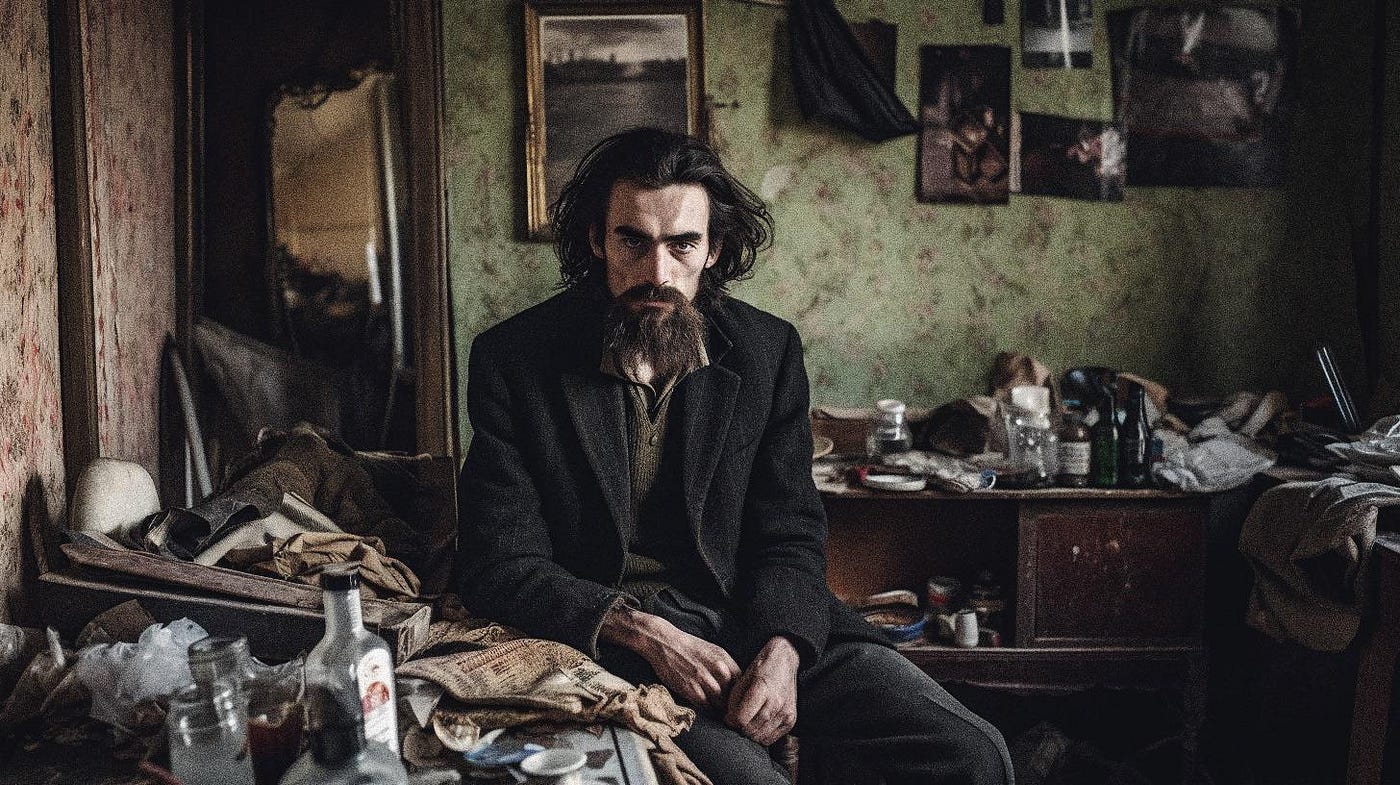
Raskolnikov, a failed university student, is really a rather pathetic figure. He is obviously quite intelligent, but his career has, up to this point, been completely non-existent.
He is penniless, lives in a small apartment and has done very little in his life. Despite this, Raskolnikov is convinced of a proto-Nietzschean argument that he himself has defended in print, arguing in an essay that some great men may transgress moral laws — even to commit grave evils — for a higher purpose. Raskolnikov, of course, thinks that he is one of these great men, and is trying to achieve that success that he knows he is destined for.
The problem, of course, is that Raskolnikov is poor, and he sees no immediate way to get the money he needs. Moreover, the financial need is pressing for more than just himself: his sister is about to marry a terrible man only because she needs his wealth. So, in desperation, Raskolnikov does the only thing he can think of: he murders and robs a despised pawnbroker. In the process, Raskolnikov also has to murder Lizaveta, the pawnbroker’s stepsister, who happened to be there when he showed up. For a purse of money, Raskolnikov is a murderer.
What Evil Does To You
Almost 2400 years ago, the Greek philosopher Aristotle argued that good and evil were derived from our human nature. What was morally right helped our human nature achieve its ultimate end, and what was morally wrong did the opposite. But unlike many modern philosophers, Aristotle did not take our “ultimate end” to be self-determined. We do not get to choose what our ultimate end is; it is determined by our nature itself.
This means that morality is not just about following rules. Really, it is about avoiding self-destruction: when you do evil things, it leads to the degradation of your own personality. When you do bad things, you become less happy, less healthy, and less yourself.
And this is exactly what happens to Raskolnikov: rather than become a superman who is above good and evil, he becomes a nervous, pathetic wreck. He faints in the face of investigation. The murder, as well as its subsequent cover-up, eats away at Raskolnikov constantly. The only salvation available to him is offered, ironically, from his friend Sonia, a prostitute who also happens to be in love with Raskolnikov.
It is Sonia who fully realizes the effect that this crime is having, not on society or the victim, but on Raskolnikov himself. Raskolnikov admits the murder to Sonia because she was a friend of Lizaveta. And Sonia responds, not with anger, but tragic sadness:
“‘What have you done—what have you done to yourself?’ she said in despair, and, jumping up, she flung herself on his neck, threw her arms round him, and held him tightly. [...] ’There is no one—no one in the whole world now so unhappy as you!’”
Sonia is no stranger to evil; she is a devout Christian who went into prostitution out of desperation, and knows how sin can destroy a soul.
That makes her the perfect person to bring about Raskolnikov’s conversion.
From Crime To Punishment
To Sonia, it is obvious what Raskolnikov must do: he needs to turn himself in.
“‘Well, what am I to do now?’ he asked, suddenly raising his head and looking at her with a face hideously distorted by despair.
‘What are you to do?’ she cried, jumping up, and her eyes that had been full of tears suddenly began to shine. ‘Stand up!’ (She seized him by the shoulder, he got up, looking at her almost bewildered.) ‘Go at once, this very minute, stand at the crossroads, bow down, first kiss the earth which you have defiled and then bow down to all the world and say to all men aloud, ‘I am a murderer!’ Then God will send you life again. Will you go, will you go?’ she asked him, trembling all over, snatching his two hands, squeezing them tight in hers and gazing at him with eyes full of fire.
He was amazed at her sudden ecstasy.
‘You mean Siberia, Sonia? I must give myself up?’ he asked gloomily.
‘Suffer and expiate your sin by it, that’s what you must do.’”
Sonia sees what Raskolnikov cannot: only by bringing himself back into justice, by acting virtuously again, will it be possible for Raskolnikov to be happy. And, incredibly, Sonia assures him that he will not be alone; she will go with him, and help him, even while in Siberia.
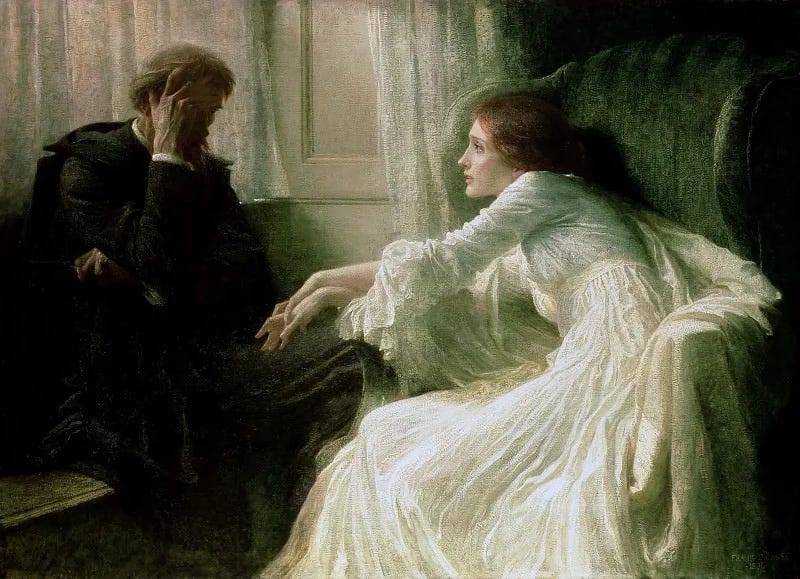
Despite initially resisting, the power of Sonia’s love and his own misery compel Raskolnikov to do what she asks: he admits to his crime, even though somebody else was almost guaranteed to be convicted for it. And so Raskolnikov goes to Siberia, but not alone: Sonia follows him, and her love in the midst of Siberia ultimately wins his repentance and his reformation.
What is brilliant about Crime and Punishment is that the greatest damage to Raskolnikov is not the legal or social consequences that eventually catch up to him. Instead, Raskolnikov’s actions destroy him bit-by-bit from the inside. Where Raskolnikov thought that his own superiority would allow him to commit crimes with impunity, he finds that it is the personal cost that actually damages him.
Thus Dostoevsky makes a poignant argument that morality is objective. And if we live according to our own will, and to our own ambition, disaster is lurking.
Evil lures us with temptations and great promises, but ultimately, Dostoevsky shows that evil is self-destructive. And when we have committed a crime, punishment is not just required; it is the only way to stop the destruction.
Thank you for reading!
Please do join our read-along of Crime and Punishment if it interests you. All paid subscribers to Athenaeum can participate in the live discussions via Zoom (or via the Substack live streams if preferred).
The next discussion is on Tuesday, May 12, at noon ET — come join our fantastic group of readers!
It might be interesting in addition to what you've written here to contemplate Number 35:33 where is states that murder defiles the land, a sin which can only be expiated by the death of the murderer. "Defiles the land" is a fairly mystical reason why murder is evil and not readily apparent to our way of thinking.
I think Raskolnikov murdered the pawn broker and not the land lady. And I don’t think this is a trivial point.