

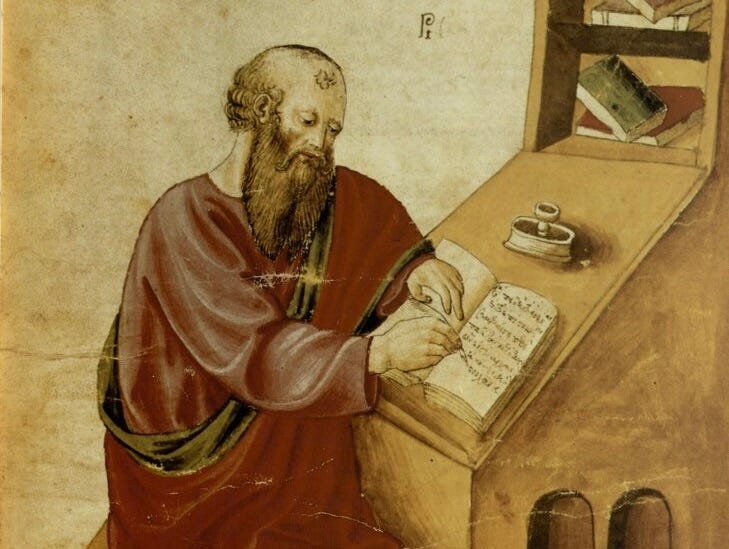
Systems of education today are dramatically different to those of past societies. We often forget just how much has changed.
This is not merely to say that the subject matter has changed along with advances in human knowledge. Today, the philosophy of public education has been reduced almost entirely to careerism — you must attend school in order to get a job and make money. It is difficult to overstate how devastating this philosophy is, and what has been lost with it.
Ancient and medieval societies had a radically different idea of what education should be. It wasn’t about readiness for work, but cultivation of the moral and intellectual virtues that free the mind.
So what does that education look like?
Traditionally, a liberal arts education was built upon seven disciplines. But rather than a set of disconnected “subjects,” each discipline built on the other, forming a systematic track to shape you into a harmonious union with Truth, Beauty, and Goodness.
Once you understand these disciplines and master them, your education will shape your mind and soul to live well — and to discover your life’s destiny…
Don’t forget to join our book club!
We are currently reading Dostoevsky’s The Brothers Karamazov! The next discussion is on Tuesday, September 1, at noon ET.
Watch the recordings of previous sessions here.

To support our mission, please consider a paid subscription. It makes a HUGE difference to the time and resources we can dedicate. You’ll get:
Live book discussions (biweekly) and recordings
Access to our incredible community of readers
Regular essays to guide you through the books we’re reading
The entire library of articles, essays, and podcasts
The Trivium — Learn to Think and Speak
These artes liberales, or the “tools of freedom,” were “liberal” because they were the kind of things studied by free men, as opposed to strictly practical education (e.g., agriculture or toolmaking) for servī, "slaves." Free men were able to seek knowledge that wasn't for a pre-defined purpose, but instead to transform them personally. Music, for example, was studied not for its practical uses, but for its effects in purifying the soul.
From the 12th century, a standard university course was built on the trivium and the quadrivium. The first three disciplines, the trivium, consisted of grammar, logic, and rhetoric. The trivium has one underlying purpose:
To train the mind to think and speak properly.
1. Grammar
It begins with grammar. Traditionally, grammar was not a bland set of rules, rather, grammar explained how language itself carries meaning and how ideas are built and structured. It trains the mind to notice patterns, distinctions, and nuances in communication.
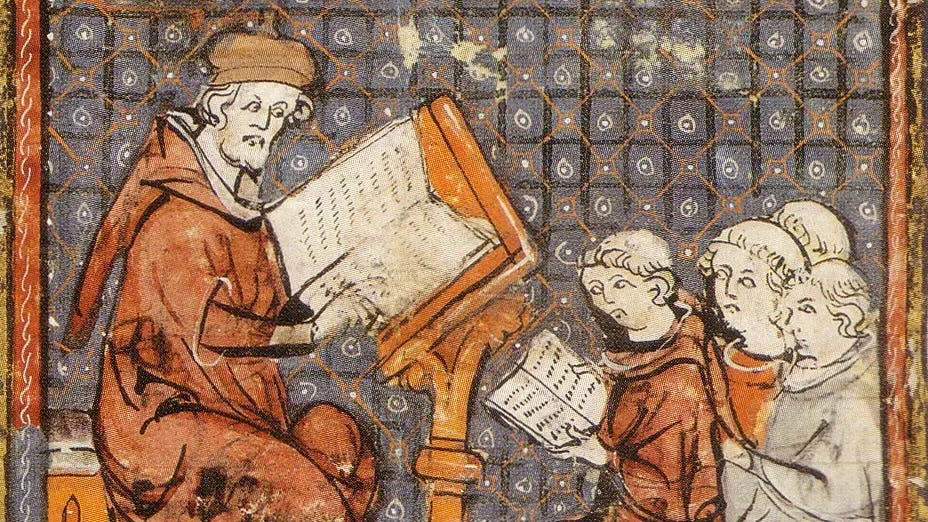
For instance, consider the sentences:
“Let’s eat, Grandma.”
“Let’s eat Grandma.”
One comma changes the sentence’s entire meaning.
So, it’s not just about arbitrary rules to write well — grammar trains your mind to think systematically and use language to express meaning with precision. Naturally, this skill leads into the next discipline.
2. Logic
Logic is the discipline of reasoning itself. Grammar gives you the tools to form sentences, but logic teaches you how to analyze those sentences up against truth. You learn the process of composing sound arguments and discerning fallacious ones, and the goal is to rationally deduce sound knowledge that can be trusted.
Consider, for instance, this famous syllogism:
Premise 1: All humans are mortal.
Premise 2: Socrates is a human.
Conclusion: Therefore, Socrates is mortal.
Ultimately, logic is the bridge between knowing words and knowing ideas, to discover truth. At this point, you’ve learned to think and speak, and are now ready for the third discipline.
3. Rhetoric
Rhetoric is the art of persuasion and expression. It teaches you how to express your ideas effectively.
Speaking truthfully alone isn’t enough to win a debate or garner support for your cause. There is an art to persuasion that must be mastered if you want to move the minds and souls of your loved ones to accept Truth.
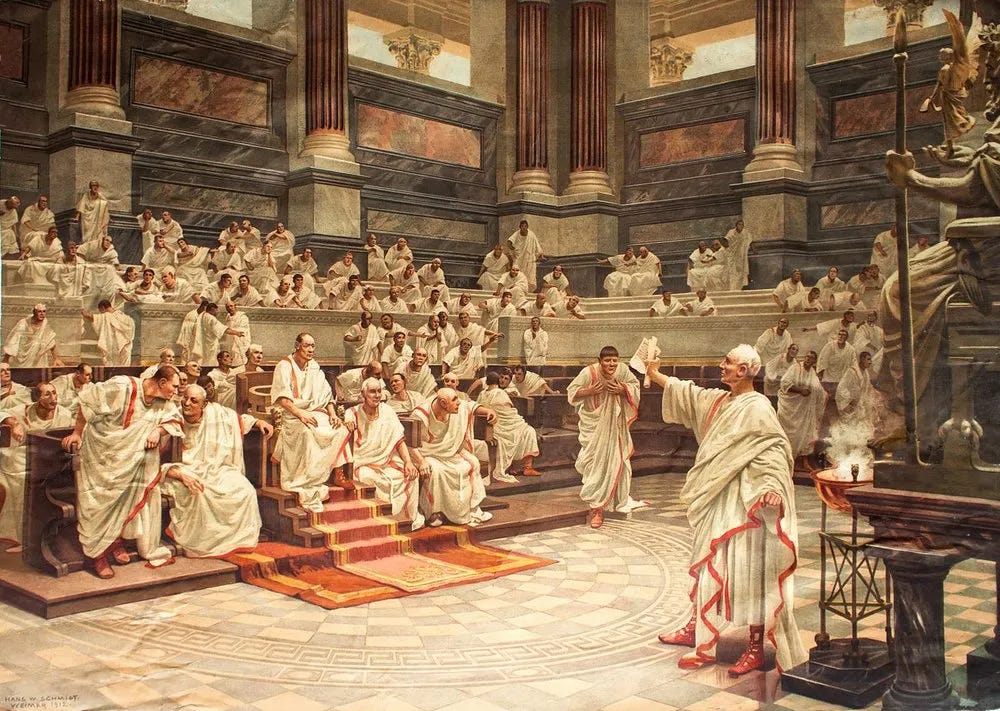
This is the discipline that changed destinies in the ancient world. Greco-Roman antiquity saw the rise and fall of civilizations, spurred on largely by the rhetorical excellence of magnanimous statesmen.
This wisdom still rings true to this day — if you want to make a mark in this world, you must learn to communicate effectively. You must learn the art of rhetoric.
With this third discipline in line, you’re now prepared for advanced education in the liberal arts.
The Quadrivium — Learn the Patterns of Reality
The quadrivium is studied after the trivium. It consists of Arithmetic, Geometry, Music, and Astronomy. Unlike the trivium, which is about how we think and communicate, the quadrivium is about how the universe itself is ordered.
It teaches your mind to see patterns, relationships, and harmony everywhere. Most important, it trains you to see your relationship to that reality (more on this later)…
4. Arithmetic
First, arithmetic is the study of numbers and quantity (addition, subtraction, fractions, etc.) But why should we understand mathematics in the first place (beyond the practical utilities in the workplace)?
Well, a deeply mathematical mindset helps you to understand abstract thinking, reasoning, and basic pattern recognition. This pattern recognition acts as a ladder to greater heights of the intellect.
5. Geometry
Geometry comes next. Building on our arithmetic skills, geometry investigates shapes, space, and the relationships between points, lines, and surfaces. This teaches you logical deduction and visual reasoning, or understanding how parts relate to a whole.
For example, Pythagoras’ theorem (a squared + b squared = c squared) isn’t just an abstract formula, but a means of discerning order in space.
Through geometry, you understand that the material world is ordered, with concrete manifestations of harmony underlying these mathematical equations. You now can perceive structure in everything — architecture, ethics, business systems — because order in space mirrors order in thought and the cosmos.
Soon enough, you start to see an underlying beauty in these patterns. You’re now ready for the next discipline.
6. Music
Music is the next discipline of the quadrivium. It’s not just about playing instruments and making beautiful sounds, but ultimately understanding proportion, harmony, and mathematical relationships in sound itself.
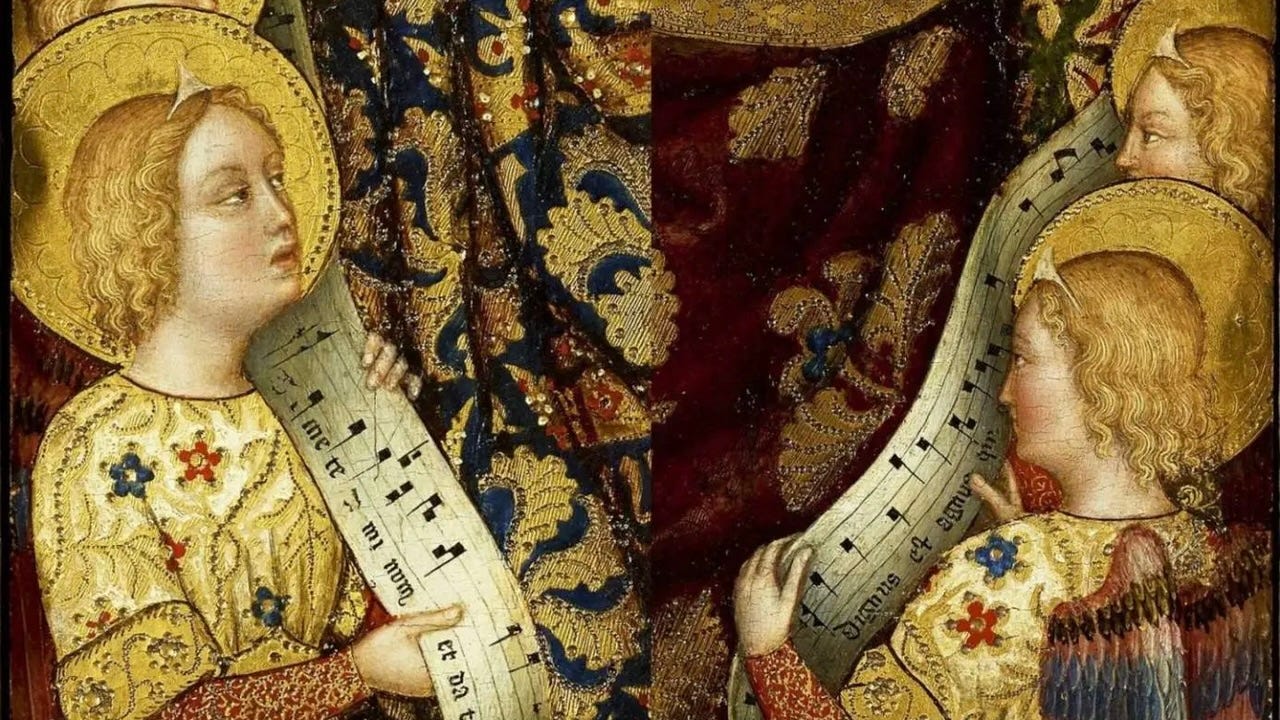
Consider the classical idea of the musical scale: the octave, fifth, and fourth are all ratios (2:1, 3:2, 4:3). A discernment of these patterns helps you understand not just pattern recognition of reality, but also how beauty is interwoven into the fabric of existence itself.
Music teaches that the universe has rhythm and proportion, and that certain patterns create harmony, others discord. Implicitly, you recognize which patterns are harmonious in reality, and which patterns cause discord.
This goes beyond music, and can inform your moral life. You recognize that life is about discerning a harmonious relationship of reality via pattern recognition of truths that underlie its substructure. In other words, do good so that you can be in harmony with the goodness underlying the cosmos.
7. Astronomy
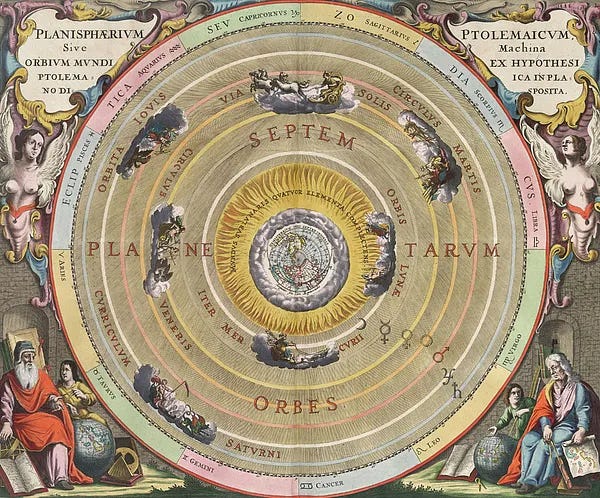
Speaking of which, the cosmos is the final discipline. Astronomy studies the movements and patterns of celestial bodies. Discerning the patterns of the cosmos reinforces the idea that reality is governed by a law and order that points to a higher mode of being, and perhaps a greater transcendental reality.
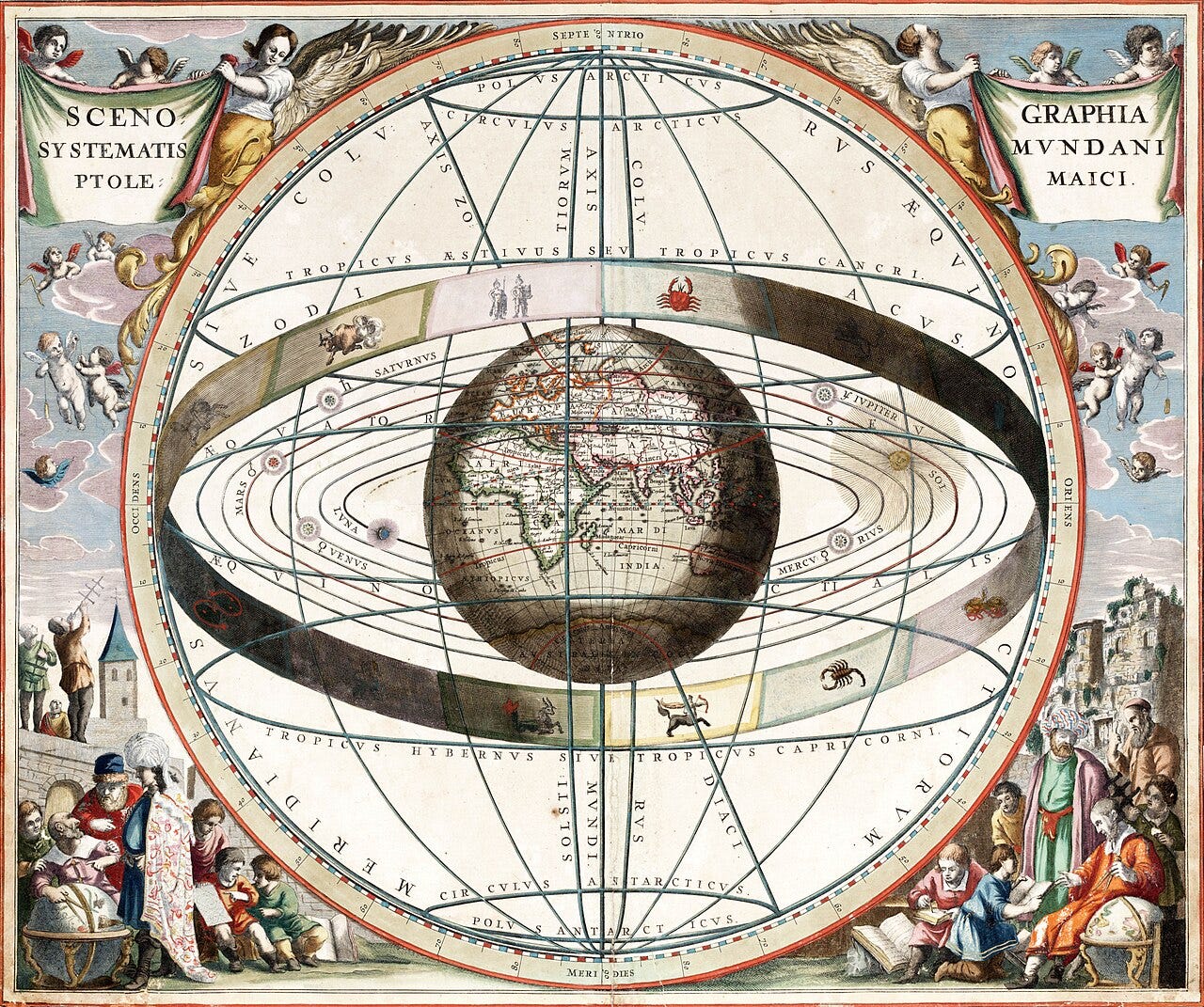
The study of the heavens cultivates awe, curiosity, and a sense of proportion. You begin to recognize that education itself is an embodied experience.
In other words, you have a soul that partakes in a relationship with the cosmos. The same beauty in space rings true in your soul. You share an intimate relationship with a greater whole, and discover that there is a unified beauty hidden behind all of Being itself.
And finally, having completed the seven liberal arts, you’re ready for the next level of education — one that reveals the unity and beauty behind all of Being…