

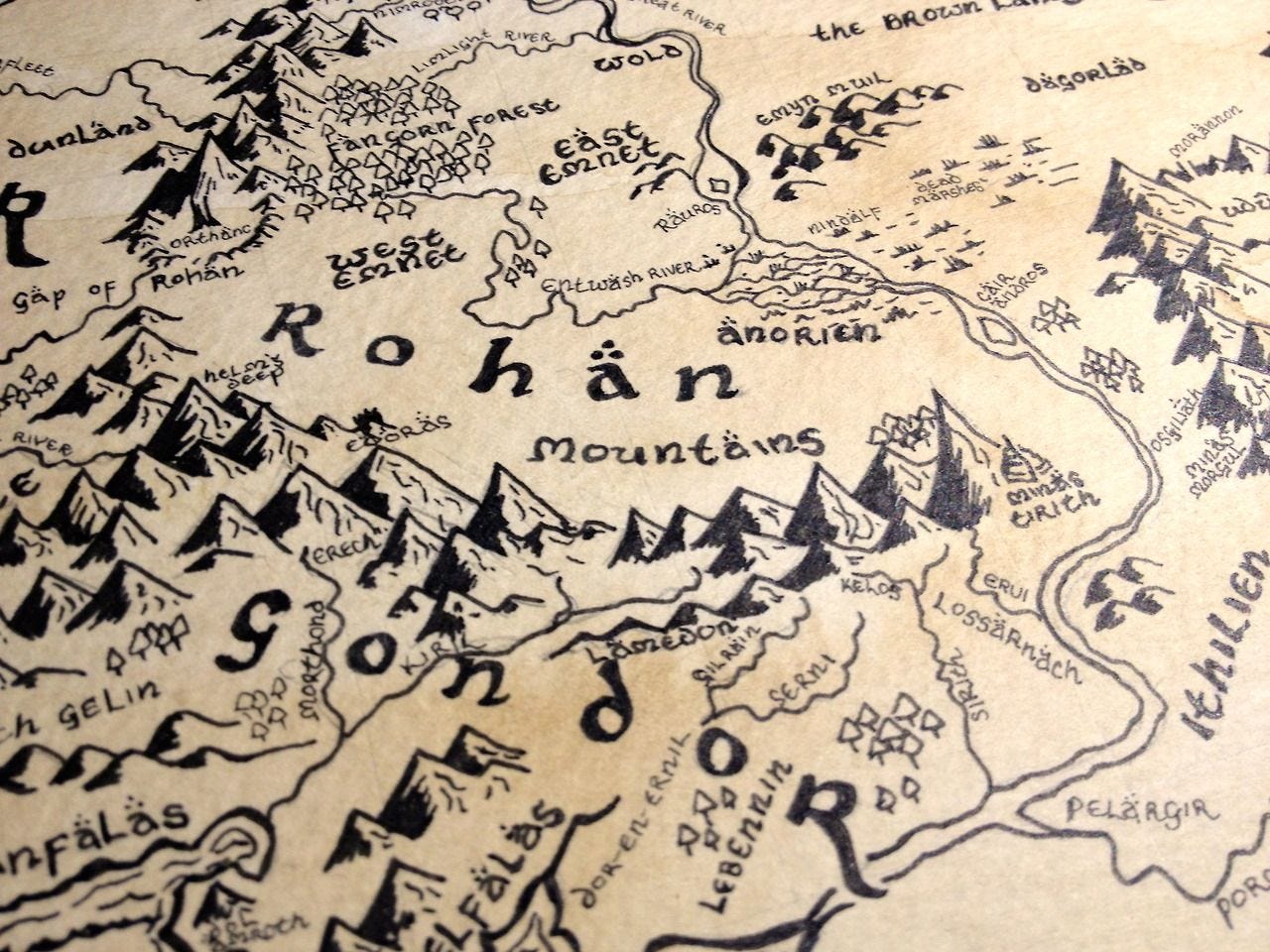
We are the most entertained people in history, but might we be the least creative?
Nowadays, it is frighteningly easy to spend the best part of a day consuming the creations of others: listening, streaming, scrolling. For most of us, the ratio of consumption to creation has never been more lopsided — and yet, the tools of creation are more accessible than ever.
Let me establish at the outset that consuming art is itself a worthy pursuit. But if this is all you do, what are you giving up?
G.K. Chesterton once wrote that a culture has become decadent when its people prefer to pay others to dance for them, rather than a whole room of people doing the dancing for themselves.
This matters because creation is not just a joyful addition to human life, but the defining feature of it. This is an argument made by several great writers, from Ruskin to Chesterton to Tolkien: that created beings are designed to create things themselves.
This article examines why — and importantly how — we must all pick up a pen or a brush, and bring into the world something of our own…
Thank you for being part of our mission! If you’d like to support us and join the book club, please consider a paid subscription. You’ll get:
All live book discussions (biweekly) and recordings
Access to our community of readers
The full library of articles, essays, and podcasts
We have just voted to read Dostoevsky’s Crime and Punishment next! The first discussion is on Tuesday, April 28, at noon ET — join us!
Learn to See
At the foundation of why creating things matters is the following: you never really notice the world until you try to reproduce some part of it.
Anyone who has tried their hand at sketching, for example, knows this. You thought you knew what a tree or a bicycle looked like, and then you sat down with a sketchpad and realized you had never truly looked at one.
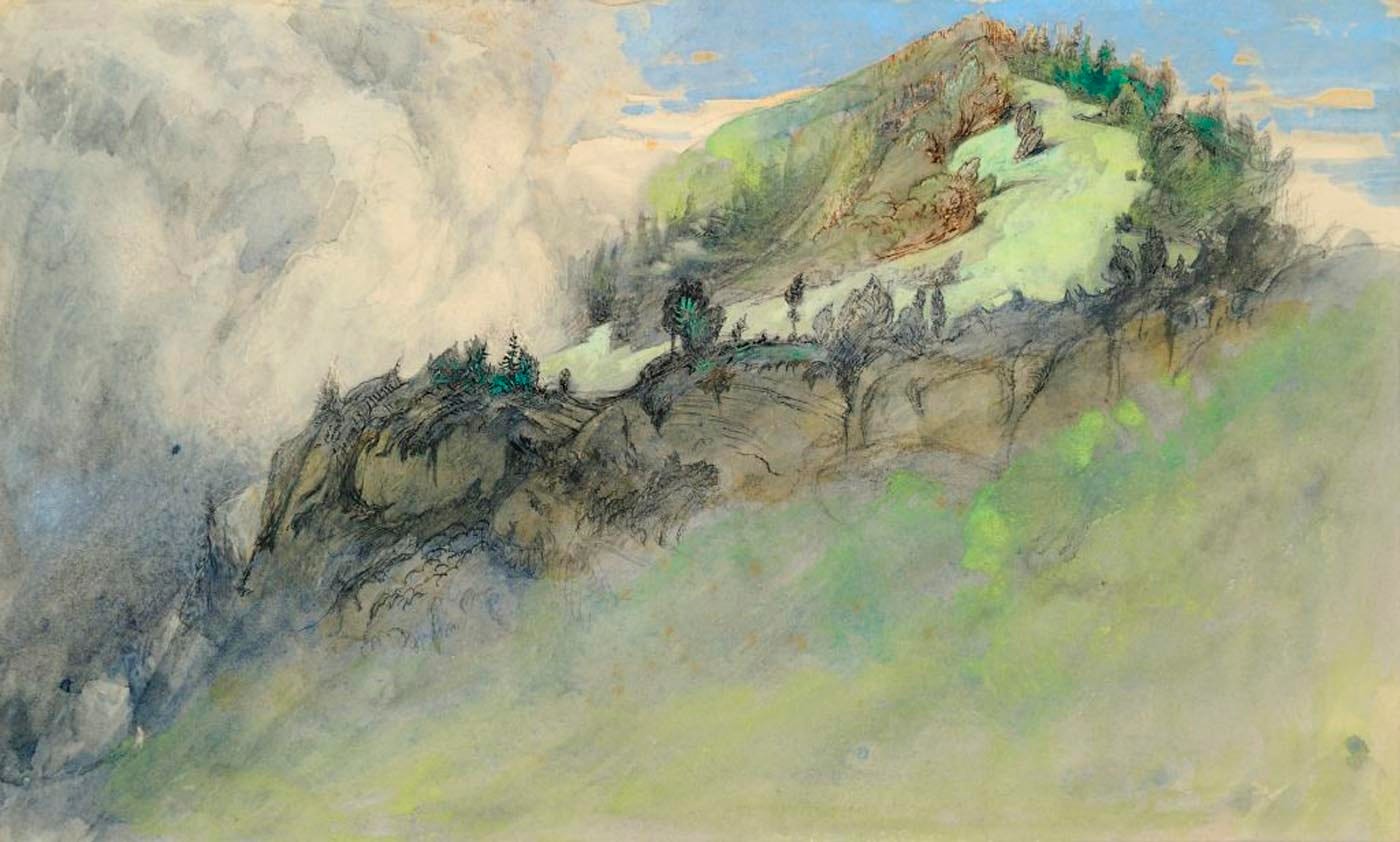
English polymath John Ruskin believed this so fervently that he set up a rudimentary drawing school in Oxford to encourage others to learn how to see. He wasn’t concerned so much with the actual art they produced, and never sought to train artists — he merely hoped to prompt ordinary folk to “see greater beauties than they had hitherto seen in nature and in art, and thereby gain more pleasure in life.”
To Ruskin, drawing was the process by which you educate the eye, and come to consume the world more meaningfully. Where many think the creative act is about departing from the world to imagine something entirely new, it is really about the creative process that brings you into fuller participation with what’s already there.
Fight Cognitive Atrophy
Writing is another form of creation, perhaps the most important of all.
Just as sketching a tree branch helps you to see the tree, composing words about something confers a new understanding of the thing you are communicating. You can see a concept anew by forming your own words about it.
When you log into ChatGPT and ask it to compose a paragraph or email for you, you are depriving yourself of this most precious faculty: the thinking process that is writing. LLM users, abdicating their duties as humans born with the capacity to think, risk losing that ability by way of cognitive atrophy. Each time they defer to the chatbot, the more their ability to think deteriorates — many of us are aware of this new danger and attempting to limit our AI exposure already.
Similarly, if you abdicate your wider creative duties (to compose stories, songs, drawings, etc.), you risk losing a profoundly important part of yourself. The creative act is part of you, and one that you cannot afford to lose…
Satisfy Your Innate Desire
There is a school of thought that argues that humans, as beings of a created universe (indeed, created beings), are thereby designed to create themselves.
Dorothy L. Sayers, an Oxford contemporary of J.R.R. Tolkien (and honorary Inkling in my view), made this compelling argument in her book, The Mind of the Maker. In it, she argues why the desire to create is an integral part of the human experience.
When we turn back to see what [the author of Genesis] says about the original upon which the ‘image’ of God was modeled, we find only the single assertion, ‘God created’. The characteristic common to God and man is apparently that: the desire and the ability to make things.
It is through the process of imaginative creation that a human being in some sense emulates the God of Genesis: creating something out of nothing.
It is the artist who, more than other men, is able to create something out of nothing. A whole artistic work is immeasurably more than the sum of its parts.
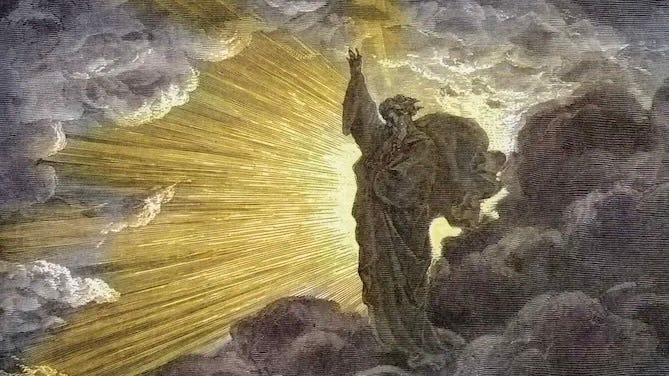
This is also how J.R.R. Tolkien thought about the creative act. The ‘Lord of the Rings’ author famously wrote that every human being carries a deep impulse to “sub-create” secondary worlds: to take the raw material of the primary world they inhabit and fashion from it something new.
As I compile this article, I’m aware how easy it is to talk about the importance of creation. In reality, creating things is hard. Sure, we might all be happier writing novels of our own, but here comes the objection: “my life is busy.”
If you or I even get the time to write or paint something substantial, how can we be sure of creating anything worthwhile? And what if we never finish? How does one find the time to be a creator amid the duties of modern life?
Here, I want to introduce the advice put forward by Tolkien himself. He knew that for most of us, there is rarely the time to pen a novel or sculpt a masterpiece. Creation must be thought of another way, and it must take place in the margins of ordinary life.
So, here’s what Tolkien revealed about the struggles and rewards of the creative act — and how creation must work in practice for you and me…