


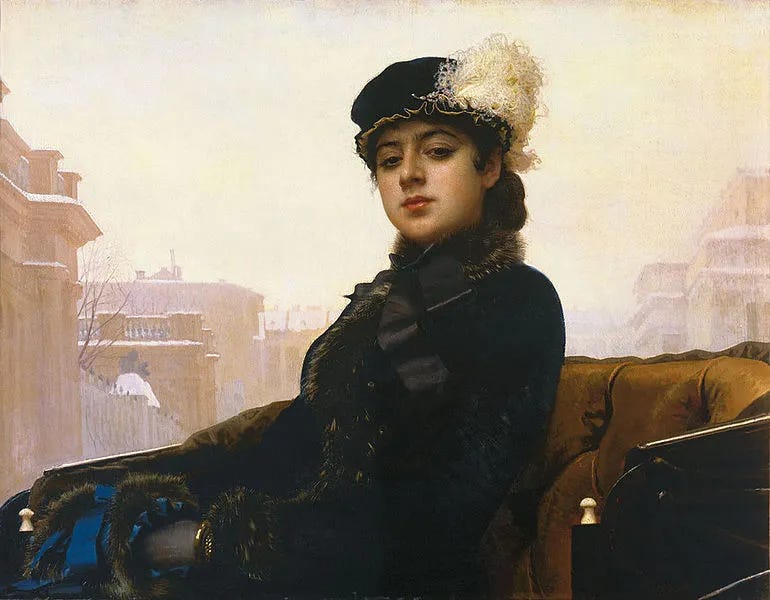
“Happy families are all alike; every unhappy family is unhappy in its own way.”
With this, one of the most memorable opening lines in literature, Leo Tolstoy opens the greatest romance novel of all time. His masterpiece has everything you would expect from a powerful love story: a beautiful, charismatic woman named Anna; a charming, suave military officer named Vronsky, who woos her; and their eventual decision to run away together and travel across Europe.
Except… not really.
The novel is a classic, and undoubtedly a great love story. But Tolstoy had a much larger ambition: to make a powerful argument about what truly makes us happy.
The romance itself is far less straightforward than you might expect. But what makes the novel unforgettable is not simply its love story; it is the profound questions it raises about what it means to live a virtuous and happy life.
You will never forget reading Anna Karenina or the fundamental questions about the human experience that it explores…
Our new read-along is about to begin!
We will read Tolstoy’s Anna Karenina together over the next 6 weeks. The first discussion is on November 24 — see the reading schedule here.
Read the Great Books with us, and you’ll get:
Live book club discussions (biweekly) and recordings
Weekly reading guides and regular essays to guide you
Access to our incredible community
The entire library of resources, essays & podcasts
Ability to vote on what we read next
What Makes a Good Marriage?
Tolstoy presents four different couples in the novel. Three of them are, as Tolstoy mentions, unhappy in their own way.
The first couple we learn of is Stepan Oblonsky and his wife Dolly. Stepan is unfaithful; the very first event we witness in the novel is Dolly trying to cope with the fact of her husband’s adultery. Though they eventually reconcile, Stepan does not actually amend his ways. He continues philandering throughout the novel, and neither he nor Dolly is ever happy.
The second is Stepan’s sister, Anna (the titular character) and her husband Alexey Karenin. Anna is beautiful, charismatic, and talented. Alexey is a bureaucrat who is emotionally unavailable to his wife and spends very little time showing her love or affection. He even refuses to interfere when Anna tells him that she’s concerned about where her relationship with Vronsky is headed! This passivity ends up leading to the third couple.
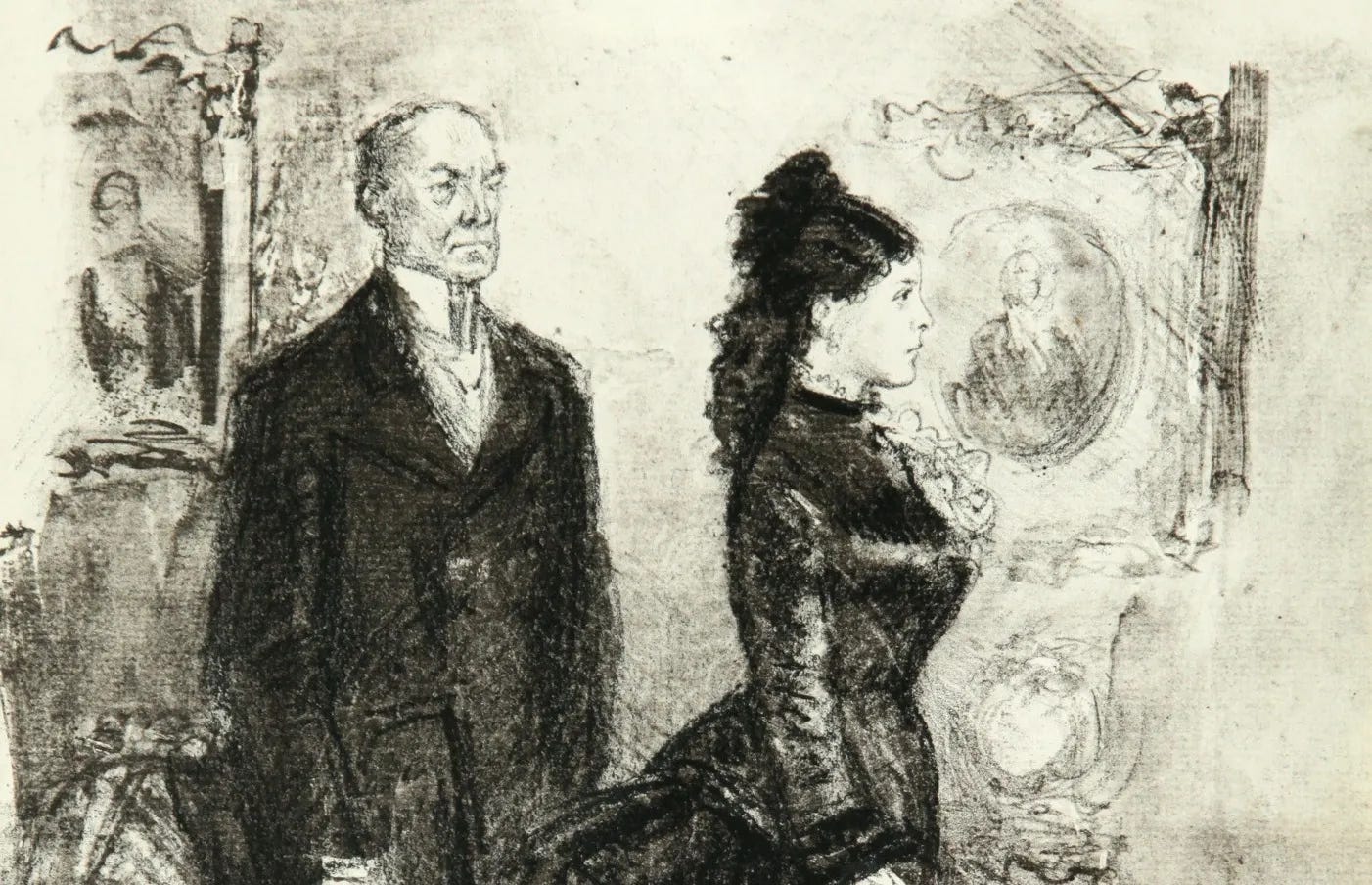
Anna is eventually seduced by Vronsky, a dashing cavalry officer. Vronsky is everything Karenin is not: flirtatious, emotionally available, and in ardent pursuit of Anna’s heart. He eventually wins it, and Anna leaves Karenin to be with Vronsky. But things are never as happy as they seem they should be. Despite their approving friends, Anna and Vronsky find they cannot trust one another, leaving Anna jealous and Vronsky feeling nagged.
The fourth couple is the least impressive (on the surface): a landowner named Kostya Levin and Kitty Shcherbatskaya. Neither is especially talented, though Kostya is competent and Kitty is beautiful. But unlike the other couples, they are willing to sacrifice for one another. They work hard, live virtuously, and, unlike the other three couples, are truly able to be happy. The novel ends as their family begins to grow with the birth of their son.
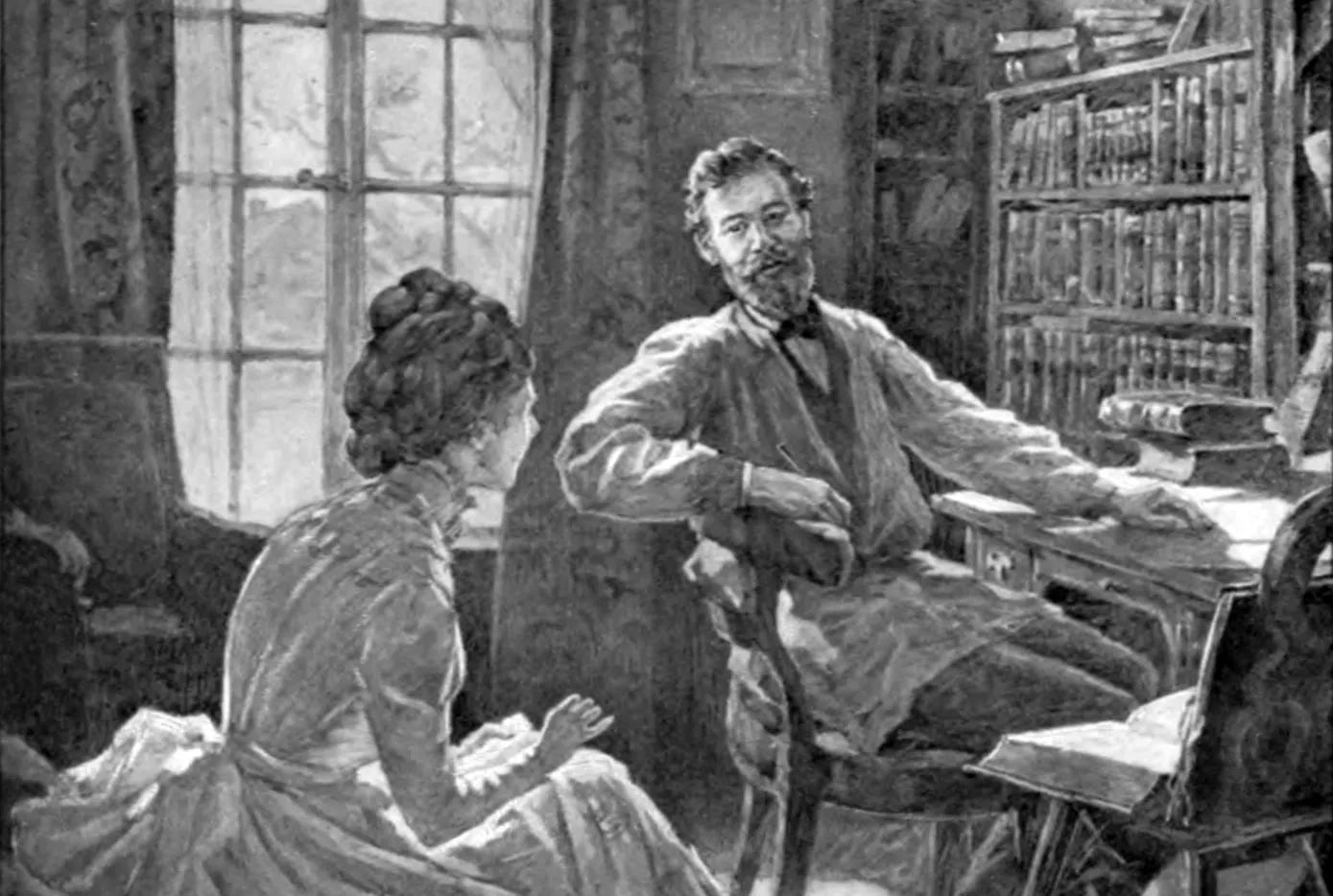
So, three unhappy couples and one happy one. What sets them apart? As it turns out, the thing that most sets apart unhappy and happy people is this: virtue.
How to Be Happy
Tolstoy presents many dynamic characters throughout his novel, and almost all of them end up unhappy. The first is Anna, whose collapse from confident, brilliant, beautiful woman to anxious, difficult companion for Vronsky is as tragic as it is astonishing. Vronsky is unhappy, too; his relationship with Anna leaves him miserable.
Stepan and Dolly, too, are quite competent but end up unhappy. Stepan is always chasing after a new affair, and Dolly has given up being angry about it; she is numb and heartbroken.
Karenin, who is left alone by Anna, is in a similarly miserable state. But he ends up finding peace through perhaps the most heroic act of forgiveness in the novel: he takes care of Anna and Vronsky’s child Annie. Anna and Vronsky have abandoned her in St. Petersburg with Karenin, and he is able to forgive his estranged wife and her lover. Thus Karenin ends the novel picking up the pieces of Anna’s infidelity. But he has both happiness and peace, something his wife cannot claim.
Finally, we have Levin and Kitty. Neither is perfect, and both are ridiculous in their own ways. But they manage genuine happiness where Anna, Vronsky, Stepan, and Dolly all fail. Why? Because they show virtue. Levin sacrifices for his wife and fights for her when other men flirt with her. Kitty forgives Levin when he fails and supports him as he struggles to build a career. Despite their frailty, they build a family that makes them both very happy.
Happiness is not a question of talent, worldly success, or good circumstances. Every character had all three, and the miserable ones generally had more than those who turned out happy. But it wasn’t enough. To be truly happy, virtue was required.
“Happy families are all alike”
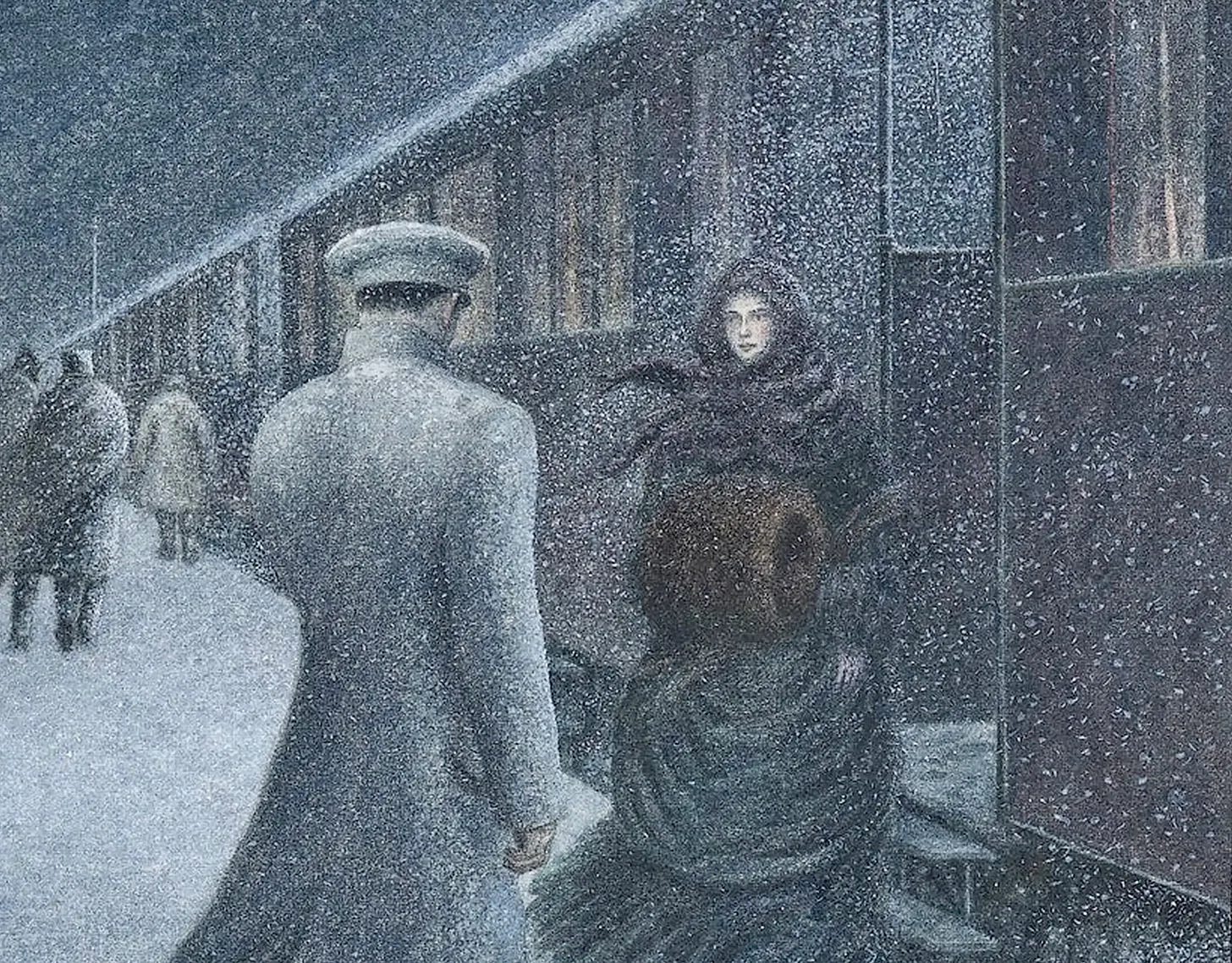
Unlike your typical romance, Tolstoy is not interested merely in what makes a good story — he wants to really understand what makes a good life, and especially what makes a good marriage.
While we often spend much time talking about the external circumstances that lead to good marriages and families, Tolstoy is not concerned with ensuring that your family is comfortable. Instead, he shows why happy families are all alike: all happy families are alike because virtue is a goal for all people.
The thing about vice is that it carries many different characters. There are a lot of ways to go wrong. But when people are virtuous and do the right thing, they will be happy. And, remarkably, that virtue will allow them to help others to be happy too.
It’s an ambitious goal for a romance novel. But Tolstoy’s demonstration of the power of a good man and a good woman is why Anna Karenina may just be the greatest romance novel of all time.
Stepan may admire Dolly’s virtue as a good mother but he is not impressed enough to be persuaded that fidelity is preferable to the thrill of the pleasure principle.
Stupid man.
The children will internalize that they’re not good enough for him to be a faithful head of family. And then sophistication will project blame onto their mother for not being able to make daddy happy. Those silly little glass bottles enticing him to indulge his entitled human nature.
Dolly can’t be hostile or defensive for fear of being abandoned financially. So she will become invisible
Anna has no fear of dire straits and so marches straight into them. Being unable to defy the primacy of absolute paternal authority she cannot live with consequences of the depth of grief that losing her son inflicts, despite having a daughter. She can endure no more misery