

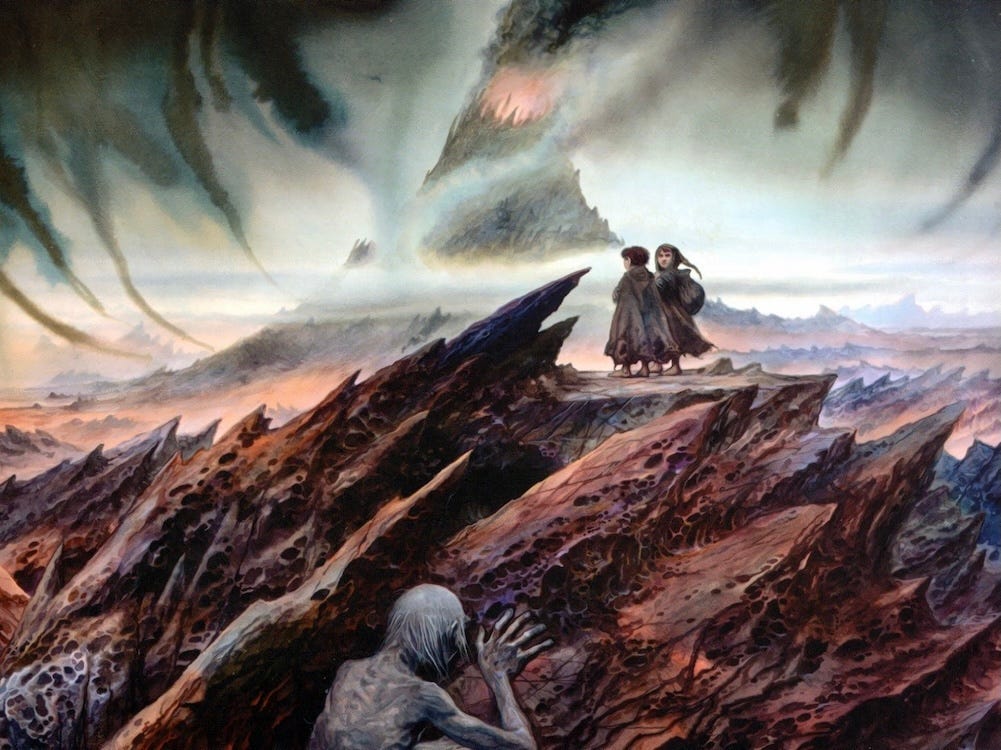
Some of the most beautiful things ever written were penned in the author’s darkest moments.
J.R.R. Tolkien began his epic saga from the trenches of WWI, in a senseless war that claimed the lives of several of his close friends. Homer, author of the Iliad, witnessed the most brutal acts of Bronze Age warfare (as you can tell from the descriptive manner in which his war poetry is written), yet turned them into a tale of virtue that became the foundational work of Western literature.
Once again, it seems, our world lives under the threat of a horrifying war — one which could displace or destroy countless innocent lives in the Middle East.
So, how on earth does one create a thing of beauty when all around is gripped by evil and suffering? How can your mind be so impervious as to create beautiful art at such a time?
The art that we see come forth from these dark hours is itself revealing. In the case of The Lord of the Rings, we see that those characters who hang onto beautiful thoughts in dark times can withstand virtually any tribulation — but how do they manage it?
Tolkien provides an answer via two conflicting perspectives: the “doomerism” of Denethor, and the eternal optimism of Samwise Gamgee…
Thank you for being part of our mission! If you’d like to support us and join the book club, please consider a paid subscription. You’ll get:
All live book discussions (biweekly) and recordings
Access to our community of readers
The full library of articles, essays, and podcasts
We are currently reading Virgil’s Aeneid! The next discussion is on Tuesday, April 14, at noon ET — join us!
The Great Shadow
In Tolkien’s The Lord of the Rings, the free people of Middle-earth live under the threat of seemingly inevitable occupation by evil. Sauron, Lord of the One Ring, threatens to engulf it all — even the Shire — under his terrible shadow. No alliance of Elves and Men appears to have the muscle required to resist it.
The situation is dire, and Denethor, Steward of Gondor, knows it.
“The West has failed. It shall all go up in a great fire and all shall be ended. Ash! Ash and smoke blown away on the wind!… It is time for all to depart who would not be slaves.”

The problem with criticizing this perspective is that Denethor is right. If one were to calculate the likelihood of success in his position, it would be impossible to envision any outcome beyond total annihilation. Death or torture awaits anyone still lingering in Minas Tirith when Sauron’s hordes arrive.
Denethor, already suffering from grief, spirals into suicidal despair at the thought of Sauron’s insurmountable army. He turns in on himself, his mind driven to madness, and perishes in his own fire rather than die at the sword of the enemy.
Before examining why this mindset is wrong in the eyes of Tolkien, consider first the perspective of another…
The Light Beyond Reach
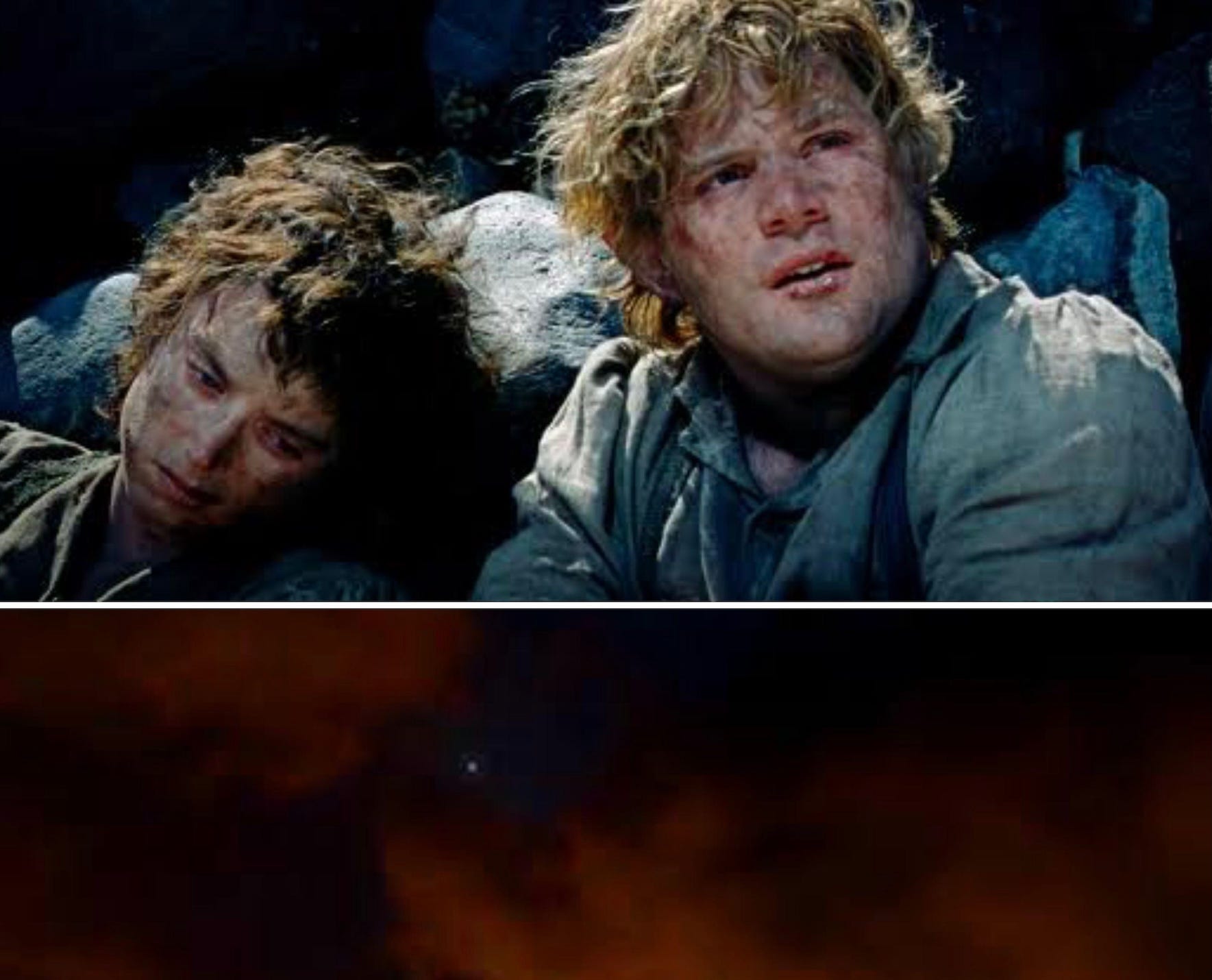
After passing into Mordor and escaping the orc tower at Cirith Ungol, Frodo and Sam are physically and spiritually depleted. Pausing for a moment, semi-conscious from exhaustion, Sam looks up at a distant star in the night sky. One of the most quoted and uplifting passages of the entire novel follows:
There, peeping among the cloud-wrack above a dark tor high up in the mountains, Sam saw a white star twinkle for a while. The beauty of it smote his heart, as he looked up out of the forsaken land, and hope returned to him. For like a shaft, clear and cold, the thought pierced him that in the end the Shadow was only a small and passing thing: there was light and high beauty for ever beyond its reach.
At the edge of all things, the star is a symbol of the goodness Samwise clings to within his own heart, and this sustains him to the very end of his quest — but what provides a person the determination to cling on?
You might be thinking: “Is Sam’s situation really comparable with Denethor’s?”
Denethor could well be a pessimist because he’s seen too much of war. He’s seen countless battles, lost family members, lived on the edge of Mordor for decades. Sam had seen nothing of evil before his first and only journey out of the Shire.
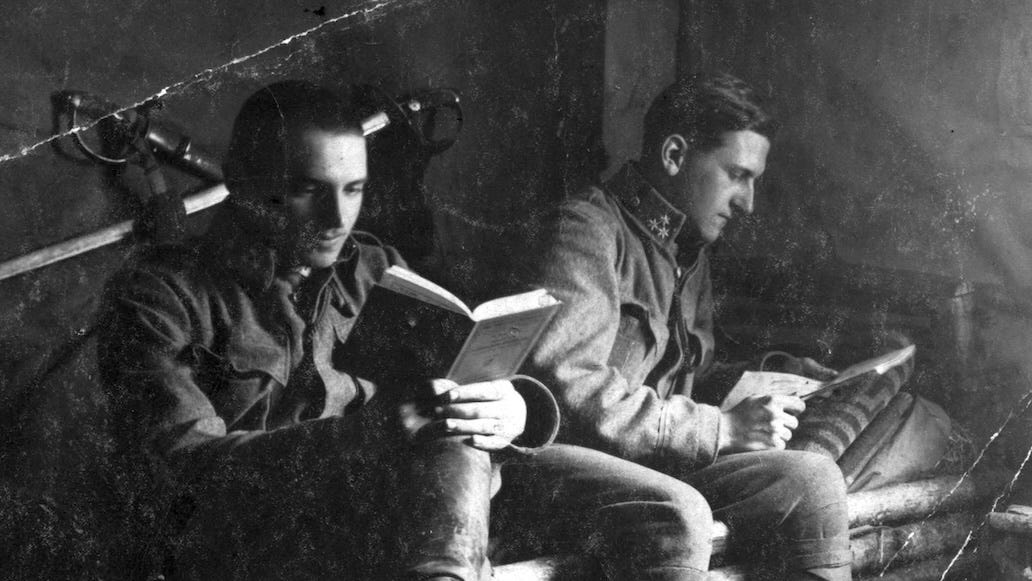
This, I think, is not the answer. Tolkien’s friend C.S. Lewis, recalling his own time in the trenches of WWI, once remarked that the closer one got to the front line the less everyone spoke of the war effort. Their minds went back to what matters most: spiritual, intellectual, and aesthetic pursuits.
And so it is with Samwise. The closer he gets to Mount Doom the more it seems to fill him with memories of home, and thus with fortitude. Proximity to evil is not the explanation for Denethor’s “doomerism.”
But why, then, is Samwise able to cultivate beautiful thoughts at the brink of annihilation and Denethor is not?
Tolkien’s philosophical framework provides the answer, and the antidote to despair…