


Hello, book club — and a warm welcome to our new joiners.
It’s time to start our read-along of Tolstoy’s Anna Karenina, one of the great novels of the 19th century (or indeed any century). We will read this together over the next 6 weeks and discuss it in three parts:
Discussion 1 (Nov. 24) — Parts 1–2
Discussion 2 (Dec. 8) — Parts 3–5
Discussion 3 (Dec. 22) — Parts 6–8
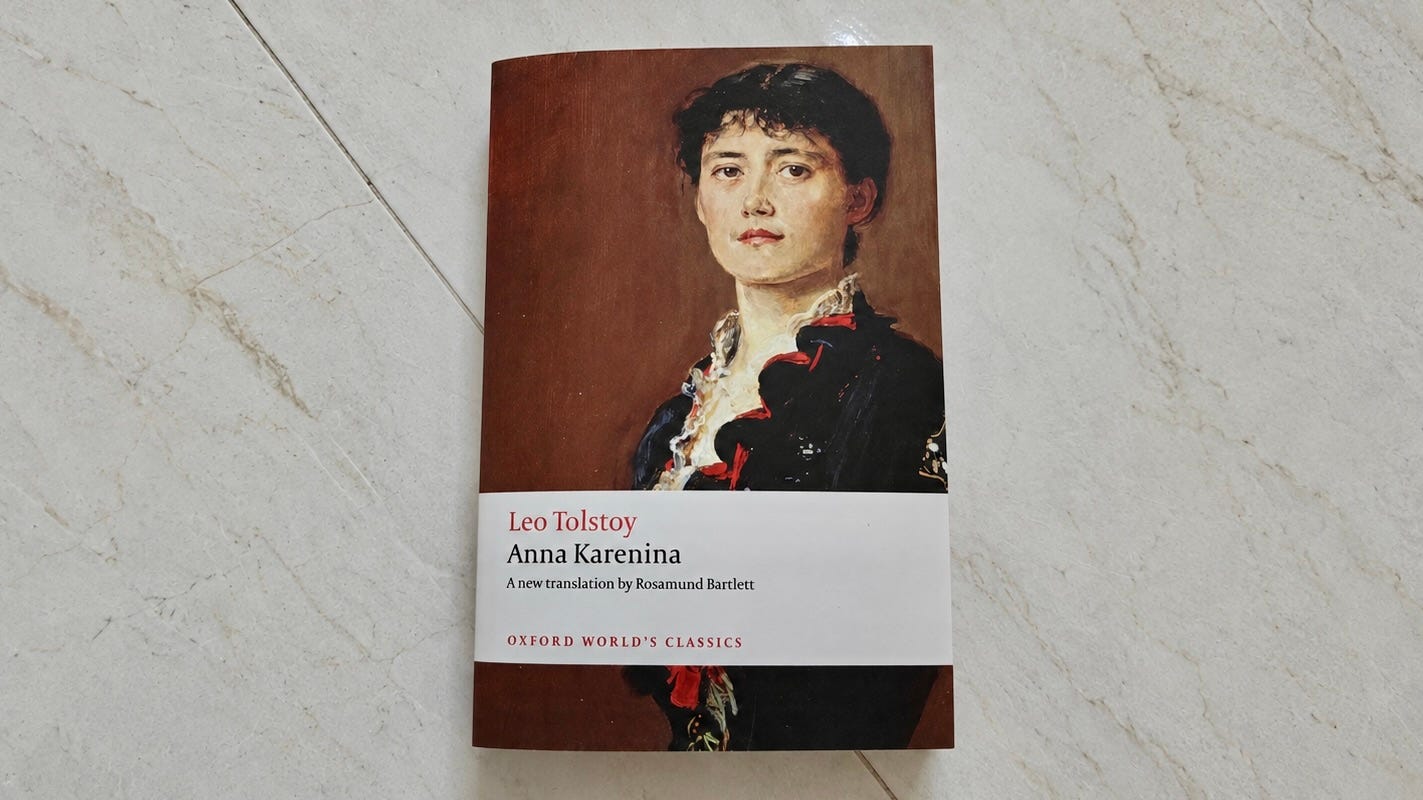
The first session will be livestreamed on Substack for all to join, and our paid community will receive Zoom links to take part directly (24–48 hours beforehand).
To begin, here is our first weekly discussion thread focusing on the opening chapters and key themes…
There are still a few hours left to claim the new member discount!
25% off full book club membership, FOREVER:
Read the Great Books with us, and you’ll get:
Live book club discussions (biweekly) and recordings
Weekly reading guides and regular essays to guide you
Access to our incredible community
The entire library of resources, essays & podcasts
Ability to vote on what we read next
Anna Karenina begins with the very famous opening line:
“Happy families are all alike; every unhappy family is unhappy in its own way.”
From the outset, Tolstoy makes clear the fundamental theme of this novel is the family. This is a novel about the human soul — its pursuit of happiness or collapse into misery — and argues that the full scope of this pursuit is not an individual one, but rather it is realized through the family.
In short, Tolstoy’s novel suggests that the pursuit of building a happy family is one of the greatest adventures of the soul. But the question that follows over the next 800 pages is this: How exactly do you accomplish this?
Indeed, we’ll find that the path to building a happy family is, in a sense, straight and narrow, an unhappy one broad and tempting.
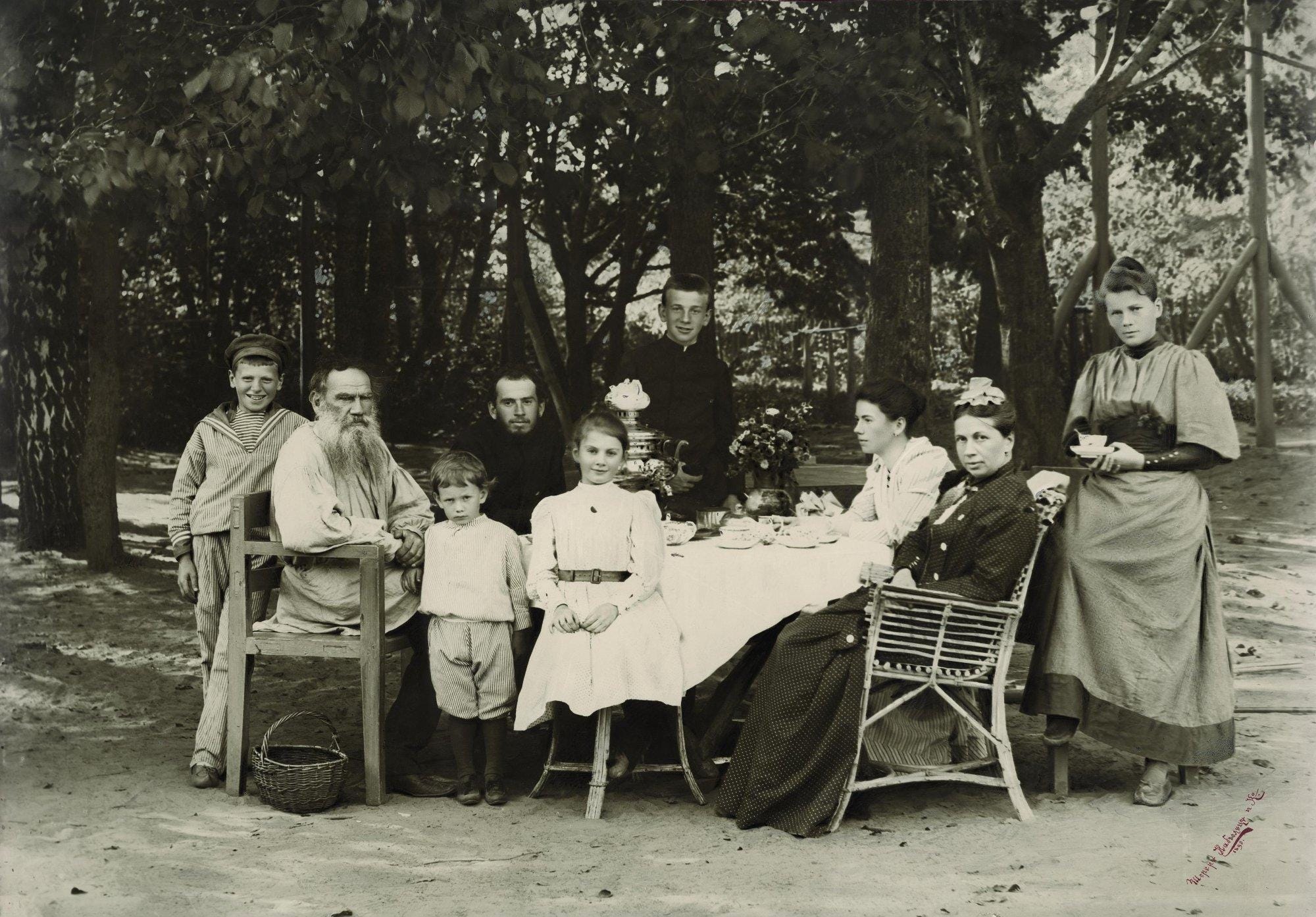
The novel begins with an introduction to the Oblonsky household, a family that is anything but happy. Stiva has been caught having an affair with his children’s governess, to great scandal. Worse yet, Stiva himself remains untroubled by his adultery, as if the uproar is more of an inconvenience to his personal life than a righteous rebuke to his immorality.
This highlights one of Tolstoy’s central concerns, namely, the relationship between one’s private desires and the obligations of family life. Stiva is charming and sociable, but governed by his appetites to the neglect of his spouse and children.
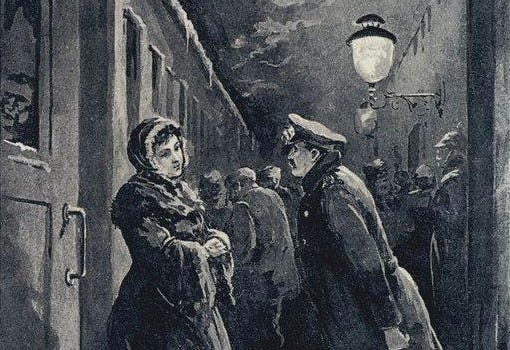
Soon after, Anna Karenina, Stiva’s sister, arrives to help reconcile the couple. She’s introduced as charming, intelligent, and graceful, immediately beloved by everyone she meets. She thankfully helps reconcile the couple and preserve her brother’s marriage.
But the peace doesn’t stay. The married Anna soon meets a charming young aristocrat named Vronsky, and their mutual attraction is apparent to all…
Scandal is brewing on the horizon, and it’s here that Tolstoy introduces a strange new character, who will be the foil to Anna’s temptations and a model of what noble human love looks like.
This character is Levin, who possesses none of Anna’s charm, attraction, or wit. He’s the proverbial “country bumpkin,” whose rural way of life clashes with the sophistication of St. Petersburg.
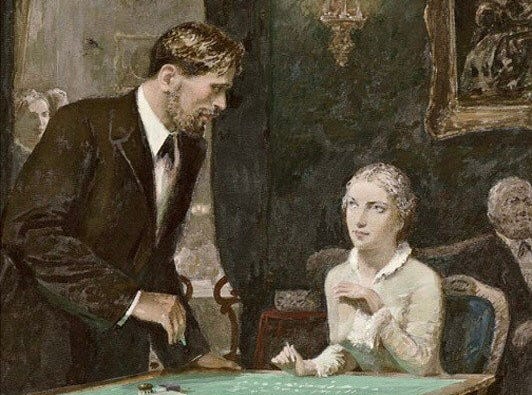
Levin is unassuming on the surface, but has a spirited interior life. His thoughts are preoccupied with family, agricultural labor, religion, and the pragmatic difficulties of managing an estate. Thus, while he’s unimpressive, he’s introduced as a thoughtful character concerned with reconciling philosophical ideals with the ordinary realities of everyday life. In simpler terms, his fundamental concern is, “How can I be a dutiful citizen who lives a life of truth and beauty?”
Thus, in these two characters Tolstoy introduces two competing worlds: the glamorous, amoral rush of aristocratic society and the tranquil, grounded world of domestic labor and rural life.
And yet, neither world is without its problems. Levin’s own romantic disappointments and existential anxieties suggest that the pursuit of a good life is hardly straightforward.
Thus, as we begin our journey through his book, take note of how Tolstoy develops these competing worlds and corresponding visions of love, marriage, family, and happiness. We shall track which characters succeed in reconciling these desires, which fail, and what their stories reveal about the human soul as such.
Some questions/ideas to ponder:
Consider the famous opening line about happy and unhappy families. What does Tolstoy mean by this distinction? How does the Oblonsky household fit into this description? How does the protagonist Levin, a single man, fit into this theme of family?
Consider the contrast between Stiva and Levin — the former is sociable, charming, and governed by his appetites, whereas Levin is introspective, serious, and preoccupied with the meaning of life. Which man seems better equipped to pursue genuine happiness? What does Tolstoy suggest about the relationship between character and the good life?
We also have the question of Anna and Vronsky. Their attraction is powerful and instantaneous. How should we understand this romantic attraction? Is this genuine love? Romantic infatuation? Both? What does Anna’s behavior suggest about her character and understanding of marriage?
Finally, consider the contrast between the social world of Moscow and Petersburg and Levin’s rural estate. Both worlds have their own virtues and shortcomings, though Tolstoy appears to favor the latter as more natural to mankind. Why is this so? What does rural life offer Levin that city life is missing? Conversely, what virtues belong to the city that are absent in rural life?
Please share your thoughts below or in the subscriber chat, along with any questions you have — we will incorporate them into the discussion.