

Hello all!
Our read-along of The Brothers Karamazov continues. We meet this Tuesday, August 18, at noon Eastern Time. We’ll be discussing Books 5–9.
If you missed the first session, don’t worry — you can catch up on the recording here.

Tuesday’s session will be live streamed via Substack at this link.
For those joining our discussion group directly (available to all paid members), the Zoom link is at the bottom of this email…
You can join our inner circle group by taking out a paid membership here:
This is proving to be one of our most rewarding read-alongs yet. If you’ve been on the fence about joining our inner circle, now is a really great time to join us!
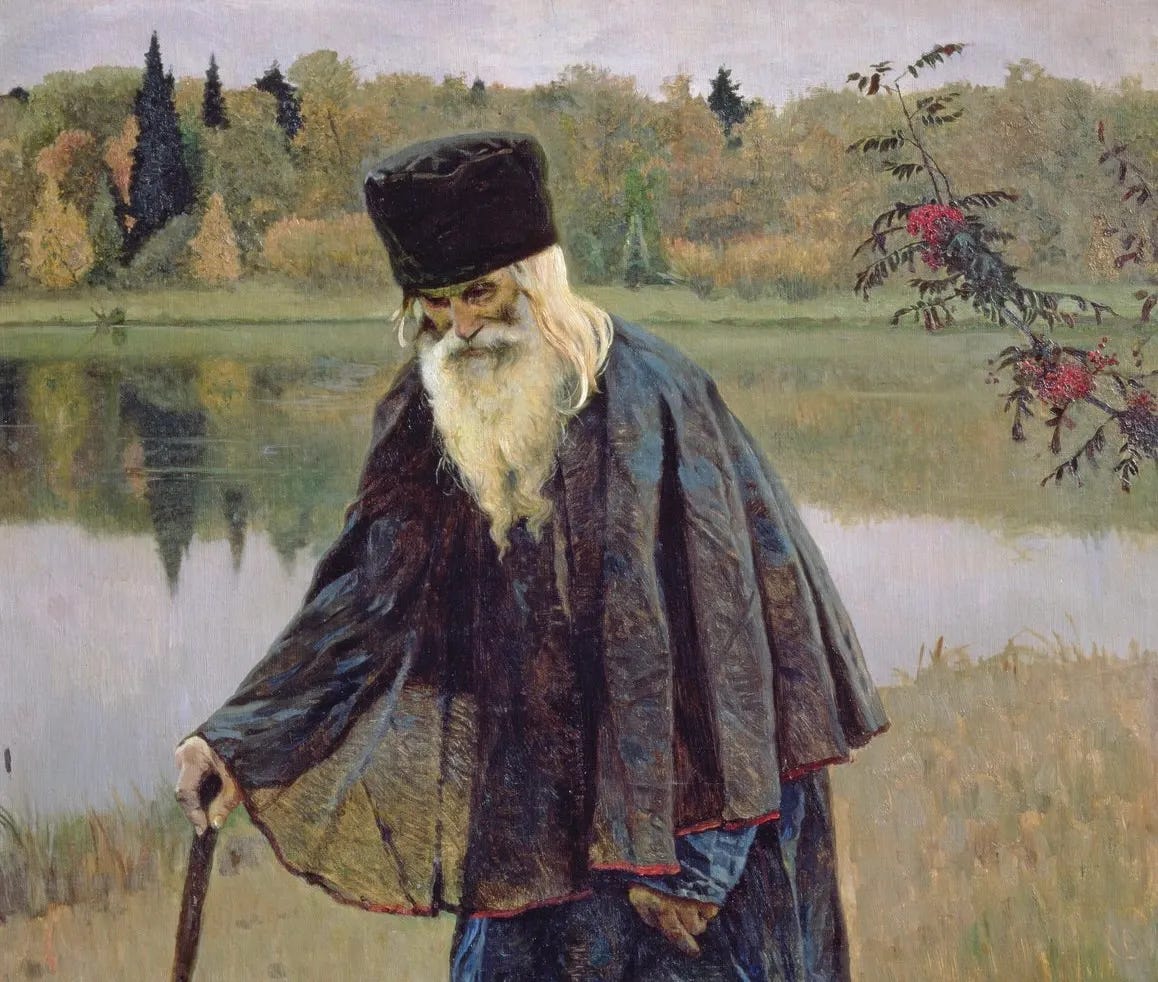
Today’s thread will focus on Book 6, which gives credence to Father Zosima’s teachings and backstory.
We find out that the wise and noble elder had a conflicted past. His brother and parents died when he was young, and though he took to Christianity in childhood, he grew up to become a morally reprehensible officer in the army. Eventually, his behavior catches up to him after challenging a gentleman to a duel over a woman.
The night before, he grows tormented and irritable and strikes his servant. Then, after a sleepless night a profound spiritual experience comes over him. He feels remorse for striking his servant, offending the gentleman, and his years of debauchery. After making apologies to his servant, he arrives at the duel and closes his eyes, preparing for death.
However, the gentleman misses his shot, and Zosima, overjoyed, throws his pistol into a tree. He begs forgiveness of the gentleman, and after much scandal, the town falls in love with his spiritual fervor as Zosima announces he’s joining the monastery.
Some question/ideas to ponder:
Dostoevsky’s most moral characters are rarely saints without a past. It’s often the case that his “saints” reach a spiritual maturity after repentance from great evil. Why might this be the case? And why is Zosima’s backstory so enlightening to the nature of his gentle character?
Consider the profound spiritual experience that leads to Zosima’s repentance. It almost defies explanation. Why is this the case, and what happened to Zosima specifically? Do you consider this lazy writing, or might it be the case that a true change of heart transcends neat explanation?
Perhaps the key idea in all of Zosima’s teaching is this: we are all guilty before all. Every one of us is guilty and collectively responsible for the evils of the world, and until you know this, you will limit your self-knowledge, happiness, and ability to love your fellow man. Why does he argue this? Do you agree with him? Why or why not?
Share your thoughts below or in the subscriber chat, along with any questions you have — we’ll incorporate them into the discussion!