

Hello book club!
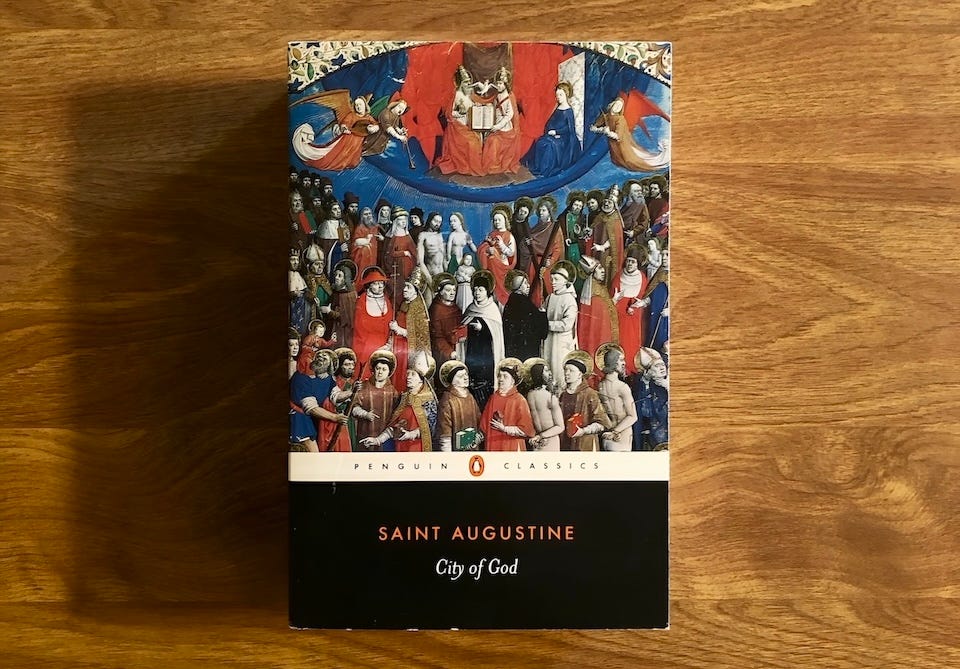
It’s time for the second (and final) session of our introductory read of Augustine’s City of God. We meet Tuesday, September 29, at noon ET to discuss the critical Books 19 and 22.
The discussion will be streamed via Substack at this link.
For those joining our discussion group directly (available to all paid members), the Zoom link is at the bottom of this email…
You can join our reading group by taking out a paid membership here:
The City of God is a foundational work, and despite being 1,600 years old, it has a stunning amount of insight for the modern reader. Study it with us!
Recall that Book 19 introduced us to Augustine’s summum bonum (ultimate good), namely peace. He says that both the city of God and Man have this same end — peace — but do so through vastly different means. The city of man does so through pride, or love of self, while the city of God seeks peace via love of God.
Thus in Book 22, Augustine ends by addressing what the ultimate destiny looks like:
What is the final destiny for the City of God once history ends?
Augustine is concerned with one key idea here: the resurrection of the body. Whereas Porphyry argued that only the soul is granted eternal life, apart from the body, Augustine asserts the human body itself shall be included in heaven. In other words, the human soul is not trapped in the “prison” that is the body; rather the body, along with the soul, are a composite of the fullness of human nature.
But why this emphasis on the resurrection of the body?
Well, if the summum bonum is peace, pagan philosophers could argue that, in theory, the ultimate good is a disembodied beatific vision of merely the human soul. This would put into question the goodness of not just the human body, but even the natural world itself.
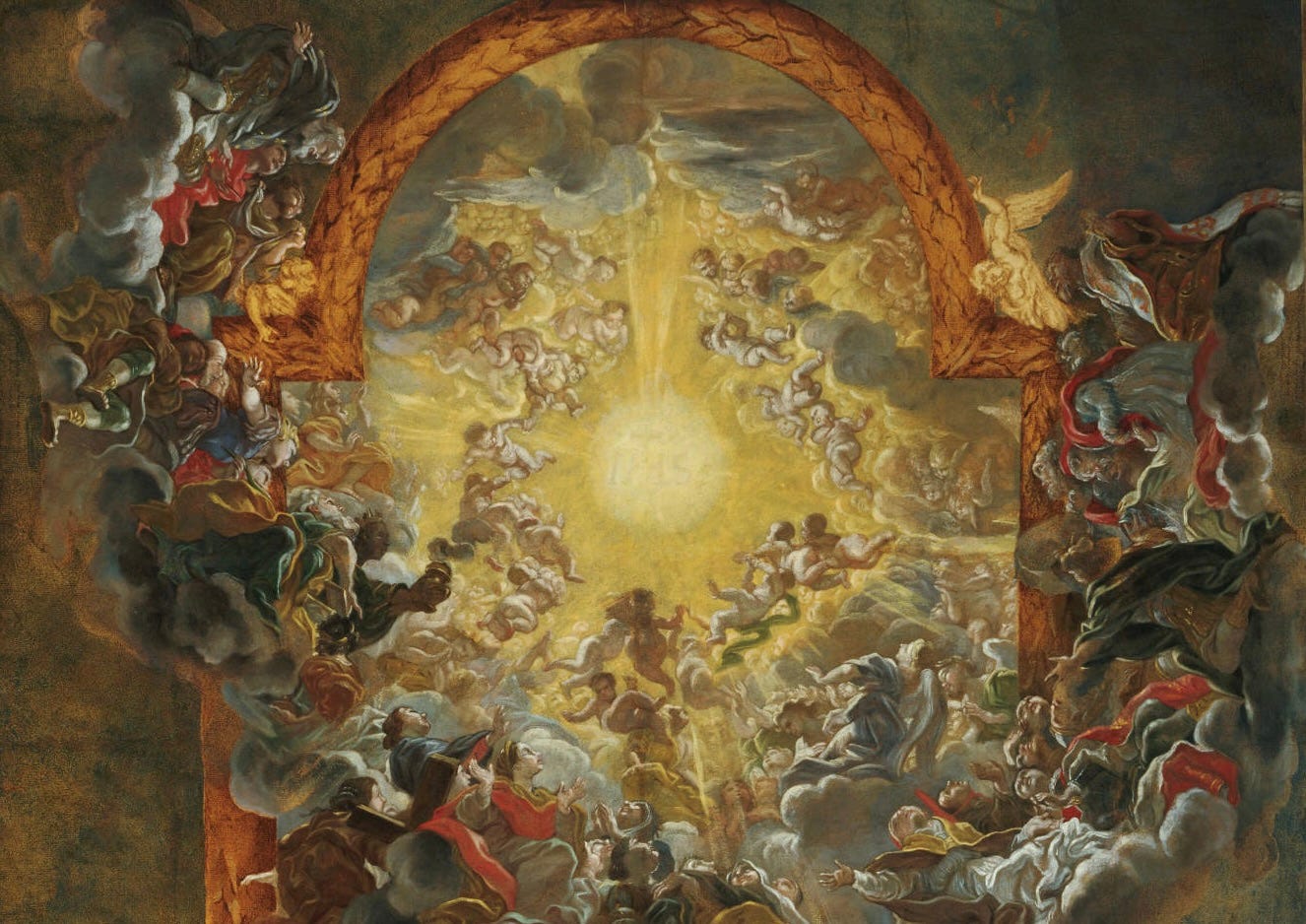
Whereas Christianity says paradise will be a renewal of creation (Christ “makes all things new”), a disembodied paradise implies the natural world may be evil, or the body an immoral prison to be escaped from.
The resurrection of the body points to the fullness of human nature perfected, and defends the foundational claim of Genesis 1 that the world was created “good,” and that life as such is good.
The book ends with a meditation on the “eternal Sabbath” — the eighth day, outside of time, where the City of God’s citizens rest, love, and praise God for eternity. Augustine’s closing image is the entire city resting in unwearied contemplation of God as the totality of beatitude — the final end of all human desire.
Some key questions/ideas to ponder:
Augustine could have ended City of God with a purely spiritual vision of the afterlife — souls contemplating God with no bodies at all. Why do you think he insists so forcefully on the flesh? What is lost theologically if resurrection is treated as merely symbolic?
Book 22 goes to great lengths to resolve strange edge cases (aborted fetuses, cannibalized bodies, monstrous births) in regard to the human body. What does the intensity of Augustine’s focus here suggest about the importance of the human body for beatitude?
Alongside this defense of the body is an inquiry into miracles. Why does he go to such lengths to report the various miracles of the day? What does that suggest about understanding the Christian “economy of salvation?”
The whole work ends in a vision of Heaven and praise — perhaps a strange conclusion for a book supposedly concerned with the political (recall this book was inspired as a defense of the Christian faith in light of Rome’s fall). Does this vision of rest, in the fullness of time, play a role in the political, or is this final vision reducible to mere escapism from the chaotic realities of life?
Share your thoughts below or in the subscriber chat, along with any questions you have — we’ll incorporate them into the discussion!