

Hello book club!
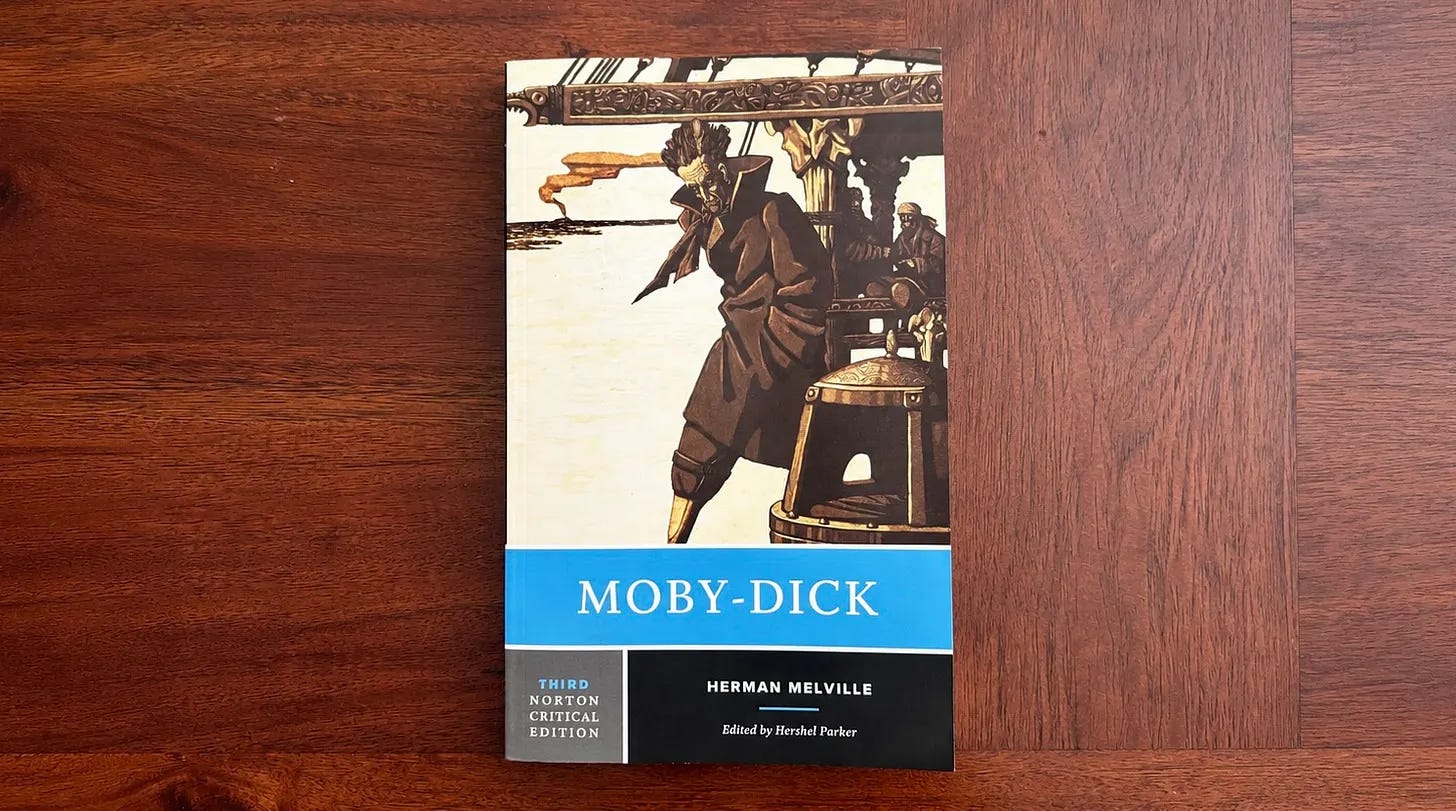
It’s time to begin our read of Herman Melville’s 1851 masterpiece, Moby-Dick. This is arguably the greatest work of American fiction, and as we will see, for good reason…
We meet TOMORROW, October 13, at noon ET. We’ll be discussing the key ideas and context as we begin our pilgrimage through chapters 1-40. You don’t strictly need to have done the reading yet, but if you have done some already, that’s great.
The first discussion will be livestreamed via Substack at this link.
For those joining our discussion group directly (available to all paid members), the Zoom link is at the bottom of this email…
You can join our reading group by taking out a paid membership here:
Study the great works of the Western canon alongside us. You’ll get:
Live book club discussions (biweekly) and recordings
Weekly discussion threads to guide the reading
Access to our incredible community of readers
Our entire library of essays, articles, and podcasts
After the slower burn of the initial 30 chapters, the intensity picks up once we meet Captain Ahab.
The most pivotal, and ominous, action takes place in Chapter 36. Here, Ahab summons his crew to gather as a “congregation” on deck. He orders them to remove the spear tips of their harpoons, and fills them with grog.
The “murderous chalices” are filled to the brim, and Ahab promises a gold doubloon to whoever first sights the white whale. The crew shouts a war cry and joins Ahab in a chant of “Death to Moby Dick!”
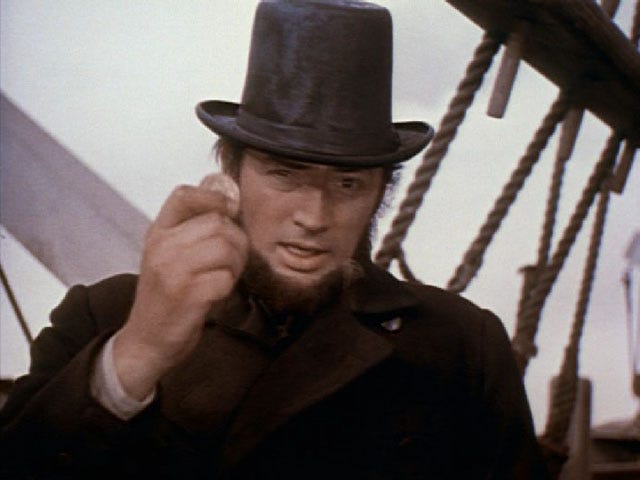
And while this war cry serves as the chapter’s climax, there’s an even more sinister undertone to the chapter that’s easy to miss. Ahab makes a subtle vow himself, which reveals the terrifying roots of his hatred — along with the actual perils awaiting the crew. This is revealed in his monologue:
“I’ll chase [Moby Dick] around Good Hope, and round the Horn, and round the Norway Maelstrom, and round perdition’s flames before I give him up…
Talk not to me of blasphemy, man; I’d strike the sun if it insulted me… Who’s over me? Truth hath no confines.”
In layman’s terms, Ahab will chase the whale into Hell itself, and will strike down anyone who tries to thwart his mission. He even questions the authority of God himself — pondering whether any deity rules in the heavens — and vows that such a God’s Truths cannot constrain Ahab’s vengeance.
The crew cheers this dark, charismatic war cry on, but the first mate, Starbuck, has reservations. He fears it’s foolish for a whaling expedition to devolve into a defiant journey on behalf of vengeance. But for now, his warnings are shrugged off as the Pequod sails into the darkness — its crewmembers vowing loyalty, obedience, and participation in Ahab’s wrath.
Some questions/ideas to ponder:
Ahab doesn’t argue the crew into joining him. Instead, this chapter reads like a theatrical performance (the chapters themselves even have “stage directions,” as subtitles). This performance includes Ahab offering them gold, then religious ritual, followed by an oath. Consider the significance of Ahab winning over his crew via passion rather than reason. What is the significance of this ritual?
Ahab’s toast is described as the crew drinking from “murderous chalices” — a direct homage to Macbeth, the insane king who murdered to satiate his ambition. What might this Macbeth imagery suggest about the nature of Ahab, and the Pequod’s voyage?
Crewmates Starbuck, Stubb, and Flask each have different reactions to Ahab’s quest. Starbuck objects, Stubb laughs, and Flask follows along oblivious. Consider this triad of laughter, oblivion, and a man betraying his own conscience. What might this suggest about “ordinary men,” and the failures that led them to rally behind a dark, charismatic leader?
Share your thoughts below or in the subscriber chat, along with any questions you have. We’ll incorporate them into tomorrow’s discussion!