

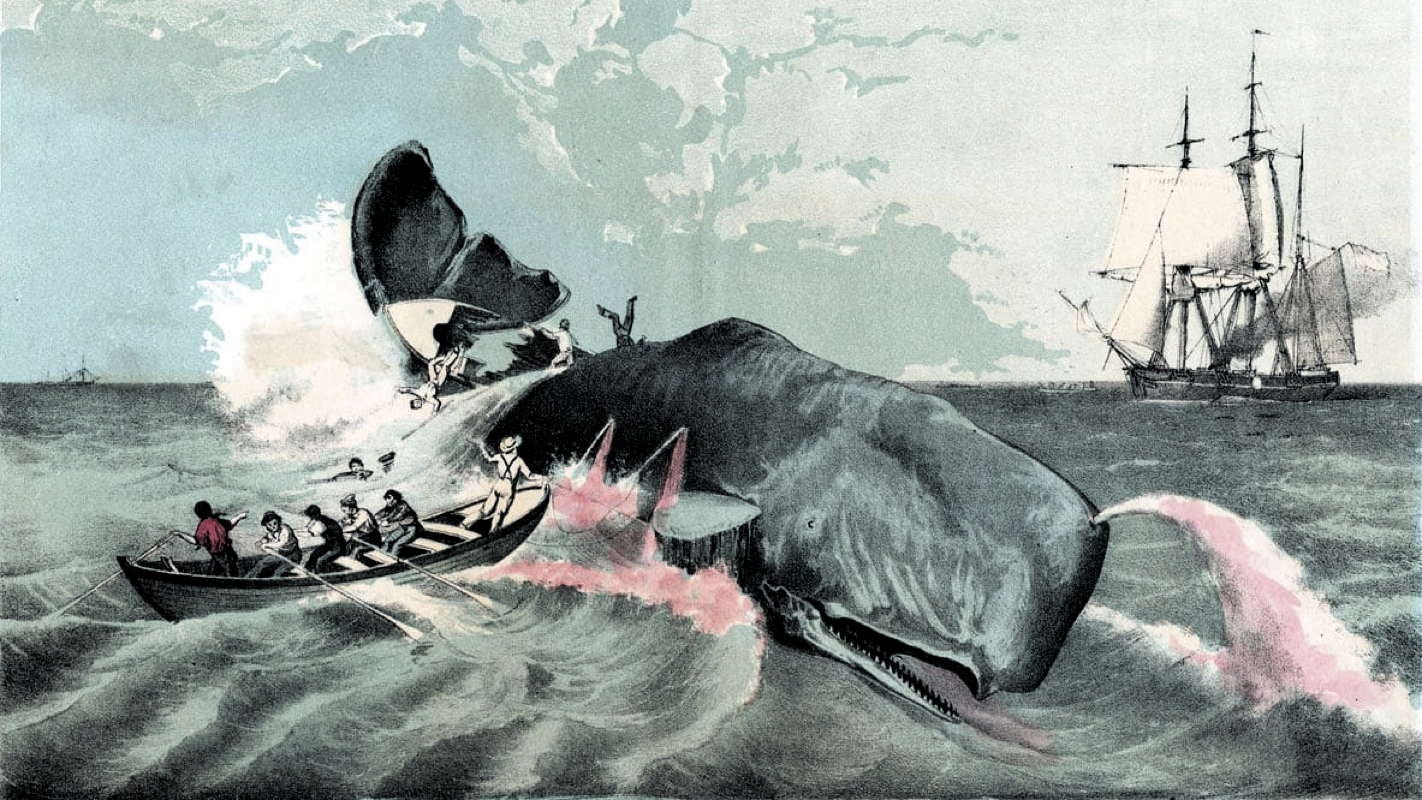
Obsession isn’t healthy, but it sure is interesting. And there might not be a better story of obsession in all of literature than Moby-Dick.
The plot of Herman Melville’s classic novel is so well known that it has entered into common parlance as a clichéd metaphor: if something is your “white whale,” then it is a deeply personal, but largely unattainable, goal.
In Moby-Dick, Captain Ahab’s white whale is the white whale: Moby Dick, who took Ahab’s leg long ago and still, as the story begins, is the fundamental goal of the captain’s life. The danger of such goals, and the ways we look to change our own destiny, are central themes of this, perhaps the greatest of American novels.
Today, we discuss one of the major themes of Moby-Dick, and what we ought to learn from Melville’s sprawling meditation on pride, fate, free will, meaning, and death.
However, be advised: reading this work will not leave you the same person as when you started it…
We have just voted to read Moby-Dick next!
We will read this together over the next 6–7 weeks. The first discussion is on Tuesday, October 13.
We are running a 24-hour discount to celebrate the start of this epic read-along…
25% off full book club membership, FOREVER:
Read Moby-Dick as a member of our group and you’ll get:
Live book club discussions (biweekly) and recordings
Weekly reading guides and regular essays to guide you
Access to our incredible community of readers
The entire library of articles, essays, and podcasts
The Doomed Voyage
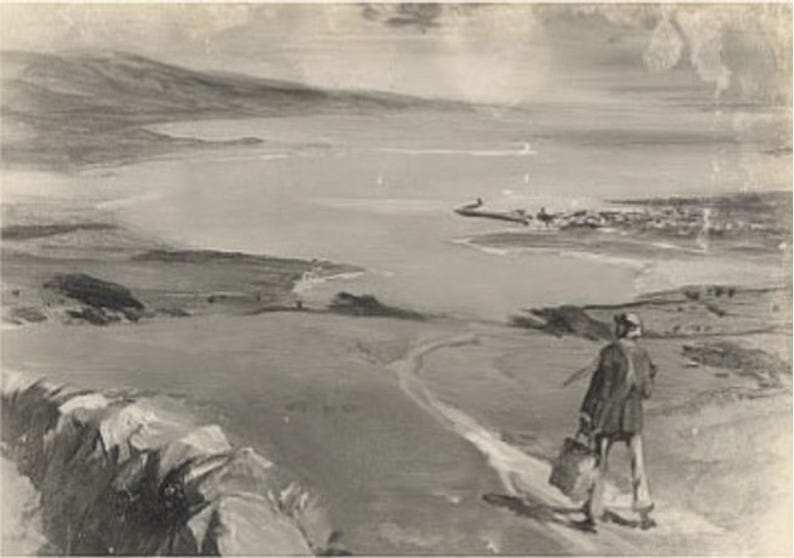
Ishmael, the main character and narrator of the novel, is not a sailor by profession, but neither is he entirely bereft of naval experience.
In fact, Ishmael is of an odd psychological character: though a schoolmaster, he frequently feels a restlessness that demands he leave his normal, simple life and go to sea. When the novel opens, Ishmael is in precisely this state of mind: he is wandering Nantucket, Massachusetts, looking for a ship that will hire him. He meets a friend, Queequeg, who is a member of an island tribe and offers a shrunken head to Ishmael as a gift.
It turns out that Queequeg is a skilled whale harpooner, and he and Ishmael both hire themselves out to a ship called the Pequod. At first, nothing seems to be especially extraordinary about the Pequod, except that several people mention the weird reputation of the ship and its captain, Ahab. But that doesn’t dissuade Queequeg or Ishmael — after all, seamen are eccentric, and neither man is willing to give up the voyage now that they have found it. Unfortunately, they are about to discover that they should have listened to the skeptics of Nantucket…
Ahab’s Deadly Obsession
The reason that Ahab is so erratic is that he isn’t just driven by the desire to catch whales. He’s driven by the obsession to catch the whale: an albino sperm whale named Moby Dick by the sailors who have long chased him. This particular whale has evaded capture for years, leaving destroyed ships and dead sailors in his wake. Ahab, though, is determined: he will catch and kill Moby Dick, or he will die trying.
None of Ahab’s crew is especially excited about the captain’s plan. Some, like his first mate Starbuck, are positively opposed to it; Starbuck is sure that pursuing Moby Dick will eventually kill Ahab. He even considers imprisoning or killing Ahab to save the crew from his mission. But in the end, nobody is willing to stand up to their crazed captain, even though they believe his obsession to be both insane and dangerous.
One thing that becomes clear as the novel progresses is that Ahab’s focus has no limits or moral consideration. When another ship, the Rachel, asks for help looking for a boat that held the captain’s son, Ahab refuses — he won’t lose any time that might impede him from finding the whale. He instead drives his ship further and further in search of Moby Dick.
Prophecy, Fate, and Free Will
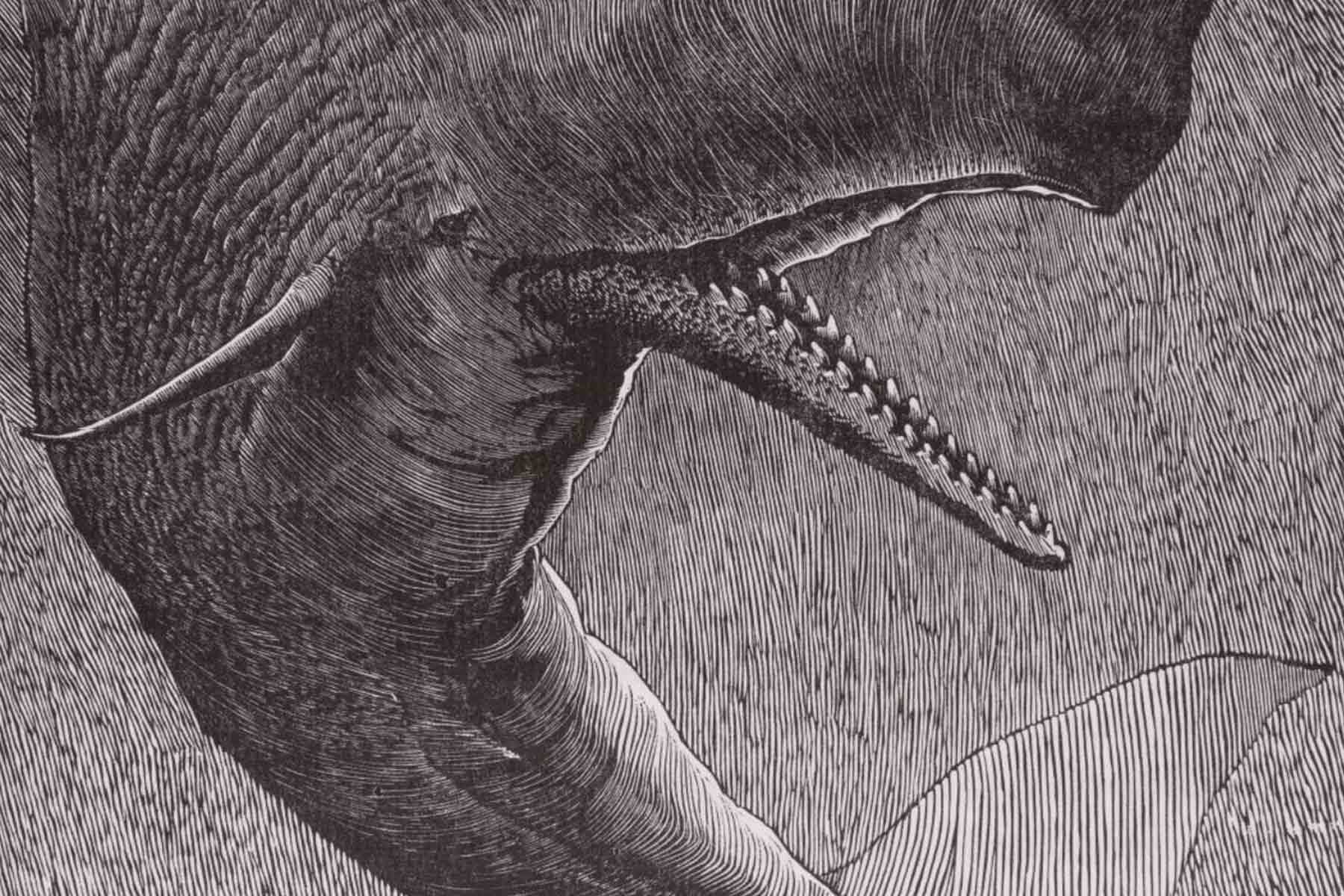
Like his story’s protagonist, Ishmael, Melville was himself raised a Calvinist with a strong sense of fate in one’s life — one of the many themes of Moby-Dick is the question of how much control we really have over our lives.
One issue that especially brings this home is that of prophecy: if a prophecy is declared, do we really have free will in that case? Or must we inevitably bring about the prophesied outcome? Such a question is one of the oldest in literature, famously encountered in the Ancient Greek tragedy Oedipus Rex.
Melville does not answer this question directly, but his story certainly wrestles with it. For Ahab is himself given a prophecy by his Parsee servant, Fedallah, predicting some strange circumstances around Ahab’s future demise: namely, Ahab will see two hearses on the sea before he dies, with the first not made by mortal hands and the second made of American wood.
Notice that the prophecy is not something explicit such as “Ahab will destroy himself in the search for Moby Dick.” Indeed, the prophecy may sound foreboding, but Ahab still has choices before him: at any point, he might abandon the mad chase, turn the Pequod around, and return home. The crucial question is not simply whether Ahab can escape his fate, but how much of that fate he is bringing upon himself should he decide to proceed. In other words, is “fate” really just the accumulated consequence of choice?
More importantly, Ahab is not simply making choices for himself. His obsession with the whale affects the lives of everyone aboard the Pequod, which have become secondary to his pursuit. Whatever awaits them at the end of the voyage, it seems that Ahab is willing to risk everything — and everyone — to reach it. Thus, in Moby-Dick, it’s clear that obsession has the potential to destroy not only us, but others, too.
Ahab’s obsession, and his refusal to consider the good of others, means that what began as a desire for revenge has morphed into something much larger: an utter refusal to accept limitation.
It is in this particular struggle that Melville’s story draws out a profound meditation upon free will, desire, and meaning itself:
Are we free?
What should we desire?
How does what we desire shape how we see the world?
Does the world have meaning beyond that which we impose upon it?
It is finally time to tackle the Great American Novel together!
Make no mistake. This deceptive story about a whale is a work of extraordinary power. It is a sprawling masterpiece that combines epic, tragedy, drama, sermon, philosophy, and theology into a profound meditation on God, fate, evil, death, free will, and the limits of human reason.
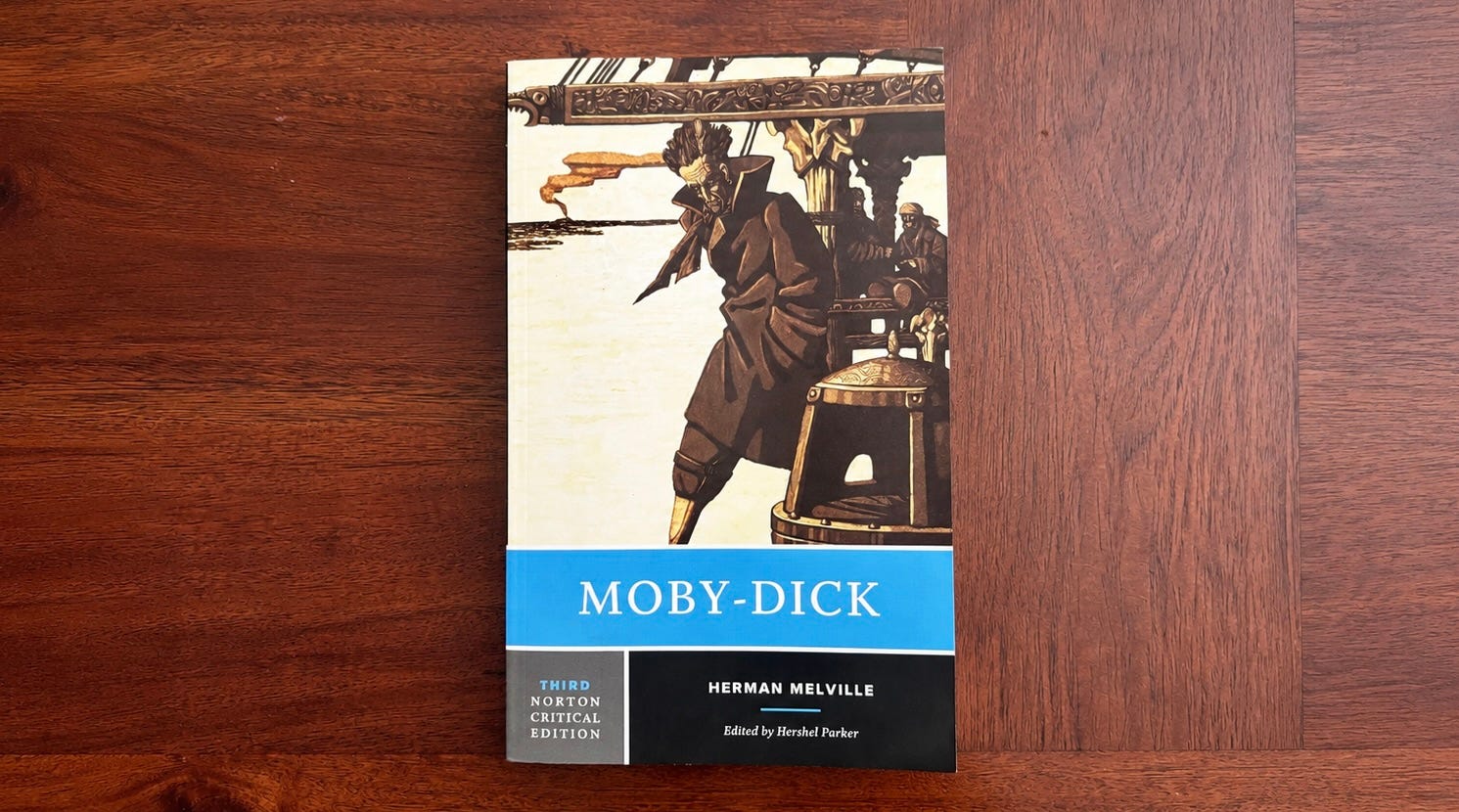
We will read it over the next 6–7 weeks, and discuss it in three parts:
Discussion 1 (Oct. 13) — ch. 1–40
Discussion 2 (Oct. 27) — ch. 41–86
Discussion 3 (Nov. 10) — ch. 87–Epilogue
Along the way, we'll send out weekly reading guides for the chapters in question.
To celebrate the start of this epic read-along, we are running a 24-hour discount…
25% off full book club membership, FOREVER:
Read Moby-Dick as a member of our group and you’ll get:
Live book discussions (biweekly) and recordings
Weekly reading guides and regular essays to guide you
Access to our incredible community of readers
The entire library of articles, essays, and podcasts
Cannot wait to discuss this!!
That’s an interesting perspective, the role of free will.
My main takeaway was the difference between Ahab and Jonah.
Jonah still had free will but God didn’t plan to let him make the wrong choice. Maybe He allowed Ahab to freely choose but without so much influence.