

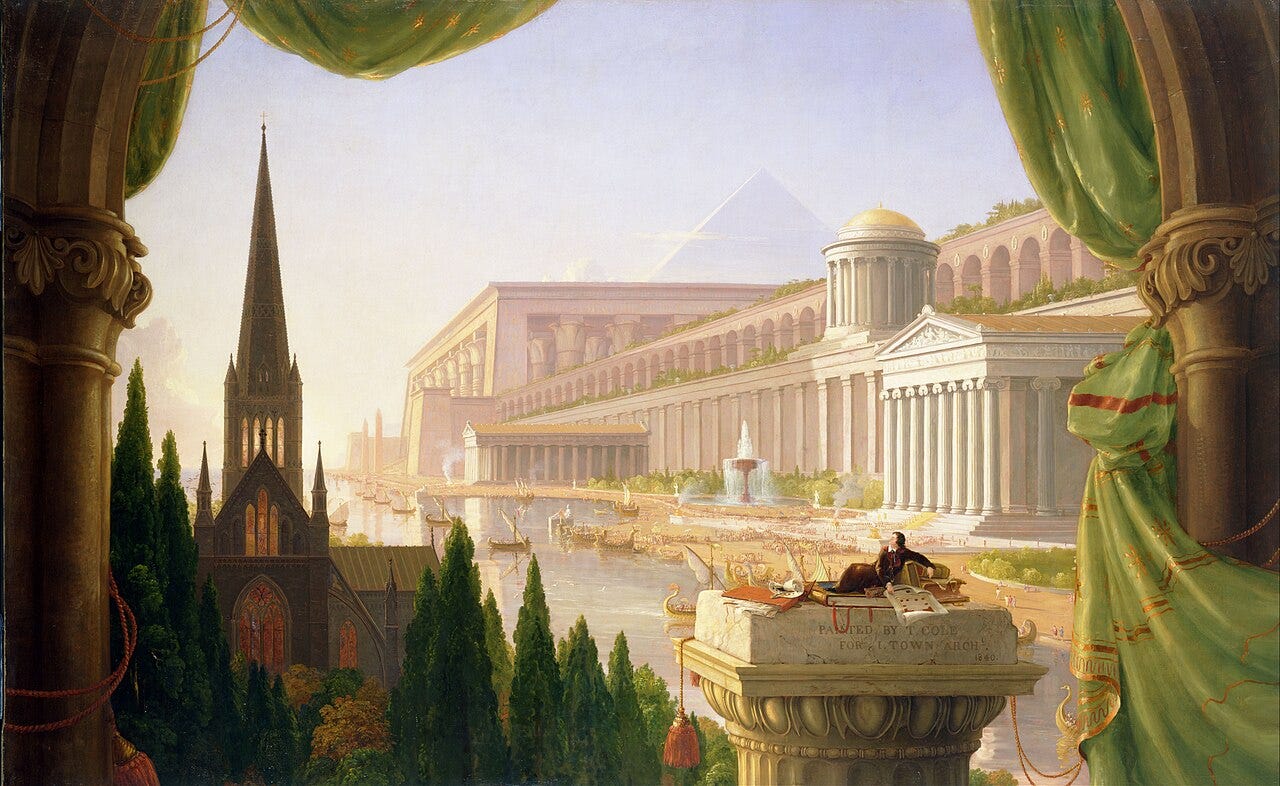
A popular idea today — and perhaps the founding myth of modernity — is that mankind is gradually ascending from ignorance to rational enlightenment.
Progress, in this sense, is defined as gradual improvement in both morality and technological capability, so that mankind may eventually become fully rational and live in a kind of utopia.
Not only is this belief almost certainly wrong, but it turns out that the opposite may be true — because technological progress not only fails to guarantee moral progress, it can even become a sign of civilizational degradation.
This warning is nothing new. It was first sounded by Plato over 2,500 years ago, and later echoed, quite intentionally, by J.R.R. Tolkien in The Lord of the Rings.
Today, then, we’ll look at what Plato (and Tolkien) warned us about human nature, how that warning is unfolding in real time, and what we can do to protect ourselves…
Reminder: we are 100% reader-supported.
To support our mission, please consider a paid subscription. It makes a HUGE difference to the time and resources we can dedicate to this. You’ll get:
Live book discussions (biweekly) and recordings
Access to our incredible community of readers
Regular essays to guide you through the books we’re reading
The entire library of articles, essays, and podcasts
We’re currently reading Aristotle’s Nicomachean Ethics! The next discussion is on Tuesday, July 7, at noon ET — come study it with us!
The Myth of Progress
Let’s restate the myth of progress:
Modern man is a product of evolution, descended from apes, and steadily ascending toward rational enlightenment. Religion, myth, and superstition were merely primitive stages of mankind learning to reason and gain mastery over his environment.
Over time, through rationality and science, man will master both nature and morality, and use this mastery to usher in a utopia free of suffering.
The problem with this theory is not science itself, nor whether one affirms the theory of evolution. The problem is the unsound philosophical assumptions smuggled in under the authority of science.

Evolution alone, of course, does not account for human consciousness, the origin of existence, nor the fullness of human nature. It is therefore not “scientifically sound” to assert that man is a creature of pure rationality, especially when nearly all philosophers agree that man is a mixture of reason and will.
Thus, it is not guaranteed that mankind is gradually becoming more moral, nor that technological advancement implies an improved understanding of the human good.
Plato, in fact, argues the opposite. Progress can be dangerous when it reshapes the soul without reference to virtue. Innovation for its own sake, says Plato, is a dangerous thing: “Change, we shall find, except in something evil, is extremely dangerous.”
But why?
Plato and the Decay of Regimes
In The Republic, Plato argues that excessive innovation — especially in education, culture, and moral norms — destabilizes societies. Civilizations, he says, do not endlessly advance; they tend to cycle and decay instead.
Famously, Plato identified five political regimes that any society can inhabit (for a more detailed breakdown, check out this article). To understand why Plato mistrusted innovation, we must first summarize each. Note, the five regimes are not just different governments; they represent successive deteriorations of the human soul.
Crucially, a city (or a soul) is defined by what it treats as its highest value…
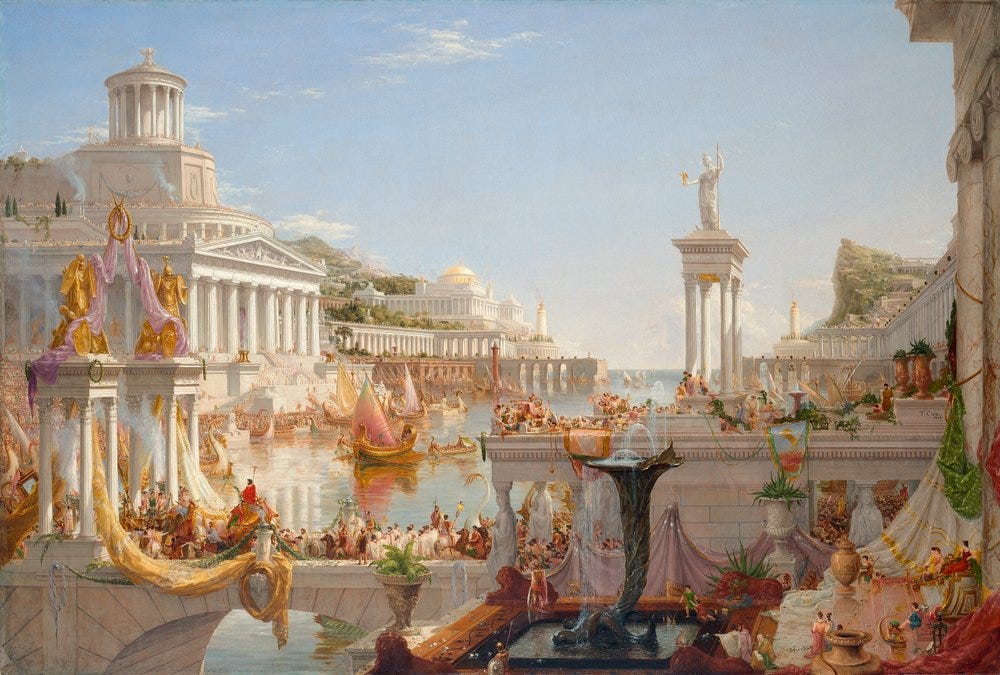
1. Aristocracy
An aristocracy, as Plato defines it, is ruled by philosopher-kings: benevolent rulers with a perfect philosophic knowledge of justice and the Good. This is the ideal state for Plato.
In this society, wisdom is held as the highest value, and the aristocratic man’s soul is led by reason. Education must be carefully regulated to protect this, because citizens create governments that reflect their dominant values. Cultural or technological “advancement” must not be allowed to threaten society.
Plato, however, admits that mis-education of philosopher-kings is inevitable over time, and when rulers are no longer totally committed to the Good, society will devolve into its next form…
2. Timocracy
In a timocracy, rulers begin to prize honor, not wisdom, as the highest value. Plato points to the warrior ethos of Ancient Sparta, where timocratic man is led by his spirit instead of his reason: the part of the soul that craves recognition.
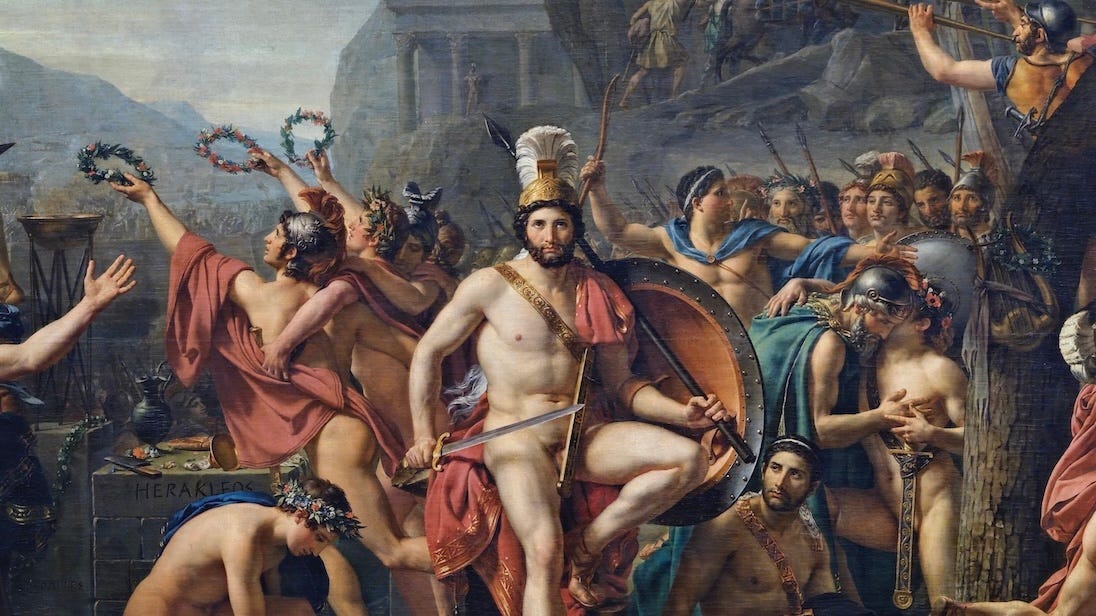
Timocratic man looks up at those of military status, but down upon producers and serfs — he is obedient to his rulers, but harsh with his slaves. Thus, timocracy produces order and vigor, but not justice. And over time, hunger for status mutates into hunger for possessions, because to accumulate wealth is the best way to protect oneself against an unjust state.
3. Oligarchy
The next form is oligarchy, rule by the wealthy. Wealth replaces honor as the highest good. The oligarchic man’s soul is ruled by his appetite, but this is restrained out of his fear of losing what he has.
Though the state may grow rich, wealth-inequality and social instability begin to arise. The state is brittle because wealth alone is not enough to secure unity — a city held together by money rather than virtue or wisdom cannot last.
4. Democracy
Plato (and most classical thinkers) heavily disliked democracy, where freedom is held as the highest value. It arises from the grievances of the impoverished classes of oligarchy, and charismatic speakers who can sway the crowd’s appetites rise to power.
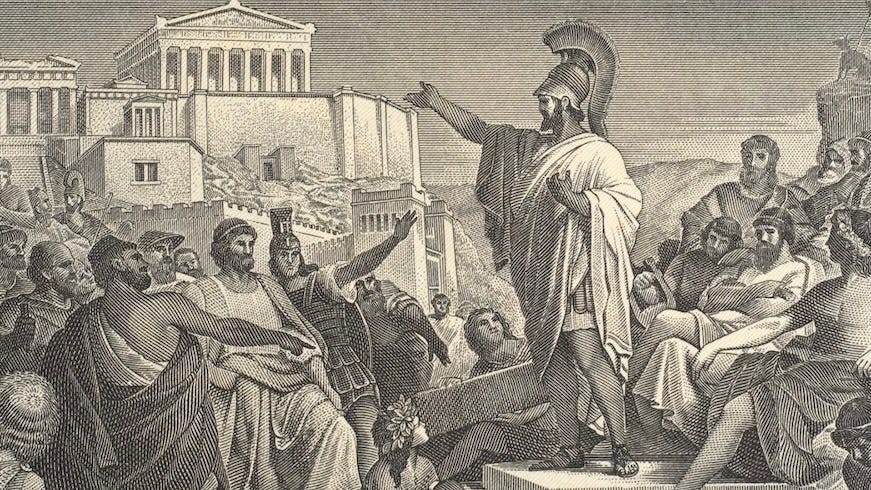
Democracy unchains the appetite of the oligarchic man, and pleasures belonging to both bad and good desires are now accepted (since freedom of choice is the ultimate good). With nothing to direct the soul’s appetite, democracies end when one single appetite comes to enslave the others…
5. Tyranny
Out of democracy emerges a strongman leader who promises redistribution to the mob. He grabs power by playing upon the people’s appetites, and the state becomes authoritarian to preserve that power.
Tyrannical man is the most free to pursue his lawless appetite, and thus he is the most enslaved by it. The result is inevitable ruin.
Remember, earlier systems kept the appetite in check: at first through the pursuit of wisdom, then honor, then the oligarchic man’s fear of losing what he has. But when freedom became the guiding ethos, there is nothing to check the appetite. Ultimately, Plato’s point is that any society that cannot keep wisdom and virtue as its guiding principle will spiral into tyranny through the cycle he described.
An Age of Tech Worship
Ours is an age of tech worship. We all know that the rapid innovation in AI — which disrupts the way we think, write, and learn — opens up a Pandora’s box of unintended consequences that could fundamentally unsettle society. And yet, there is little attempt to slow down the rapid advancements being made in AI. We live in an age of unrestrained tech worship, where to endlessly improve the capability of technology at the cost of all else is deemed the greatest good.
In Plato’s terms, a civilization driven by “progress” in this way (defined primarily as material wealth and mastery over nature) is oligarchic in spirit. It may flourish externally, for a time, but Plato warns that such a society is doomed to decay.
And this is precisely what J.R.R. Tolkien witnessed a century ago, and which lies at the heart of his epic saga, The Lord of the Rings.
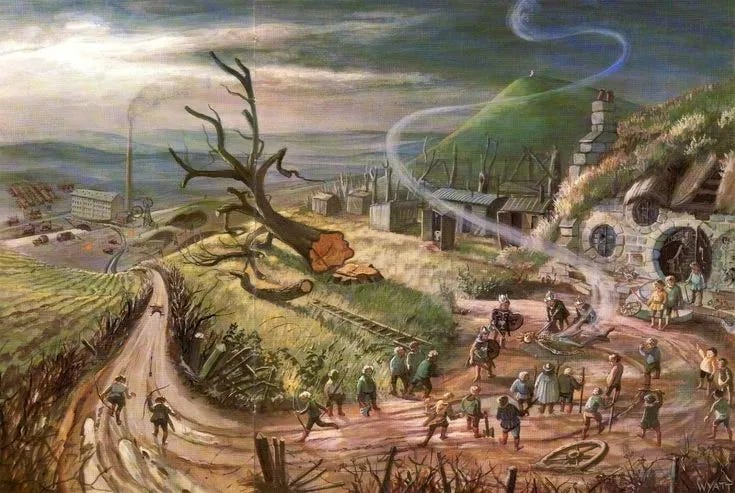
What does a story of a heroic, pre-technological age, have to tell us about technology and the decay of civilization?
Well, quite a lot.
What Tolkien was trying to communicate is the key to understanding both our decay and the narrow path out of it. For Tolkien, technology is not simply a tool, but an apparatus that replaces the formation of the soul, and amplifies the will to dominate…