


Hello book club,
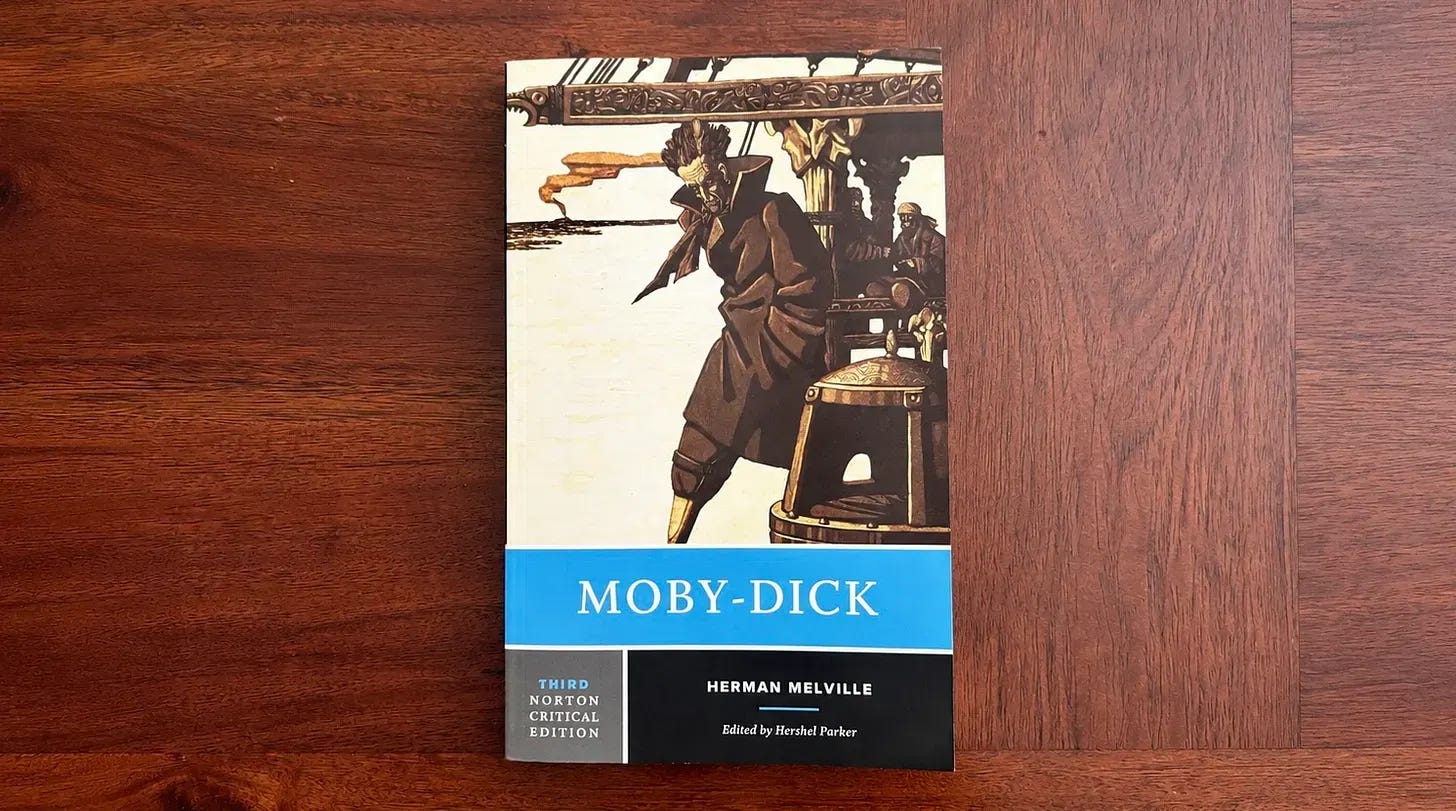
It is time to complete our read-along of Moby-Dick.
We meet TODAY, November 10, at noon ET. We’ll be discussing the key concepts and questions as we read from chapter 87 to the end of the novel.
Here is this week’s breakdown of the main ideas and questions to consider…
The final discussion will be livestreamed via Substack at this link.
For those joining our discussion group directly (available to all paid members), the Zoom link is at the bottom of this email…
You can join our reading group by taking out a paid membership here:
Study the great works of the Western canon alongside us. You’ll get:
Live book club discussions (biweekly) and recordings
Weekly discussion threads to guide the reading
Access to our incredible community of readers
Our entire library of essays, articles, and podcasts
The final stretch of this book is filled with a litany of warnings — each seemingly a providential last chance for Captain Ahab to ‘repent’ and turn back from his quest against Moby Dick.
Thus far, Ahab’s madness has only grown in strength as the novel has progressed. And yet, in chapter 129 we get a surprising moment of tenderness between Ahab and Pip. Recall Pip was the cabin boy who nearly drowned and is now half-mad himself. Yet Pip’s madness moves Ahab to pity, telling the boy, “Thou touchest my inmost centre.” He even invites Pip to live in his cabin for the rest of the voyage.
But unfortunately, this moment of solace is short-lived.
Ahab soon takes a turn for the worse, as he reveals the true extent of his darkness and wrath a few chapters later — a scene that gets to the heart of his character and delivers the ultimate moral warning this novel has been hinting at since the beginning.
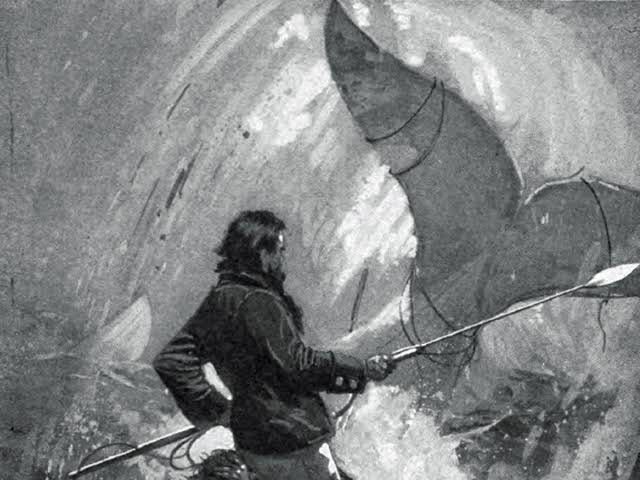
This aforementioned scene appears in chapter 132 on the eve of the climactic battle with Moby Dick. Ahab stands at the rail of his ship on a mild, golden day, and for the first time, we see him weep. Starbuck pleads with Ahab to turn the ship around and return home to his family, and Ahab even seems to waver, asking:
“Is Ahab, Ahab? Is it I, God, or who, that lifts this arm?”
Unfortunately, he answers his own question by affirming that he is himself merely a pawn, subjected to a greater power and fate beyond his control — and thus cannot turn back.
And we see the heart of Ahab’s monomania was indeed fatalism. His rage against Moby Dick was a rage against God — not merely because he had lost his leg, but because he felt he was born a cursed and depraved being with no hopes of altering his destiny.
In short, it was an anti-life-affirming fatalism that forced Ahab to lash out at Leviathan, and now the concluding chapters will be the ultimate battle between Ahab, Moby Dick, and fate itself.
Some questions/ideas to ponder:
In these final chapters, we see an unusual wavering from Ahab who nearly turns back from the white whale. Did he have free agency in these moments? Or was he truly fated to die — either due to the cost of his years-long obsession, or the dictates of fate beyond his control?
Consider how mythologized Moby Dick has become over this novel — a white whale, a wrathful beast, a symbol of evil, a sign of God’s Providence, a ubiquitous sea monster, etc. How does his mythologization impact the grand reveal of the actual whale? Does Moby Dick live up to his reputation? Surpass it? Consider the gap between Moby Dick the myth and Moby Dick the whale, and how the power of myth relates to material reality and man’s understanding of the cosmos.
Finally, we have the question of the novel’s ultimate meaning. By the end of this story, we don’t have a clear resolution and takeaway. Instead, there’s a murky silence and loneliness in which Ishmael appears just as uncertain about the nature of reality as before his voyage. Do you now consider the white whale a symbol of a malevolent God, an unfeeling universe, an inscrutable but otherwise ordered reality, or something else altogether? In the end, is Ahab validated, redeemed, damned, or does his final fate remain an open-ended question?
Share your thoughts below or in the subscriber chat, along with any questions you have. We’ll incorporate them into the discussion!